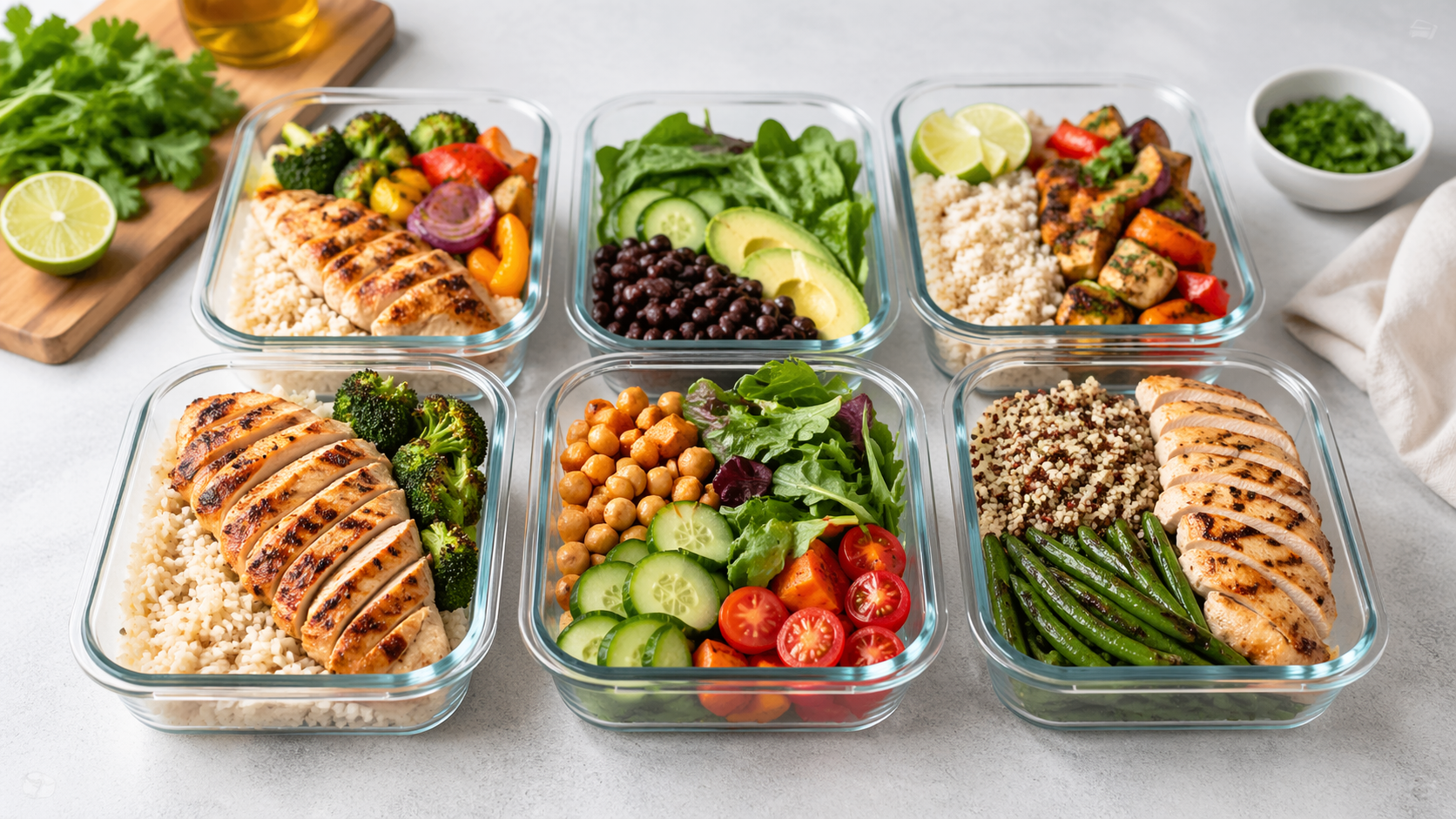
Fat loss becomes much harder when every meal is improvised. You get hungry, the day gets stressful, and suddenly the easiest option becomes the one you did not really want to choose.
Meal prep is not about living like a bodybuilder. It is about reducing decision fatigue. A few prepared foods, some default meals and a simple weekly structure can make fat loss feel much more manageable.
Why meal prep helps fat loss
Fat loss depends on consistency. Meal prep helps because it removes some of the most common points of failure: hunger, stress, lack of time and random food decisions.
Less guessing
You already know what you can eat, so every meal does not become a new negotiation.
Better portions
Preparing food in advance makes it easier to control portions without obsessing over every bite.
Fewer emergency choices
When you have useful food ready, hunger does not have as much power over your decisions.
Meal prep is not about perfection. It is about making the next good decision easier.
You do not need a fridge full of identical boxes. You need enough structure so that busy days do not automatically become chaotic eating days.
Step 1: Do not prep every meal
The biggest mistake with meal prep is trying to prepare your entire life in one afternoon. That usually feels overwhelming and makes the habit harder to repeat.
Start with the meals that usually fail
- If you skip breakfast and get hungry later, prep breakfast.
- If lunch becomes takeaway, prep lunch.
- If dinner collapses when you are tired, prep dinner ingredients.
- If snacks are the problem, prepare better snack options.
- If weekends are chaotic, plan one or two anchor meals.
Meal prep works best when it solves your real problem, not when it copies someone else’s perfect routine.
Step 2: Build meals around protein
Protein is one of the most useful anchors for fat loss because it helps meals feel more satisfying and supports training progress. Your meal prep should make protein easy to include.
Cook once, use often
Chicken, turkey, lean beef, eggs, tofu, fish, tuna or Greek yogurt can become the base of several meals.
Change the format
The same protein can become a bowl, wrap, salad, omelette, stir-fry or simple dinner plate.
Keep backup protein
Canned tuna, cooked eggs, Greek yogurt or ready-to-eat lean protein can save a chaotic day.
Step 3: Prep components, not only full meals
Full meal boxes can work, but many people get bored quickly. Component prep is often easier: you prepare separate foods and combine them in different ways during the week.
Step 4: Make your meals satisfying, not tiny
A common fat loss mistake is making meal prep too small. Tiny meals may look “clean”, but if they leave you hungry all day, consistency becomes harder.
Use lean protein
It helps you build meals that are filling without making calories climb too quickly.
Add volume foods
Vegetables, salads, soups, fruit and high-fiber foods can make meals feel bigger.
Control fats carefully
Olive oil, nuts, cheese and sauces are not bad, but they are easy to overdo if you do not measure them roughly.
Simple meal prep ideas for fat loss
These are not strict recipes. They are flexible meal formats you can adapt to your taste, calories and schedule.
Protein bowls
Lean protein, rice or potatoes, vegetables and a sauce you enjoy.
High-protein breakfast boxes
Greek yogurt, fruit, oats, boiled eggs or cottage cheese depending on your preference.
Dinner plates
Protein, vegetables and a controlled carb portion. Simple, repeatable and easy to adjust.
Wraps or salads
Use prepped protein and vegetables to build quick lunches without cooking from zero.
Step 5: Prepare for the moments you usually lose control
Meal prep is most valuable when it protects the weakest points of your week. For many people, that is not every meal. It is the moment after work, the late-night snack, the rushed lunch or the weekend.
Ask this before you prep
- When do I usually make the worst food decisions?
- Which meal causes the most stress?
- What food would make that moment easier?
- What can I prepare in less than one hour?
- What backup meal can save a chaotic day?
The best meal prep plan is not the most impressive one. It is the one that solves your repeated problems.
A simple weekly meal prep structure
You can adapt this to your schedule, but this kind of structure is enough for most people to start eating better without overcomplicating the week.
Step 6: Keep flavor in the plan
If your meal prep tastes boring, you will eventually escape from it. Fat loss food does not need to be bland. Flavor matters because it helps you repeat the plan.
Easy ways to improve meal prep flavor
Common meal prep mistakes
Frequently asked questions
Is meal prep necessary for fat loss?
No, but it can make fat loss much easier. Meal prep reduces random decisions and helps you stay consistent when you are busy, tired or hungry.
Do I have to eat the same meal every day?
No. You can prep components instead of full meals. This lets you combine protein, carbs, vegetables and sauces in different ways.
What should I meal prep first?
Start with the meal that usually fails. For many people, that is lunch, dinner or snacks after work.
How long should meal prep take?
A useful meal prep session can take 30 to 60 minutes. You do not need to spend an entire afternoon cooking unless you enjoy it.
Related guides
Want nutrition to feel simpler?
Radikal Reset gives you a clear 8-week structure for training, cardio and practical nutrition, so you can stop improvising and start building a routine that fits real life.