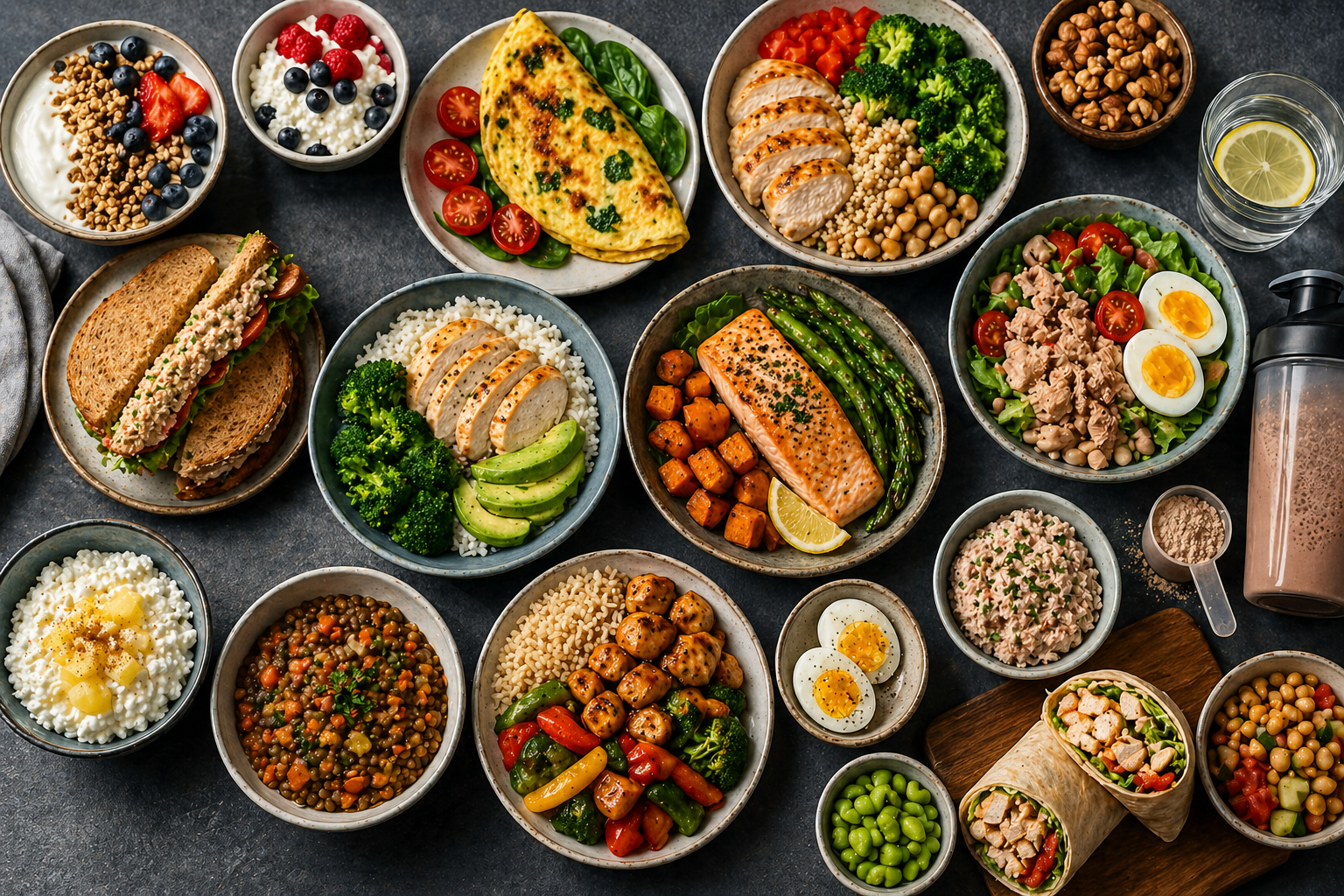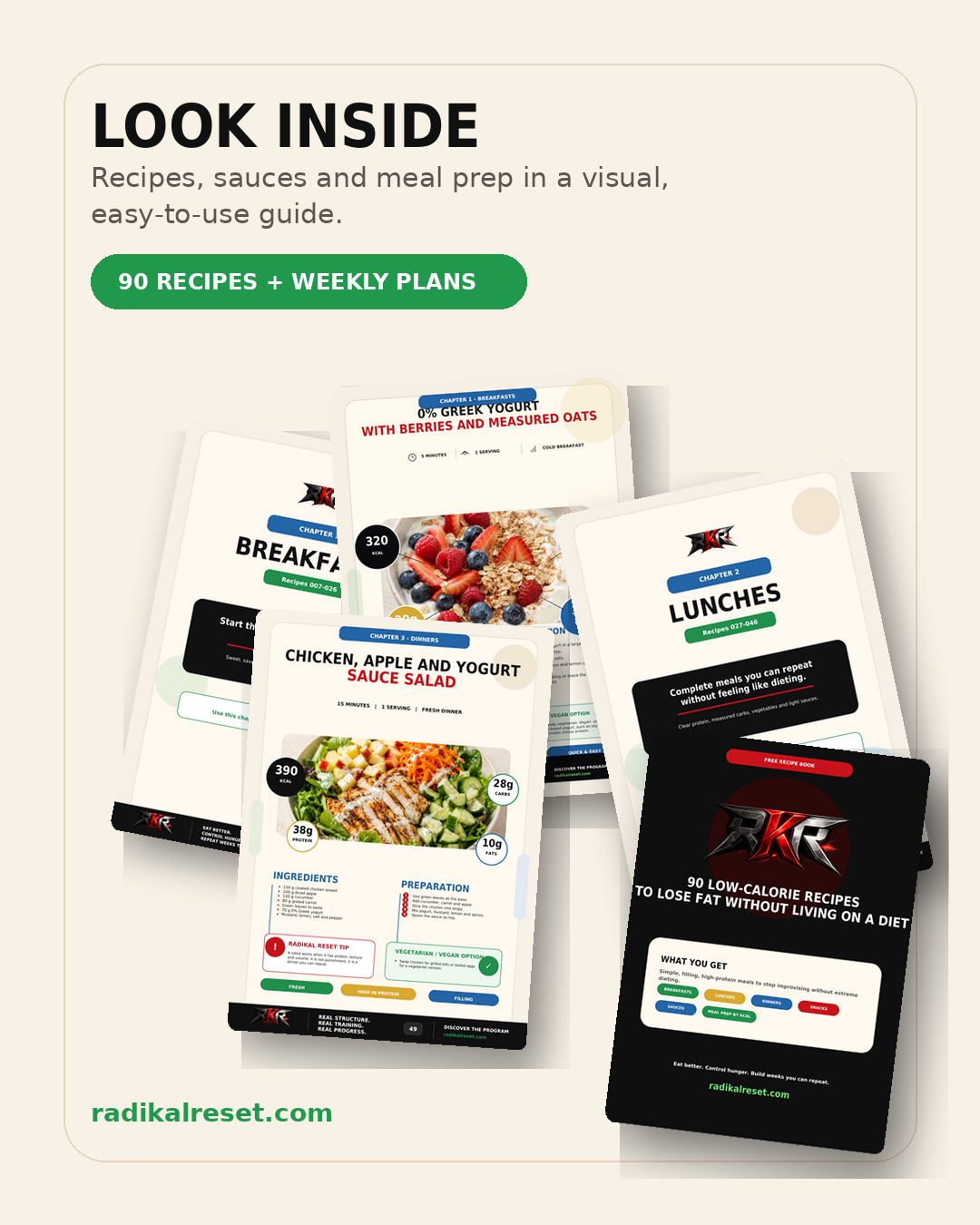
Radikal Reset Recipe Book: 90 low-calorie recipes to lose fat without living on a diet.
A free recipe book built to help you eat lighter, organize your meals and reduce food chaos without extreme dieting, boring meals or unrealistic plans.
Losing fat does not depend on finding the perfect recipe, eating sad salads every day or removing every food you enjoy. It depends on repeating meals that help you control calories, manage hunger and make better decisions during the week.
That is why we created the Radikal Reset Recipe Book: a free resource with 90 low-calorie recipes, meal prep systems, lighter sauces and practical substitutions so eating better becomes simpler, more flexible and less dependent on motivation.
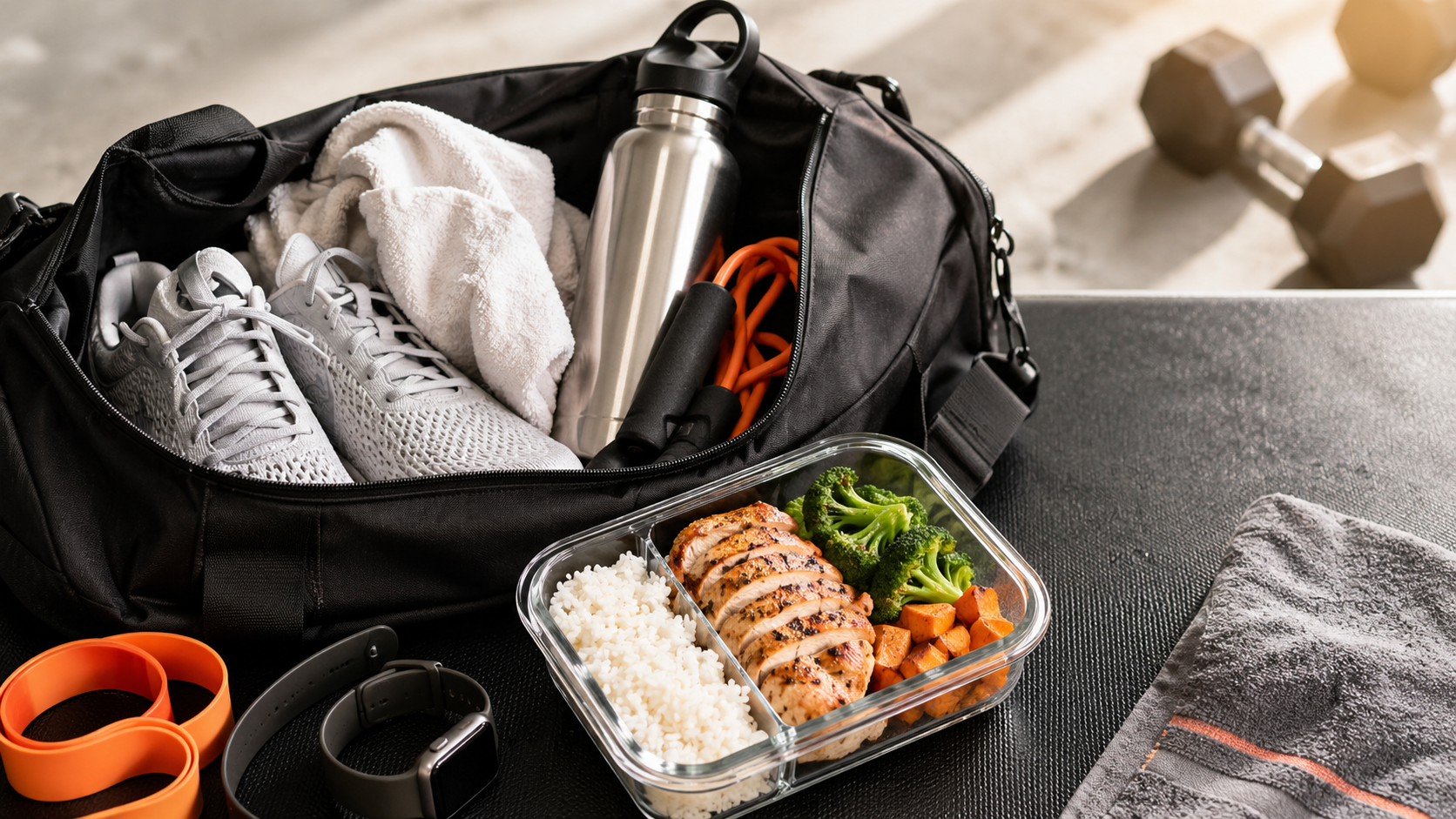
Training opens the drain. Nutrition controls the tap.
Training helps you burn energy, maintain muscle, improve fitness and build routine. But if nutrition becomes chaotic every week, fat loss becomes much harder. This recipe book is designed to help with that side of the process: controlling the tap without living on a diet.
What is inside the Radikal Reset Recipe Book?
This is not an extreme fitness recipe PDF. It is a practical guide for people who want to eat better, control hunger and reduce weekly improvisation without making every meal feel like a problem.
Low-calorie breakfasts
Simple, filling, protein-focused options to start the day with more structure.
Complete lunches
Meals for work, meal prep or main dishes with protein, volume and measured carbohydrates.
Light and filling dinners
Dinner ideas designed to help you finish the day in control without feeling punished.
Fit snacks and desserts
Sweet, practical options to manage cravings without turning them into a full loss of control.
Healthy sauces and dressings
Lighter sauces that make meals easier to repeat without silently pushing calories too high.
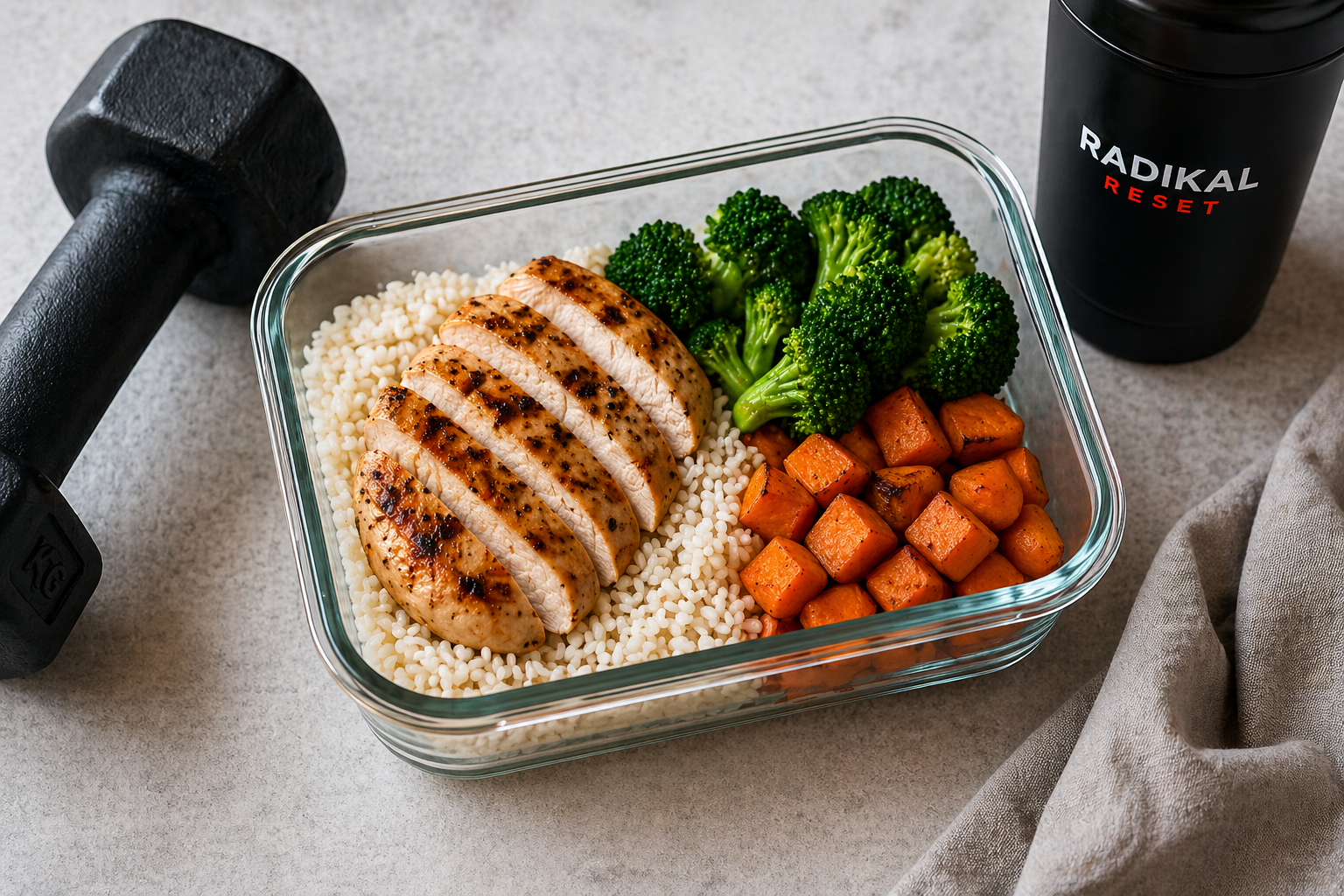
Weekly meal prep
Predesigned weekly systems based on goals and calories so you do not have to rebuild everything from scratch.
Download the free Radikal Reset Recipe Book and start eating lighter without living on a diet.
You will get the complete recipe book with breakfasts, lunches, dinners, snacks, sauces, weekly meal prep systems, a smart shopping list and calorie-adjustment substitutions.
Get the free recipe bookWho is this recipe book for?
This recipe book can help you if you know you need to eat better, but struggle with planning, repeating useful meals or finding options that do not feel like a boring diet.
Having base recipes reduces the number of decisions you need to make during the week.
The recipes prioritize protein, volume, vegetables, measured carbs and more filling meals.
The idea is not to eat perfectly. It is to have repeatable options so you do not depend on Monday motivation.
You do not need sad meals. You need meals that fit the goal and are easy enough to repeat.
How to use the recipe book without overcomplicating it
You do not need to cook all 90 recipes or change your entire diet overnight. The smartest way to use it is as a bank of repeatable options.
- Choose 2 breakfasts you can repeat.
- Choose 2 complete lunches for the week.
- Choose 2 light and filling dinners.
- Keep 1 or 2 fit snacks or desserts for difficult moments.
- Use lighter sauces to make meals more enjoyable.
- Repeat what works before chasing endless variety.
Meal prep without trying to be perfect
The meal prep chapter is not designed to make you eat the same boring food all week. It is designed to give you a prepared base so every meal does not start from zero.
For more controlled phases with tighter calories and more measured meals.
For a more manageable fat-loss phase with more flexibility and better adherence.
For people who train or move more and need more energy during the week.
For maintaining results, eating better and staying active without an aggressive deficit.
For strength or controlled gain phases without turning nutrition into chaos.
The recipe book includes substitutions so you can adjust calories without starting over.
One of the most useful parts of the recipe book is that you do not have to rebuild your entire menu every time you need to move calories up or down. You can adjust carbs, fats, portions or specific ingredients while keeping the structure of the meal.
What makes this different from an extreme diet?
It gives you tools to eat better, but progress still depends on consistency, context and your overall habits.
The idea is to control portions, improve choices and repeat useful meals, not live afraid of food.
If one day is not perfect, you return at the next meal. You do not need to wait for Monday.
Work, hunger, tiredness, low time, cravings and social life are part of the process.
Eating better helps. But it is not the whole structure.
This recipe book can help you organize nutrition, reduce decisions and build more filling meals. But if you want to change your body, training, progression, daily movement and the way you handle imperfect weeks also matter.
That is where Radikal Reset comes in: the complete 8-week program that combines training, simple nutrition, habits and weekly structure so you can stop improvising.
Related guides
Continue with these guides if you want to make nutrition and training easier to repeat:
Download the free Radikal Reset Recipe Book.
90 low-calorie recipes, breakfasts, lunches, dinners, snacks, sauces, weekly meal prep systems, a smart shopping list and substitutions to adjust calories without living on a diet.