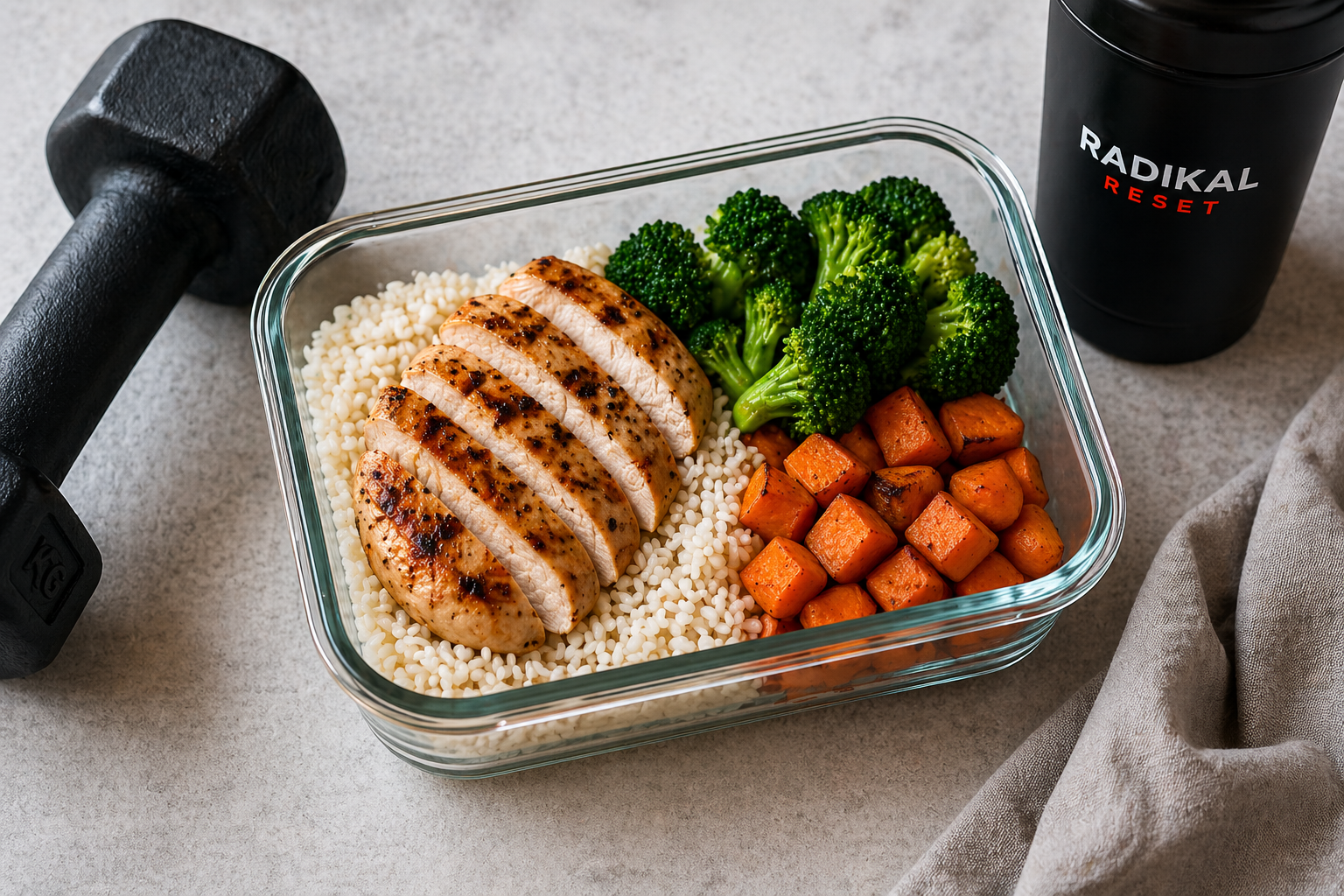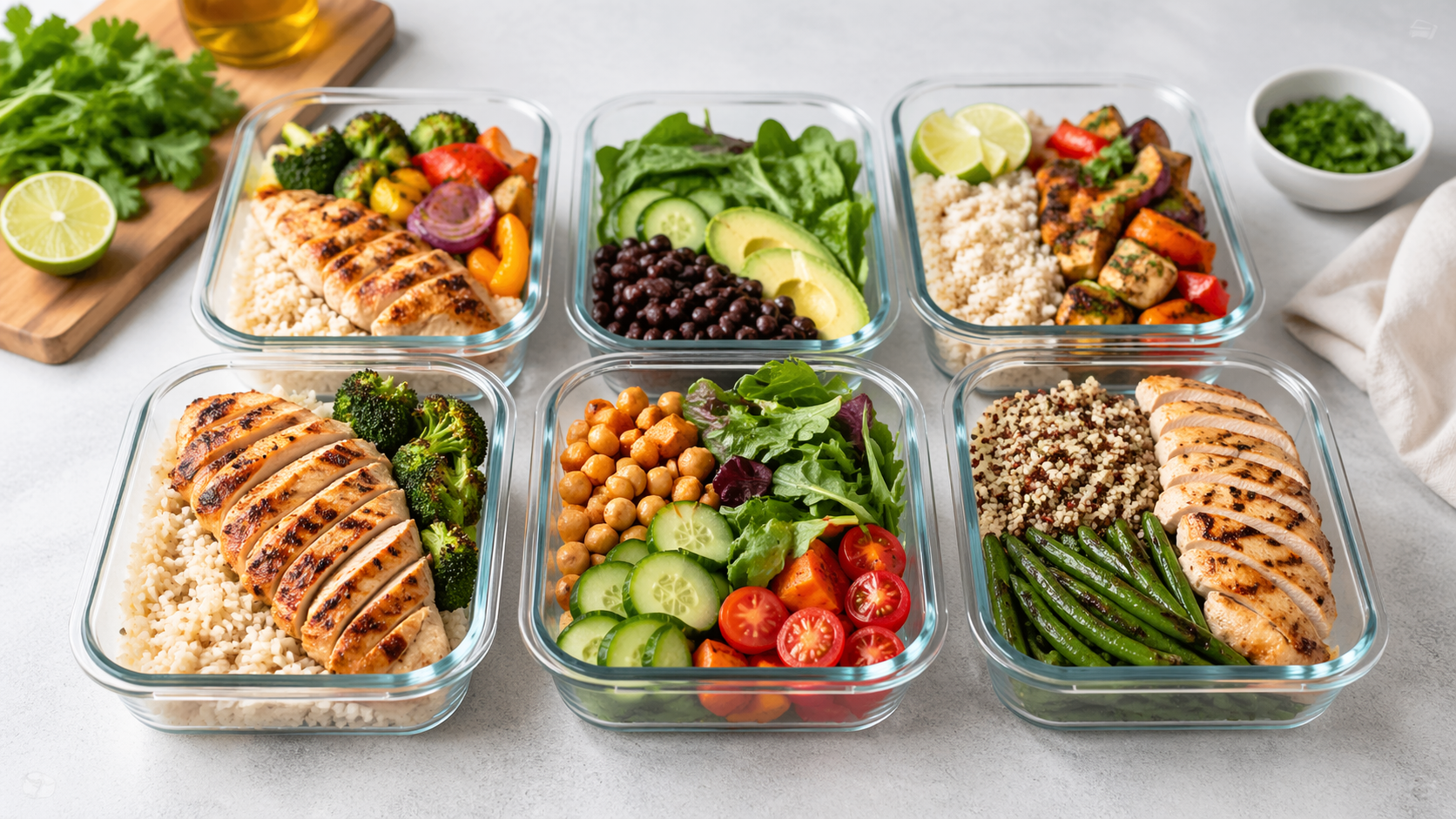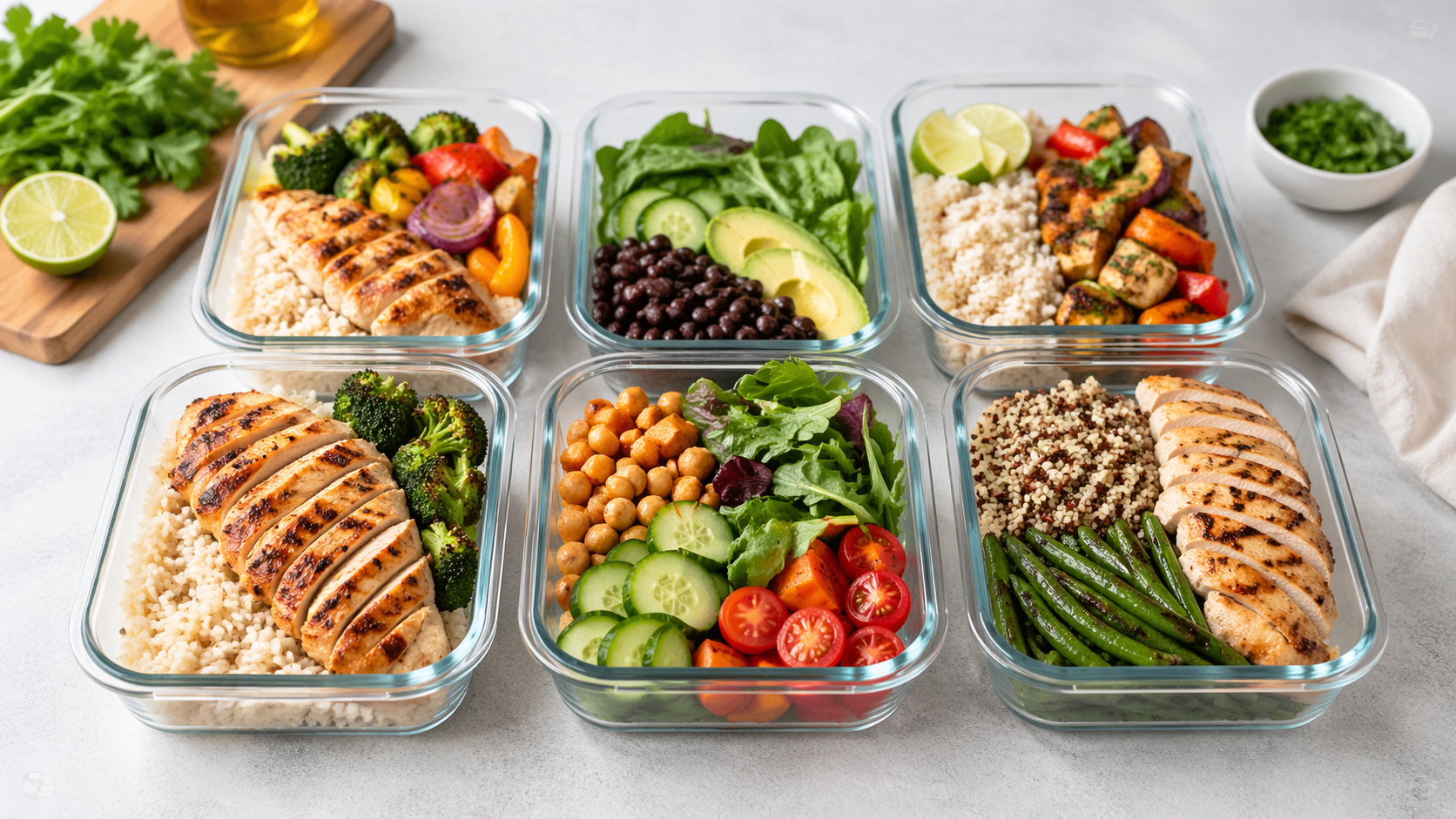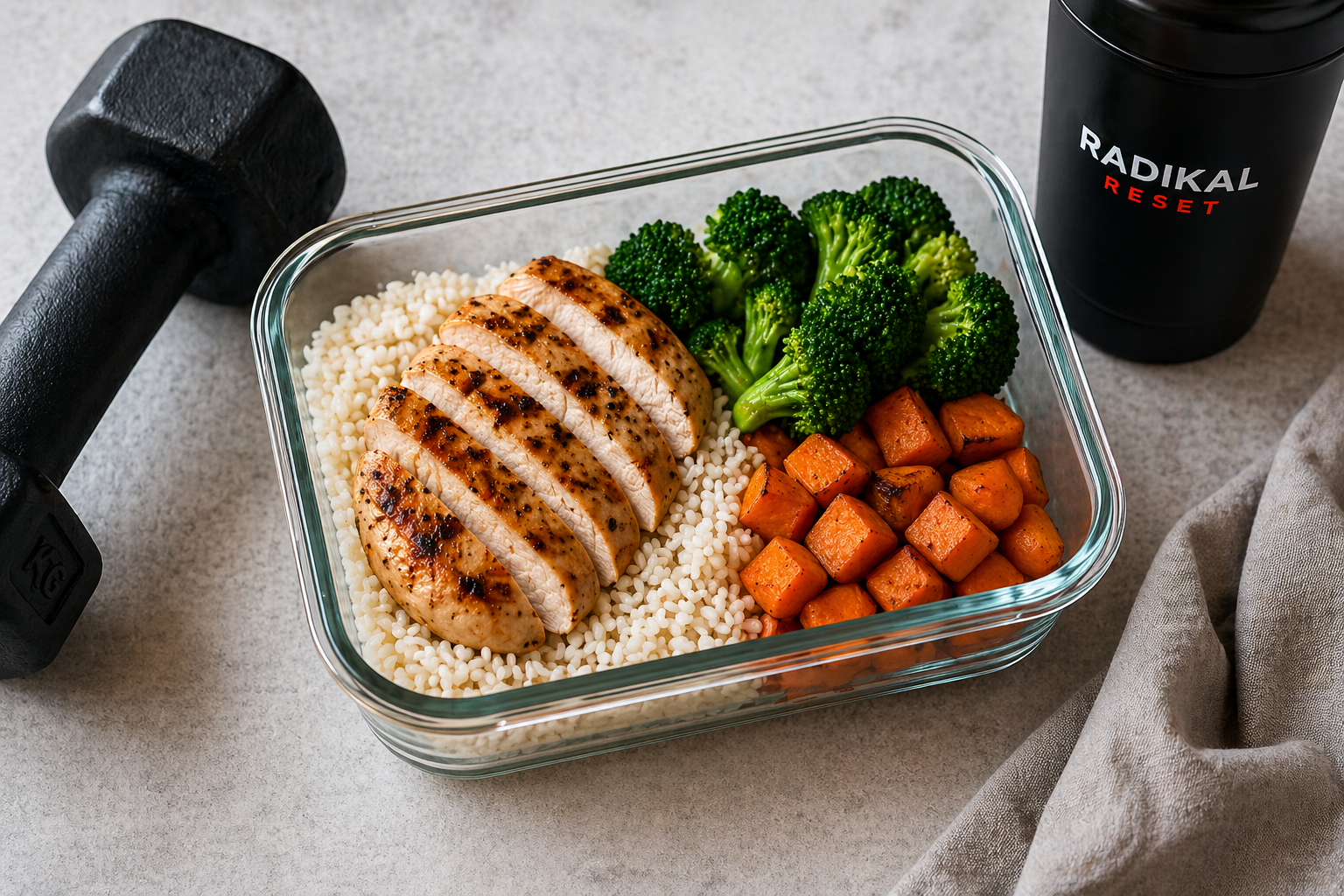
• Meal prep containers with chicken, rice, vegetables and legumes prepared for several days

    Meal Prep for Fat Loss

    Meal prep is not mandatory, but for many people it can make a huge difference. When meals are prepared, or at least partially solved, you reduce impulsive decisions, save time, and make it much easier to eat in a way that matches your goal.

    That matters even more when you want to lose fat. Not because meal prep is magical, but because it usually helps you control portions better, repeat reasonable decisions, and stop each meal from depending on whatever feels easiest in the moment.

    Quick answer

    Good meal prep for fat loss does not mean cooking twenty perfect containers. It means having several meals or meal bases ready in advance so that eating better during the week requires less effort, less improvisation, and fewer impulsive choices.

    Why meal prep helps so much when you want to lose fat

    Many people do not struggle because they do not know what they should eat. They struggle because work, fatigue, timing, and hunger make every meal feel like a last-minute decision. Meal prep reduces that problem at the root.

    Saves time

    Cooking properly once or twice is often easier than improvising seven rushed meals.

    Improves decisions

    When food is already partly solved, it is much less likely that you end up ordering random meals or overeating.

    Builds consistency

    Fat loss improves when your decisions become repeatable, not when every day depends on fresh motivation.

    How to meal prep for fat loss without overcomplicating your life

    The best strategy is usually not to cook fully closed meals for the whole week, but to prepare versatile components you can combine in different ways. That gives you flexibility and reduces the feeling of eating exactly the same thing every day.

    1. Pick 2 main protein sources

    For example: chicken and turkey, or chicken and salmon, or tofu and legumes if you prefer plant-based meals. The goal is to have a protein base that can support several meals.

    2. Prepare 1 or 2 simple carbs

    Rice, potatoes, sweet potatoes, quinoa, or pasta. You do not need five options. One or two, cooked well, already solve a lot.

    3. Add vegetables that are easy to use

    Broccoli, carrots, zucchini, green beans, washed salad greens, tomatoes, or roasted peppers. The goal is volume, fullness, and practicality.

    4. Use combinations, not rigid recipes

    If you have chicken, rice, vegetables, and a simple sauce, you already have the base for several different meals without cooking from scratch every time.

    Simple meal prep example for 3 or 4 days

    Proteins

    Grilled chicken breast + sautéed turkey

    Carbs

    Cooked rice + roasted sweet potato

    Vegetables

    Steamed broccoli + roasted peppers + salad mix

    Possible combinations

    Chicken with rice and broccoli, turkey with sweet potato and salad, rice with chicken and peppers, salad with turkey and sweet potato.

    Common meal prep mistakes

    • Trying to do too much and turning it into an exhausting session.
    • Preparing only closed meals and getting bored by day two.
    • Not cooking enough and running short halfway through the week.
    • Choosing meals that are not filling enough and then snacking later.
    • Thinking everything must be perfect, when useful is what really matters.

    Meal prep does not mean eating boring food

    It means making decisions earlier. Done well, it does not make you eat worse. It helps you eat with less friction. And that reduction in friction is one of the most underrated advantages when someone wants to lose fat without feeling constantly drained by food decisions.

    In the end, it is not about cooking more. It is about deciding better when it makes sense to cook and what is worth leaving prepared.

    Frequently asked questions

    How many days should I prep for?

    For most people, preparing 3 or 4 days already creates a big improvement without becoming too heavy.

    Is it better to prep full meals or meal bases?

    Versatile bases usually work better because they allow more combinations and less repetition fatigue.

    Does meal prep help if I still eat out some days?

    Yes. You do not need to cover the whole week. Even having two or three meals ready can help a lot.

    You may also find useful

    Next step

    Fat loss usually feels easier when your week is better planned

    If you want to organize your meals, training, and habits better without turning everything into hard work, Radikal Reset is built around exactly that idea: less chaos, more structure, and better decisions repeated over time.

    See Radikal Reset
  • Recipientes de meal prep con pollo, arroz, verduras y legumbres preparados para varios días

    Meal prep para perder grasa

    El meal prep no es obligatorio, pero para muchas personas puede marcar una diferencia enorme. Cuando tienes comidas preparadas o al menos parcialmente resueltas, reduces decisiones impulsivas, ahorras tiempo y haces mucho más fácil mantener una alimentación coherente con tu objetivo.

    Y eso importa especialmente cuando quieres perder grasa. No porque preparar tuppers tenga nada mágico, sino porque suele ayudarte a controlar mejor las porciones, repetir decisiones razonables y evitar que cada comida dependa de lo que te apetezca en ese momento.

    Respuesta rápida

    Un buen meal prep para perder grasa no consiste en cocinar veinte recipientes perfectos. Consiste en dejar resueltas varias comidas o bases de comida para que comer mejor durante la semana requiera menos esfuerzo, menos improvisación y menos decisiones impulsivas.

    Por qué el meal prep ayuda tanto cuando quieres perder grasa

    Muchas personas no fallan porque no sepan qué deberían comer. Fallan porque, entre trabajo, cansancio, horarios y hambre, terminan resolviendo cada comida con lo primero que tienen a mano. El meal prep reduce ese problema de raíz.

    Ahorra tiempo

    Cocinar una o dos veces bien suele ser más fácil que improvisar siete veces deprisa y mal.

    Mejora decisiones

    Cuando la comida ya está medio resuelta, es menos probable acabar pidiendo cualquier cosa o picando de más.

    Da continuidad

    La pérdida de grasa mejora cuando tus decisiones se vuelven repetibles, no cuando cada día depende de motivación nueva.

    Cómo hacer meal prep para perder grasa sin complicarte la vida

    La mejor estrategia no suele ser cocinar platos cerrados para toda la semana, sino preparar piezas versátiles que puedas combinar. Así tienes más flexibilidad y menos sensación de estar comiendo siempre exactamente lo mismo.

    1. Elige 2 proteínas principales

    Por ejemplo: pollo y pavo, o pollo y salmón, o tofu y legumbres si prefieres opciones vegetales. La idea es tener una base fácil de repartir entre varias comidas.

    2. Prepara 1 o 2 carbohidratos simples

    Arroz, patata, boniato, quinoa o pasta. No necesitas cinco opciones. Con una o dos, bien cocinadas, ya tienes muchísimo resuelto.

    3. Añade verduras fáciles de usar

    Brócoli, zanahoria, calabacín, judías verdes, ensalada lavada, tomate o pimientos asados. El objetivo es volumen, saciedad y facilidad.

    4. Usa combinaciones, no recetas fijas

    Si tienes pollo, arroz, verduras y una salsa simple, ya puedes montar varias comidas distintas sin cocinar desde cero cada vez.

    Ejemplo simple de meal prep para 3 o 4 días

    Proteínas

    Pechuga de pollo a la plancha + pavo salteado

    Carbohidratos

    Arroz cocido + boniato asado

    Verduras

    Brócoli al vapor + pimientos asados + mezcla de ensalada

    Combinaciones posibles

    Pollo con arroz y brócoli, pavo con boniato y ensalada, arroz con pollo y pimientos, ensalada con pavo y boniato.

    Errores comunes al hacer meal prep

    • Querer hacer demasiado y convertirlo en una sesión agotadora.
    • Preparar solo platos cerrados y cansarte de ellos al segundo día.
    • No cocinar lo suficiente y quedarte corto a mitad de semana.
    • Elegir comidas poco saciantes que luego te empujan a picar.
    • Pensar que todo tiene que ser perfecto, cuando lo útil es que sea funcional.

    Meal prep no significa comer aburrido

    Significa dejar decisiones adelantadas. Si lo haces bien, no comes peor: comes con menos fricción. Y esa reducción de fricción suele ser una de las claves más infravaloradas cuando alguien quiere perder grasa sin vivir constantemente agotado por la comida.

    Al final, no se trata de cocinar más. Se trata de decidir mejor cuándo te conviene cocinar y qué te interesa dejar resuelto.

    Preguntas frecuentes

    ¿Cuántos días debería preparar?

    Para la mayoría de personas, preparar 3 o 4 días ya marca una diferencia enorme sin hacerlo demasiado pesado.

    ¿Es mejor hacer platos completos o bases?

    Normalmente, las bases versátiles funcionan mejor porque permiten más combinaciones y menos sensación de repetición.

    ¿Meal prep sirve si como fuera algunos días?

    Sí. No hace falta cubrir toda la semana. Incluso dejar dos o tres comidas resueltas ya puede ayudarte mucho.

    También te puede ayudar

    Siguiente paso

    Perder grasa suele ser más fácil cuando tu semana está mejor pensada

    Si te interesa ordenar mejor tus comidas, tu entrenamiento y tus hábitos sin complicarte más de la cuenta, Radikal Reset está planteado justo alrededor de esa idea: menos caos, más estructura y mejores decisiones sostenidas en el tiempo.

    Ver Radikal Reset
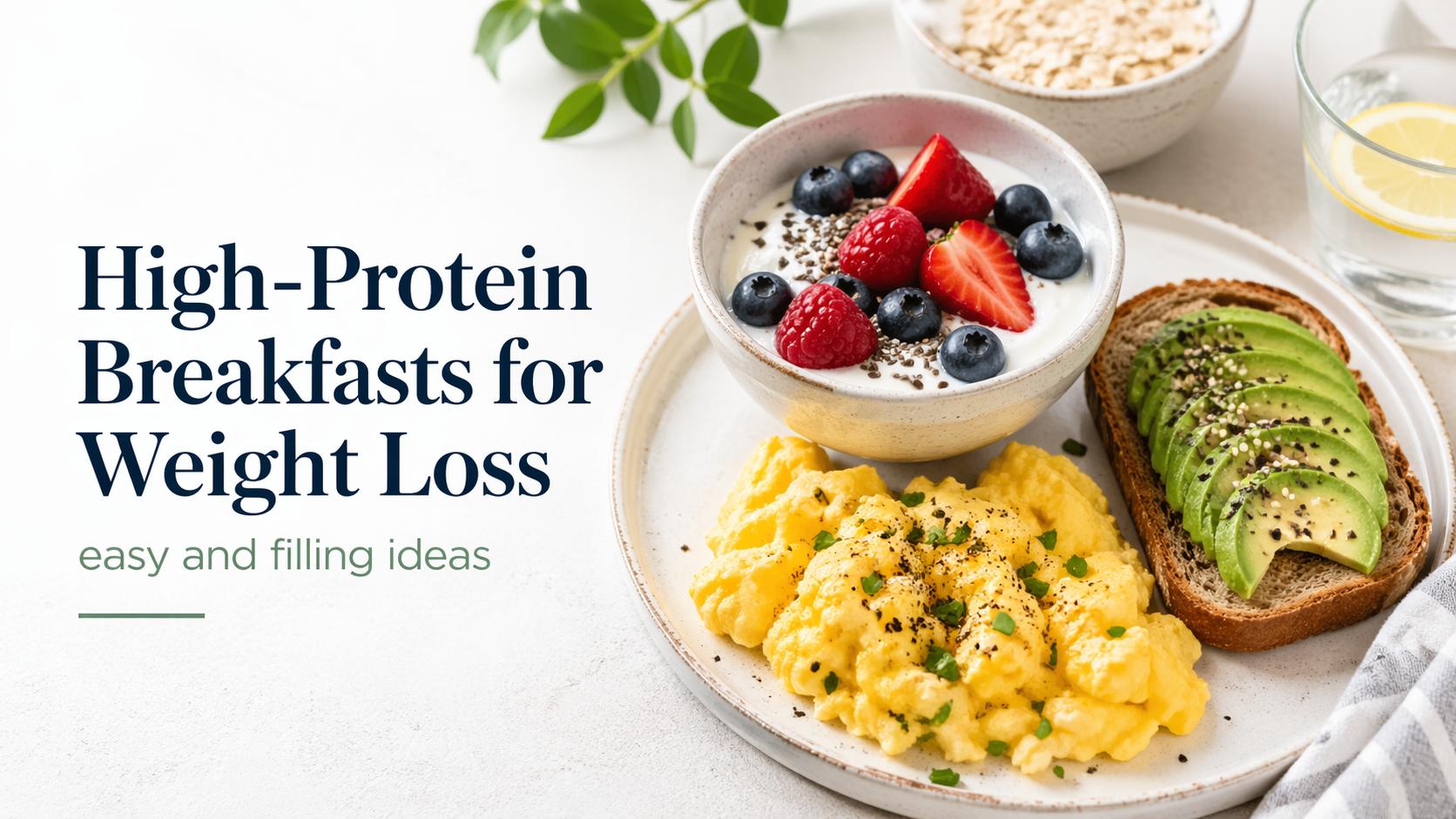
  • Scrambled eggs with avocado toast and a yogurt bowl with berries for a high-protein breakfast

    High-Protein Breakfasts for Weight Loss

    Breakfast is not mandatory for fat loss, but for many people it can be a very useful tool. Especially when it prevents extreme hunger later in the day, improves structure, and reduces impulsive snacking.

    In that context, high-protein breakfasts often work especially well. Not because they are magical, but because they tend to be more filling, more stable, and easier to fit into a realistic fat loss process.

    Quick answer

    A good high-protein breakfast for weight loss should help you start the day feeling fuller, provide around 25 to 40 grams of protein, and be simple enough to repeat without needing extra motivation every morning.

    Note: calories and protein values are approximate. They may vary depending on brands, exact quantities, and preparation methods.

    Why a high-protein breakfast can help

    When breakfast leaves you satisfied, the rest of the day often becomes easier to manage. That does not mean everything depends on the first meal, but a well-built breakfast can give you a more stable base for better decisions later.

    More fullness

    Protein helps breakfast feel more satisfying and can make the next meal easier to reach without excessive hunger.

    Less improvisation

    Having 3 or 4 solved breakfasts reduces daily chaos more than people think.

    Better consistency

    When the day starts with a useful and repeatable meal, the process often feels easier to sustain.

    8 high-protein breakfasts for weight loss

    These ideas are built for real life: limited time, limited mental space, and the need to solve breakfast in a useful way.

    1. Greek yogurt with berries, oats, and seeds

    Very practical, quick, and easy to repeat. It works especially well if you do not want a heavy breakfast but still need fullness.

    Approx. calories: 320–390 kcal · Protein: 24–32 g

    2. Scrambled eggs with wholegrain toast and avocado

    A complete, filling breakfast with a real-meal feel. Very useful if you know your morning tends to feel long.

    Approx. calories: 350–430 kcal · Protein: 22–30 g

    3. Whipped fresh cheese with banana and cinnamon

    Very simple and convenient if you want something quick, fresh, and naturally high in protein.

    Approx. calories: 280–350 kcal · Protein: 25–32 g

    4. Oat, egg-white, and yogurt pancakes

    A good option if you want something a bit more elaborate while still being realistic enough to repeat during the week.

    Approx. calories: 360–430 kcal · Protein: 28–36 g

    5. Protein shake with yogurt, fruit, and oats

    Very useful for busy mornings or when you need breakfast to be portable.

    Approx. calories: 300–380 kcal · Protein: 30–40 g

    6. Wholegrain turkey and fresh cheese sandwich

    Very practical for people who prefer a savory breakfast and do not want long preparation.

    Approx. calories: 320–400 kcal · Protein: 25–33 g

    7. Chia pudding with yogurt and protein powder

    A strong option if you want breakfast ready from the night before and even less morning improvisation.

    Approx. calories: 300–370 kcal · Protein: 25–35 g

    8. Wholegrain toast with smoked salmon and light cream cheese

    A simple and filling breakfast that fits well if you prefer to start the day with something savory.

    Approx. calories: 330–410 kcal · Protein: 24–30 g

    Common breakfast mistakes

    • Eating too little and arriving at lunch with uncontrolled hunger.
    • Choosing fast but low-protein options, such as pastries or sugary cereals.
    • Making mornings too complicated with breakfast ideas that are not realistic to sustain.
    • Not repeating breakfasts that work because you think variety matters more than consistency.

    The key is not to build a “perfect” breakfast

    The key is whether breakfast helps you. If it leaves you more organized, less hungry, and with one useful decision already made early in the day, it is probably doing its job.

    In many cases, what changes results most is not finding the ideal breakfast, but stopping the daily improvisation.

    Frequently asked questions

    Is breakfast necessary for weight loss?

    No. But for many people it can still be useful if it improves structure and helps them eat better later.

    How much protein should breakfast include?

    It depends on the wider context, but many useful breakfasts land between 25 and 40 grams of protein.

    Can I repeat the same breakfast on multiple days?

    Yes. If a breakfast works well for you, repeating it is often one of the best ways to reduce chaos and improve consistency.

    You may also find useful

    Next step

    A better breakfast helps. A better structure helps much more.

    If you want to organize your meals better and stop depending on improvised choices, Radikal Reset is built around exactly that: turning good intentions into a clearer and more sustainable structure.

    See Radikal Reset
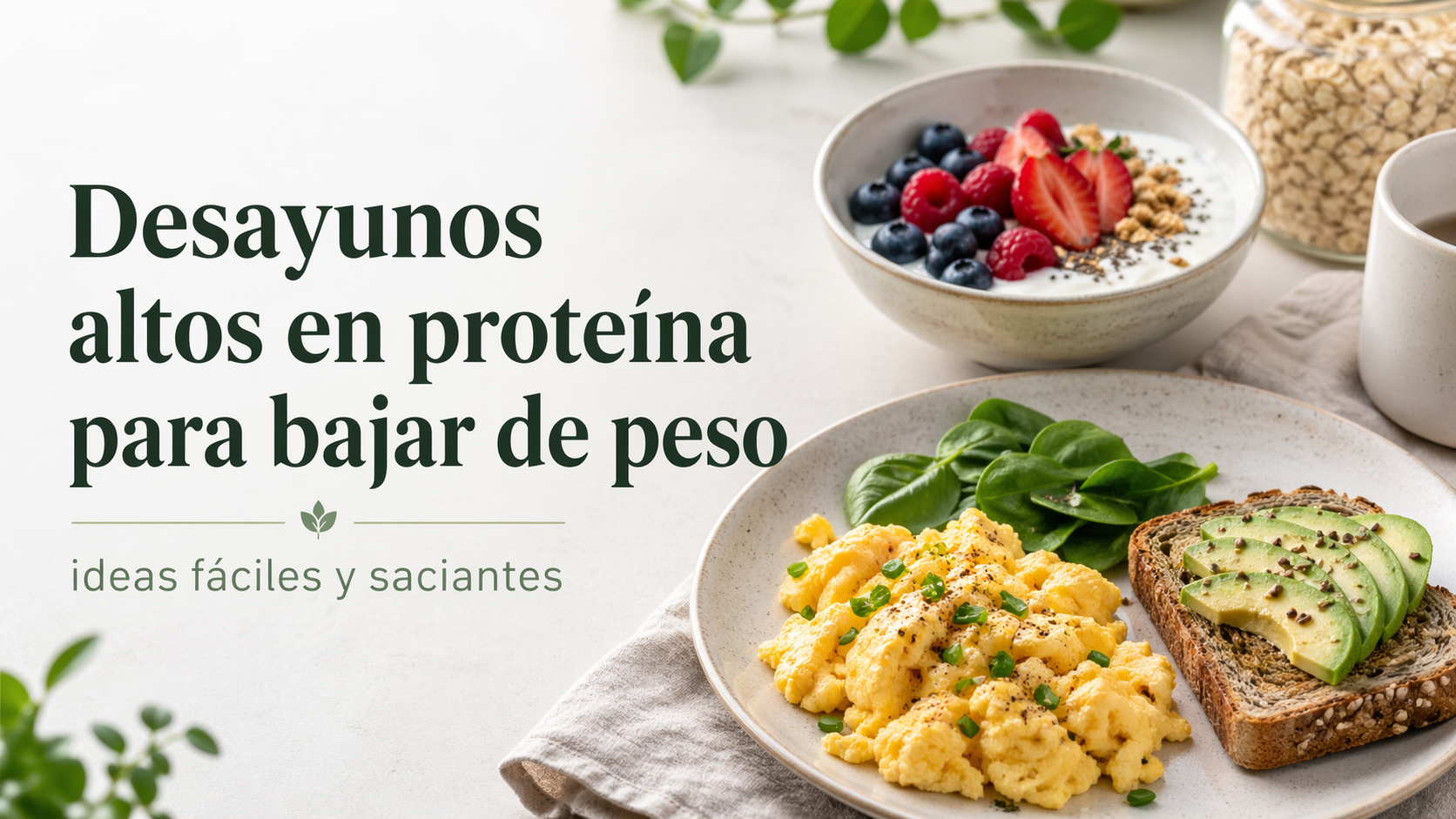
  • Huevos revueltos con tostada de aguacate y bol de yogur con frutos rojos para desayuno alto en proteína

    Desayunos altos en proteína para bajar de peso

    El desayuno no es obligatorio para perder grasa, pero para muchas personas sí puede ser una herramienta muy útil. Sobre todo cuando evita llegar al mediodía con hambre excesiva, mejora la organización del día y reduce el picoteo impulsivo.

    En ese contexto, los desayunos altos en proteína suelen funcionar especialmente bien. No porque tengan nada mágico, sino porque tienden a ser más saciantes, más estables y más fáciles de encajar dentro de un proceso de pérdida de grasa razonable.

    Respuesta rápida

    Un buen desayuno alto en proteína para bajar de peso debería ayudarte a empezar el día con más saciedad, aportar aproximadamente 25 a 40 gramos de proteína y ser lo bastante simple como para repetirlo sin depender de motivación extra cada mañana.

    Nota: las calorías y proteínas indicadas son aproximadas. Pueden variar según marcas, cantidades exactas y forma de preparación.

    Por qué un desayuno alto en proteína puede ayudarte

    Cuando el desayuno te deja satisfecho, el resto del día suele ser más fácil de gestionar. Esto no significa que todo dependa de la primera comida, pero sí que un desayuno bien planteado puede darte una base más estable para comer con más criterio después.

    Más saciedad

    La proteína ayuda a que el desayuno no se quede corto y a que llegues mejor a la siguiente comida.

    Menos improvisación

    Tener 3 o 4 desayunos resueltos reduce muchísimo el caos diario.

    Mejor adherencia

    Cuando el día empieza con una comida útil y repetible, sostener el proceso suele ser más fácil.

    8 desayunos altos en proteína para bajar de peso

    Estas ideas están pensadas para la vida real: poco tiempo, poco margen mental y necesidad de resolver bien la primera comida del día.

    1. Yogur griego natural con frutos rojos, avena y semillas

    Muy práctico, rápido y fácil de repetir. Funciona especialmente bien si te cuesta desayunar algo pesado pero necesitas saciedad.

    Kcal aproximadas: 320–390 kcal · Proteína: 24–32 g

    2. Huevos revueltos con tostada integral y aguacate

    Un desayuno completo, muy saciante y con sensación de comida real. Muy útil si sabes que la mañana se te hace larga.

    Kcal aproximadas: 350–430 kcal · Proteína: 22–30 g

    3. Queso fresco batido con plátano y canela

    Muy simple y cómodo para quienes quieren algo rápido, fresco y con buena cantidad de proteína.

    Kcal aproximadas: 280–350 kcal · Proteína: 25–32 g

    4. Tortitas de avena, claras y yogur

    Buena opción si quieres un desayuno algo más elaborado, pero todavía bastante fácil de repetir varios días por semana.

    Kcal aproximadas: 360–430 kcal · Proteína: 28–36 g

    5. Batido de proteína con yogur, fruta y copos de avena

    Muy útil para mañanas con poco tiempo o cuando necesitas desayunar algo transportable.

    Kcal aproximadas: 300–380 kcal · Proteína: 30–40 g

    6. Sándwich integral de pavo y queso fresco

    Muy práctico para quienes prefieren algo salado y no quieren complicarse con preparaciones largas.

    Kcal aproximadas: 320–400 kcal · Proteína: 25–33 g

    7. Pudín de chía con yogur y proteína en polvo

    Buena opción si quieres dejar el desayuno hecho desde la noche anterior y reducir todavía más la improvisación.

    Kcal aproximadas: 300–370 kcal · Proteína: 25–35 g

    8. Tostada integral con salmón ahumado y queso crema ligero

    Un desayuno sencillo, saciante y muy fácil de encajar si te gusta empezar el día con algo salado.

    Kcal aproximadas: 330–410 kcal · Proteína: 24–30 g

    Errores comunes con el desayuno

    • Desayunar muy poco y llegar al mediodía con hambre descontrolada.
    • Elegir opciones rápidas pero pobres en proteína, como bollería o cereales azucarados.
    • Complicar demasiado la mañana con recetas poco realistas para el día a día.
    • No repetir desayunos que funcionan por pensar que siempre hay que variar.

    La clave no es desayunar “perfecto”

    La clave es que el desayuno te ayude. Si te deja mejor organizado, con menos hambre y con una decisión razonable ya tomada desde primera hora, probablemente está haciendo su trabajo.

    En muchos casos, lo que más cambia el resultado no es encontrar el desayuno ideal, sino dejar de improvisar cada mañana.

    Preguntas frecuentes

    ¿Es obligatorio desayunar para bajar de peso?

    No. Pero para muchas personas sí puede ser útil si mejora la organización del día y evita comer peor después.

    ¿Cuánta proteína debería tener un desayuno?

    Depende del contexto general, pero muchos desayunos útiles suelen moverse entre 25 y 40 gramos de proteína.

    ¿Puedo repetir el mismo desayuno varios días?

    Sí. Si un desayuno te funciona, repetirlo suele ser una forma muy buena de reducir caos y mejorar adherencia.

    También te puede ayudar

    Siguiente paso

    Un buen desayuno ayuda. Una buena estructura ayuda mucho más.

    Si quieres ordenar mejor tus comidas y dejar de depender de decisiones improvisadas, Radikal Reset está orientado precisamente a eso: convertir buenas intenciones en una estructura más clara y más sostenible.

    Ver Radikal Reset
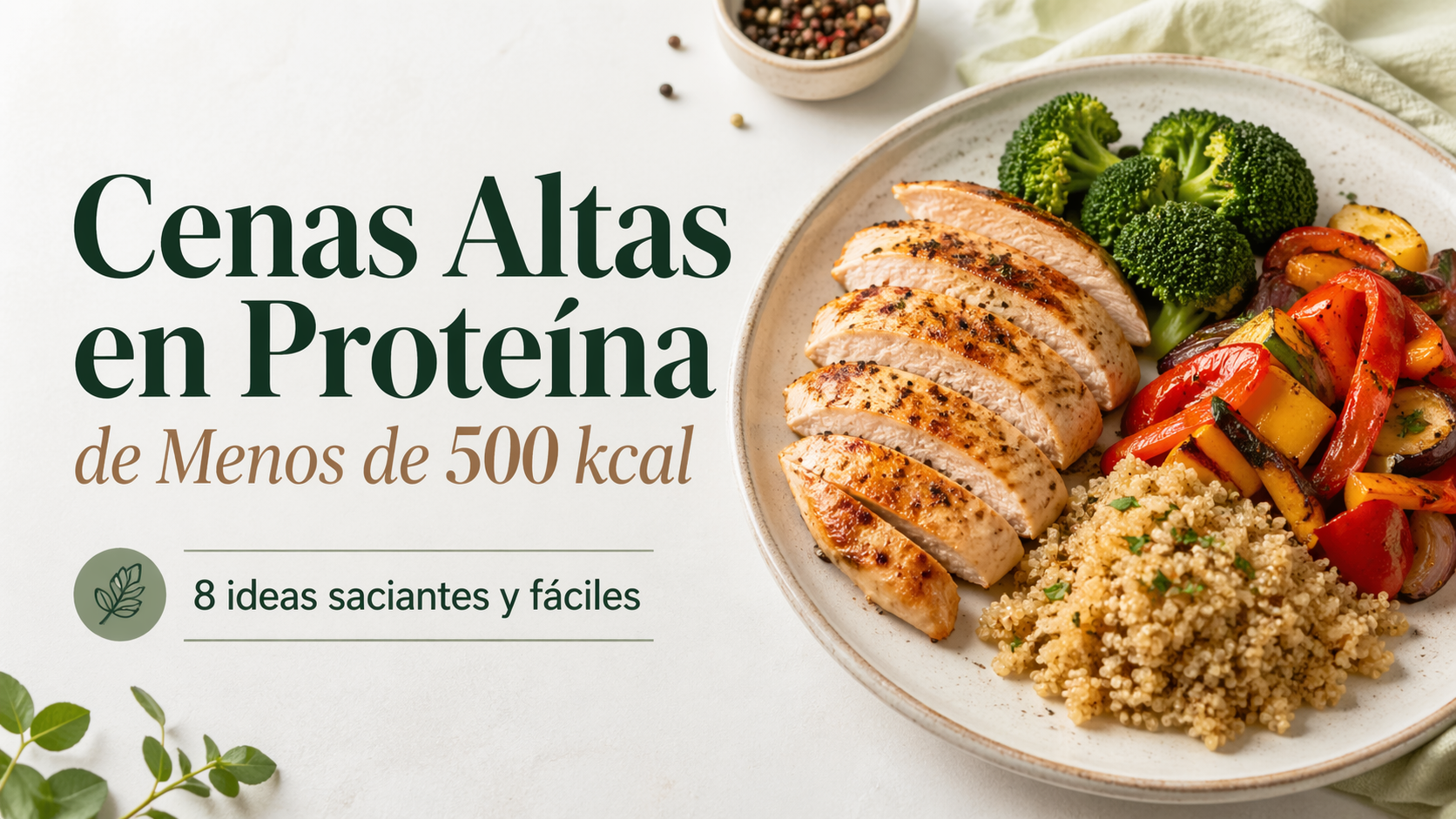
  • Pechuga de pollo con vegetales

    Cenas altas en proteína de menos de 500 kcal

    Si estás intentando perder grasa, una de las mejores formas de hacerlo más llevadero es dejar de pensar que una buena cena tiene que ser pequeña, triste o insuficiente. En realidad, una cena bien construida suele funcionar mejor cuando combina proteína suficiente, volumen y sencillez.

    Por eso las cenas altas en proteína de menos de 500 kcal son tan útiles: te ayudan a terminar el día con saciedad, favorecen la adherencia y reducen la sensación de estar “a dieta” todo el tiempo.

    Respuesta rápida

    Una buena cena alta en proteína de menos de 500 kcal debería aportar aproximadamente 25 a 40 gramos de proteína, ser fácil de preparar y dejarte suficientemente satisfecho como para no terminar picando después.

    Nota: las calorías y proteínas indicadas son aproximadas. Pueden variar según marcas, cantidades exactas y forma de preparación.

    Por qué estas cenas funcionan tan bien

    La proteína tiene un efecto muy útil cuando quieres mejorar tu composición corporal: ayuda a la saciedad y hace que las comidas resulten más estables. Si además la combinas con verduras, patata, arroz, yogur o legumbres en cantidades razonables, puedes conseguir cenas muy completas sin disparar las calorías.

    Saciedad

    Una cena más proteica suele ayudarte a llegar mejor al final del día y a reducir el picoteo posterior.

    Simplicidad

    Si la cena se puede repetir con facilidad, es mucho más probable que la mantengas en el tiempo.

    Control calórico

    Mantener la cena por debajo de 500 kcal puede ser útil si el resto del día también está bien estructurado.

    8 cenas altas en proteína de menos de 500 kcal

    Estas ideas están pensadas para ser prácticas. No buscan ser perfectas, sino ayudarte a resolver la cena con más criterio y menos improvisación.

    1. Pollo a la plancha con brócoli y quinoa

    Una cena muy equilibrada, saciante y fácil de repetir. El pollo aporta proteína, el brócoli volumen y la quinoa una base moderada de carbohidratos.

    Kcal aproximadas: 430–480 kcal · Proteína: 35–42 g

    2. Revuelto de claras y huevos con champiñones y tostada integral

    Muy útil si quieres una cena rápida, caliente y proteica sin complicarte demasiado.

    Kcal aproximadas: 330–410 kcal · Proteína: 28–34 g

    3. Salmón con calabacín y patata cocida

    Una opción algo más alta en grasa saludable, pero muy buena para quienes necesitan una cena que realmente sacie.

    Kcal aproximadas: 440–500 kcal · Proteína: 28–34 g

    4. Ensalada grande con atún, garbanzos y tomate

    Fresca, práctica y bastante completa si la montas bien. Muy útil en días de más calor o cuando no te apetece cocinar demasiado.

    Kcal aproximadas: 400–470 kcal · Proteína: 28–35 g

    5. Yogur griego natural con fruta, avena y proteína en polvo

    Perfecta si llegas tarde o no te apetece cocinar. Bien planteada, puede ser una cena ligera pero suficientemente satisfactoria.

    Kcal aproximadas: 350–430 kcal · Proteína: 30–40 g

    6. Pavo salteado con verduras y arroz

    Una alternativa muy práctica para quien quiere una cena contundente, pero sin pasarse con las calorías.

    Kcal aproximadas: 420–490 kcal · Proteína: 32–40 g

    7. Tofu con verduras salteadas y edamame

    Muy buena opción si prefieres una cena vegetal pero no quieres quedarte corto de proteína.

    Kcal aproximadas: 380–460 kcal · Proteína: 26–34 g

    8. Queso fresco batido con frutos rojos y nueces

    Una cena muy fácil para días con poco tiempo. Suele funcionar bien si no te gustan las cenas pesadas pero quieres terminar el día con algo más estable.

    Kcal aproximadas: 300–380 kcal · Proteína: 24–32 g

    Errores habituales con este tipo de cenas

    • Elegir cenas “ligeras” pero poco saciantes, que luego llevan a picar más.
    • Obsesionarse con las calorías y olvidar la proteína.
    • Complicar demasiado la preparación, haciendo que la cena no sea sostenible.
    • No repetir opciones útiles por pensar que siempre hay que innovar.

    La clave no es solo la cena: es la estructura

    Estas cenas pueden ayudarte mucho, pero normalmente el progreso no depende de una sola comida. Depende más bien de dejar de improvisar constantemente y empezar a repetir decisiones razonables con cierta continuidad.

    Ahí es donde muchas personas mejoran de verdad: cuando pasan de buscar “la cena perfecta” a construir una estructura más clara en su día a día.

    Preguntas frecuentes

    ¿Cuánta proteína debería tener una cena?

    Depende del contexto total del día, pero muchas cenas útiles para pérdida de grasa suelen moverse en un rango de 25 a 40 gramos de proteína.

    ¿Menos de 500 kcal siempre es mejor?

    No necesariamente. Puede ser útil, pero solo si esa cantidad encaja con el resto de tu alimentación y no te deja con demasiada hambre.

    ¿Puedo repetir las mismas cenas varios días?

    Sí. De hecho, repetir cenas que te funcionan suele ser una de las formas más simples de reducir el caos y mejorar la adherencia.

    También te puede ayudar

    Siguiente paso

    Comer mejor ayuda. Tener estructura ayuda mucho más.

    Si quieres dejar de depender de la improvisación y ordenar mejor tu proceso de cambio físico, Radikal Reset está orientado precisamente a eso: poner más claridad y más continuidad donde antes había caos.

    Ver Radikal Reset
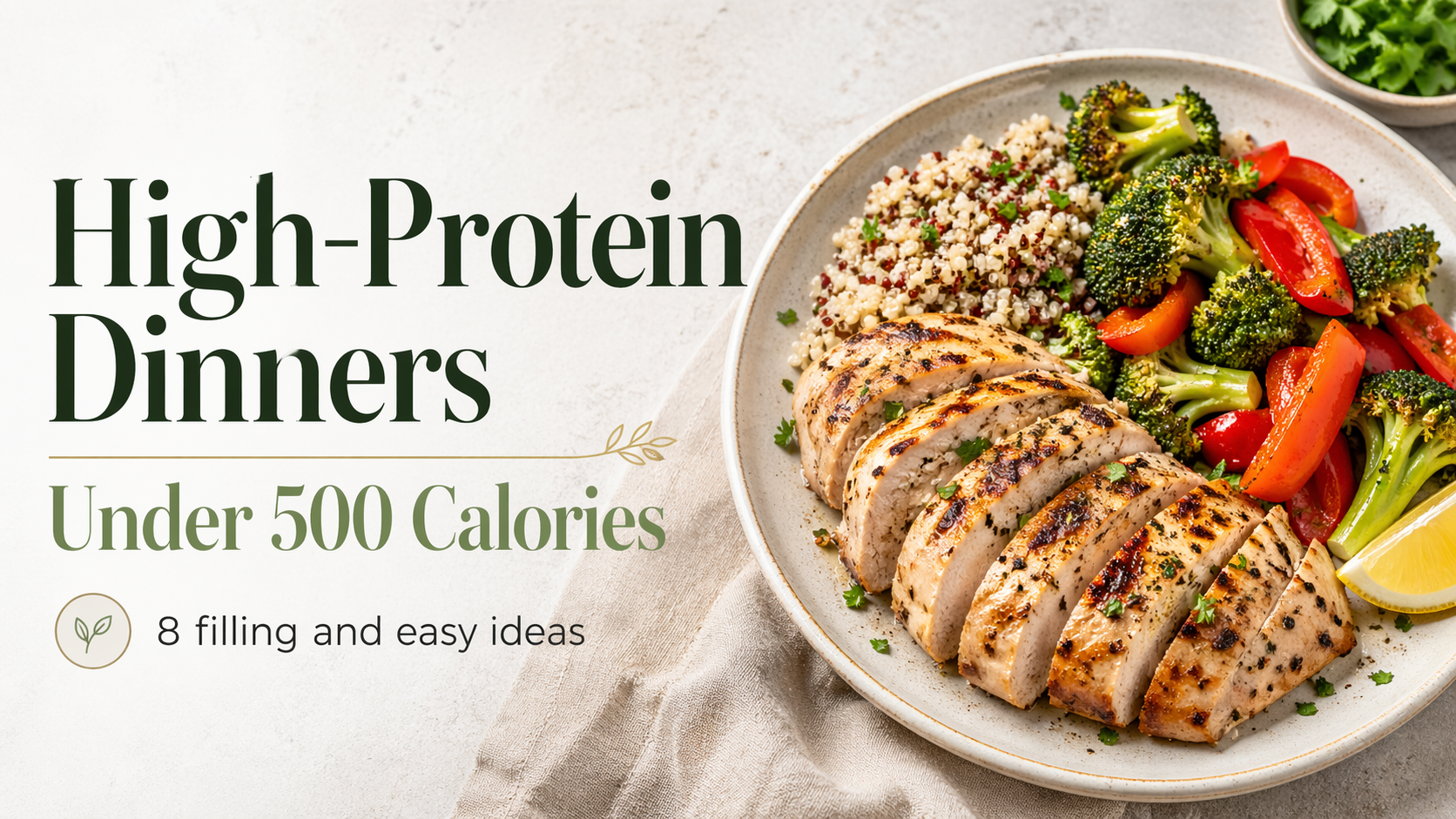
  • Chicken breast with vegetables

    High-Protein Dinners Under 500 Calories

    If you are trying to lose fat, one of the best ways to make the process easier is to stop assuming that a good dinner has to be tiny, bland, or unsatisfying. In practice, a better dinner usually combines enough protein, good food volume, and simplicity.

    That is exactly why high-protein dinners under 500 calories are so useful: they help you finish the day feeling full, improve consistency, and reduce the feeling of being “on a diet” all the time.

    Quick answer

    A good high-protein dinner under 500 calories should usually provide around 25 to 40 grams of protein, be easy to prepare, and leave you satisfied enough not to start snacking later.

    Note: calories and protein values are approximate. They may vary depending on brands, exact quantities, and preparation methods.

    Why these dinners work so well

    Protein is especially useful when you want to improve body composition: it tends to support fullness and make meals feel more stable. If you combine it with vegetables, potatoes, rice, yogurt, or legumes in reasonable portions, you can build dinners that feel complete without pushing calories too high.

    Fullness

    A higher-protein dinner often helps you finish the day in a better place and reduces late-night snacking.

    Simplicity

    If dinner is easy to repeat, it becomes much easier to sustain.

    Calorie control

    Keeping dinner under 500 calories can be useful when the rest of the day is also structured well.

    8 high-protein dinners under 500 calories

    These ideas are designed to be practical. They are not meant to be perfect. They are meant to help you solve dinner with more structure and less improvisation.

    1. Grilled chicken with broccoli and quinoa

    A very balanced, filling, and repeatable dinner. Chicken gives you protein, broccoli adds volume, and quinoa provides a moderate carb base.

    Approx. calories: 430–480 kcal · Protein: 35–42 g

    2. Egg and egg-white scramble with mushrooms and wholegrain toast

    Very useful if you want a quick, warm, protein-rich dinner without overcomplicating things.

    Approx. calories: 330–410 kcal · Protein: 28–34 g

    3. Salmon with zucchini and boiled potatoes

    Slightly higher in healthy fats, but a strong option for people who need dinner to feel genuinely satisfying.

    Approx. calories: 440–500 kcal · Protein: 28–34 g

    4. Large salad with tuna, chickpeas, and tomato

    Fresh, practical, and quite complete if built properly. Very useful on warmer days or when you do not want to cook much.

    Approx. calories: 400–470 kcal · Protein: 28–35 g

    5. Greek yogurt with fruit, oats, and protein powder

    Perfect if you get home late or do not feel like cooking. Structured well, it can be a light but still satisfying dinner.

    Approx. calories: 350–430 kcal · Protein: 30–40 g

    6. Turkey stir-fry with vegetables and rice

    A very practical alternative for anyone who wants a more substantial dinner without overshooting calories.

    Approx. calories: 420–490 kcal · Protein: 32–40 g

    7. Tofu with sautéed vegetables and edamame

    A strong option if you prefer a plant-based dinner but still want enough protein.

    Approx. calories: 380–460 kcal · Protein: 26–34 g

    8. Whipped fresh cheese with berries and nuts

    A very easy dinner for busy days. It works well if you do not like heavy dinners but still want to finish the day with something stable.

    Approx. calories: 300–380 kcal · Protein: 24–32 g

    Common mistakes with these dinners

    • Choosing “light” dinners that are not filling, which often leads to snacking later.
    • Obsessing over calories and forgetting protein.
    • Making dinner too complicated, which hurts consistency.
    • Refusing to repeat useful meals because you think every dinner has to be different.

    The key is not only dinner. It is structure.

    These dinners can help a lot, but progress usually does not depend on a single meal. It depends much more on stopping constant improvisation and starting to repeat sensible decisions with some consistency.

    That is where many people improve for real: when they stop searching for the “perfect dinner” and start building a clearer daily structure.

    Frequently asked questions

    How much protein should dinner include?

    It depends on the full day, but many useful fat loss dinners fall somewhere between 25 and 40 grams of protein.

    Is under 500 calories always better?

    Not necessarily. It can be useful, but only if it fits the rest of your intake and does not leave you too hungry.

    Can I repeat the same dinners on multiple days?

    Yes. In fact, repeating dinners that work well is often one of the easiest ways to reduce chaos and improve consistency.

    You may also find useful

    Next step

    Eating better helps. Having structure helps much more.

    If you want to stop depending on improvisation and organize your physical change process better, Radikal Reset is built around exactly that: bringing more clarity and more continuity where there used to be chaos.

    See Radikal Reset
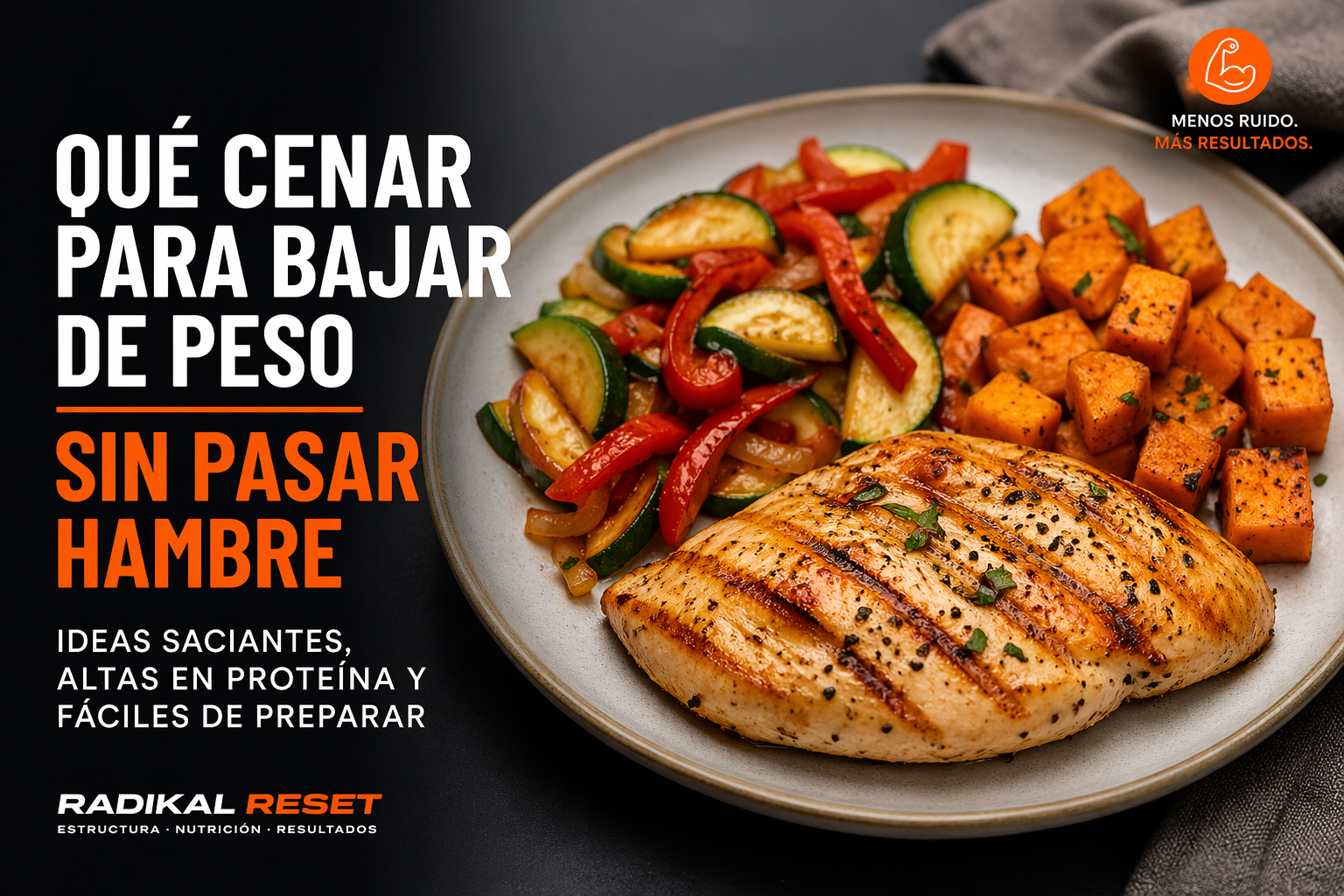
  • Qué cenar para bajar de peso sin pasar hambre

    Cenar bien puede ayudarte mucho más de lo que parece cuando intentas perder grasa. El problema es que mucha gente asocia “cena para adelgazar” con comer poco, pasar hambre o terminar el día con una ensalada triste que no satisface a nadie. Y así es fácil acabar picando más tarde, durmiendo peor o sintiendo que el proceso no hay quien lo aguante.

    Respuesta rápida

    Si quieres bajar de peso sin pasar hambre, tu cena debería ser saciante, alta en proteína, moderada en calorías y fácil de repetir. En la práctica, eso suele significar combinar una buena fuente de proteína, verduras o hortalizas que aporten volumen y una cantidad razonable de carbohidrato o grasa según el resto de tu día.

    Nota: las calorías y proteínas indicadas son aproximadas. Pueden variar según marcas, cantidades exactas y forma de preparación.

    Qué debe tener una cena para ayudarte a perder peso

    No hay una única cena mágica para adelgazar. Lo que sí suele funcionar mejor es una estructura sencilla que te deje satisfecho y te permita terminar el día sin ansiedad.

    1. Proteína suficiente

    Huevos, pollo, pavo, atún, salmón, yogur griego, queso fresco batido, tofu o legumbres bien planteadas. La proteína ayuda mucho a la saciedad.

    2. Volumen

    Verduras, hortalizas, cremas ligeras, ensaladas completas o salteados. No por postureo, sino porque llenan más el plato y el estómago.

    3. Simplicidad

    Si una cena tarda demasiado o requiere demasiada energía mental, acabarás improvisando. Y la improvisación suele salir cara.

    7 ideas de cena para bajar de peso sin pasar hambre

    Estas ideas no son “perfectas”. Son útiles. Y eso, cuando quieres sostener un cambio físico, importa bastante más.

    1. Tortilla francesa con verduras salteadas y patata cocida

    Una opción simple, saciante y muy fácil de repetir. Funciona especialmente bien cuando quieres una cena caliente que no te deje con sensación de castigo.

    Kcal aproximadas: 380–430 kcal · Proteína: 24–30 g

    2. Yogur griego natural con fruta, canela y un poco de crema de cacahuete

    Muy útil si cenas tarde, tienes poco tiempo o te apetece algo más ligero sin caer en bollería o picoteo descontrolado.

    Kcal aproximadas: 300–380 kcal · Proteína: 20–28 g

    3. Pechuga de pollo a la plancha con ensalada grande y arroz

    Muy buena alternativa si vienes de entrenar o si sabes que necesitas una cena más completa para no terminar arrasando la cocina una hora después.

    Kcal aproximadas: 430–500 kcal · Proteína: 35–45 g

    4. Salmón al horno con calabacín y patata

    Una cena algo más alta en grasa saludable, muy saciante y útil cuando te cuesta llegar satisfecho al final del día.

    Kcal aproximadas: 450–520 kcal · Proteína: 30–36 g

    5. Revuelto de claras y huevos con champiñones y tostada integral

    Muy práctica para quien quiere una cena rápida, proteica y con sensación de comida “real”, no de snack improvisado.

    Kcal aproximadas: 330–410 kcal · Proteína: 28–34 g

    6. Ensalada completa con atún, garbanzos y tomate

    Muy útil cuando hace calor o cuando te apetece algo fresco, pero necesita estar bien montada para que no se quede corta.

    Kcal aproximadas: 400–470 kcal · Proteína: 28–35 g

    7. Crema de verduras con queso fresco batido y pavo

    Una buena forma de cenar algo reconfortante, con mucho volumen y sin irte a una cena muy pesada.

    Kcal aproximadas: 300–390 kcal · Proteína: 22–30 g

    Errores comunes al elegir la cena

    • Cenar demasiado poco y terminar picando después.
    • Quitar todos los carbohidratos por norma, aunque eso luego te deje sin saciedad.
    • Depender de “cenas fit” poco realistas que no te apetecen de verdad.
    • No planificar nada y acabar resolviendo la cena con lo primero que encuentras.
    • Pensar solo en calorías y olvidarte de la proteína y el volumen.

    Entonces, ¿qué deberías cenar tú?

    La mejor cena para perder peso no es la más extrema, sino la que puedes repetir con suficiente constancia sin acabar agotado mentalmente. Si una cena te ayuda a terminar el día satisfecho, mantiene un buen nivel de proteína y no te dispara las calorías, probablemente va en buena dirección.

    Y ahí es donde mucha gente falla: no por falta de intención, sino por falta de estructura. Cuando cada cena depende de improvisar, el proceso se vuelve mucho más inestable de lo que parece.

    Preguntas frecuentes

    ¿Es malo cenar carbohidratos si quiero adelgazar?

    No necesariamente. Lo importante es el contexto total del día y que la cena esté bien planteada. En muchas personas, una pequeña cantidad de arroz, patata o pan ayuda a la saciedad y hace el plan más sostenible.

    ¿Es mejor cenar muy ligero?

    Solo si eso te deja bien. Si cenar muy ligero te empuja a comer después, no suele ser una buena estrategia.

    ¿Cuántas calorías debería tener una cena para perder grasa?

    Depende de tu contexto total, pero muchas cenas útiles para pérdida de grasa suelen moverse en un rango aproximado de 300 a 500 kcal, siempre que estén bien construidas.

    También te puede ayudar

    Siguiente paso

    La cena importa. Pero importa más dejar de improvisar.

    Si te interesa perder grasa sin convertir cada comida en un problema, Radikal Reset está planteado alrededor de una idea muy simple: poner estructura donde antes había caos. Puedes seguir explorando el blog o ver directamente cómo funciona el programa.

    Ver Radikal Reset
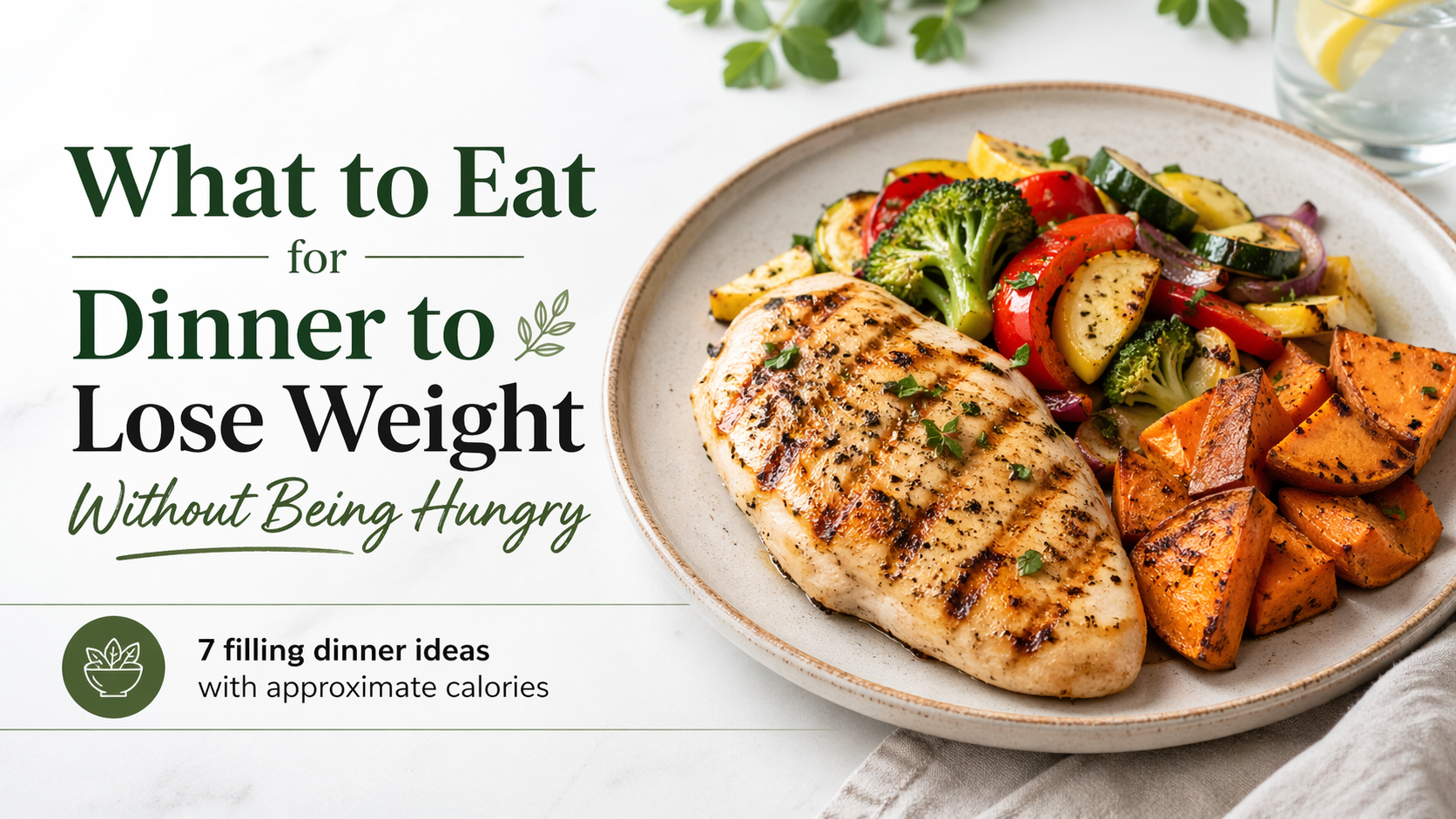
  • Chicken breast with vegetables

    What to eat for dinner to lose weight without being hungry

    Dinner can help your fat loss process much more than people think. The problem is that many people associate a “weight loss dinner” with eating too little, feeling deprived, or ending the day with a sad salad that satisfies no one.

    Quick answer

    If you want to lose weight without feeling hungry, your dinner should be filling, high in protein, moderate in calories, and easy to repeat. In practice, that usually means combining a good protein source, vegetables or high-volume foods, and a reasonable amount of carbs or fats depending on the rest of your day.

    Note: calories and protein values are approximate. They may vary depending on brands, exact quantities, and preparation methods.

    What a dinner for fat loss should include

    There is no single magical dinner for weight loss. What usually works better is a simple structure that leaves you satisfied and helps you finish the day without feeling desperate for more food.

    1. Enough protein

    Eggs, chicken, turkey, tuna, salmon, Greek yogurt, cottage cheese, tofu, or well-structured legumes. Protein supports fullness.

    2. Volume

    Vegetables, soups, salads, stir-fries, and high-volume foods. Not for show, but because they help you feel like you actually ate.

    3. Simplicity

    If dinner takes too much effort or too much mental energy, you will end up improvising. And improvising is often where the plan breaks down.

    7 dinner ideas to lose weight without being hungry

    These ideas are not perfect. They are useful. And when you are trying to sustain a body transformation, that matters much more.

    1. Omelet with sautéed vegetables and boiled potatoes

    A simple, warm, filling option that works especially well when you want dinner to feel like a real meal, not a punishment.

    Approx. calories: 380–430 kcal · Protein: 24–30 g

    2. Greek yogurt with fruit, cinnamon, and a little peanut butter

    Very useful if you eat late, have little time, or want something lighter without drifting into pastries or random snacking.

    Approx. calories: 300–380 kcal · Protein: 20–28 g

    3. Grilled chicken breast with a large salad and rice

    A strong option if you trained earlier or already know you need a more complete dinner to avoid raiding the kitchen later.

    Approx. calories: 430–500 kcal · Protein: 35–45 g

    4. Baked salmon with zucchini and potatoes

    Slightly higher in healthy fats, very satisfying, and useful when it takes more to feel full at the end of the day.

    Approx. calories: 450–520 kcal · Protein: 30–36 g

    5. Egg and egg-white scramble with mushrooms and wholegrain toast

    Great if you want a quick, protein-heavy dinner that still feels like actual food rather than a random snack.

    Approx. calories: 330–410 kcal · Protein: 28–34 g

    6. Full salad with tuna, chickpeas, and tomato

    Very useful in warmer weather or when you want something fresh, but it needs to be built properly so it does not leave you unsatisfied.

    Approx. calories: 400–470 kcal · Protein: 28–35 g

    7. Vegetable soup with whipped fresh cheese and turkey slices

    A comforting option with plenty of volume that still keeps calories under control.

    Approx. calories: 300–390 kcal · Protein: 22–30 g

    Common dinner mistakes

    • Eating too little and ending up snacking later.
    • Cutting all carbs automatically even when that makes dinner less satisfying.
    • Relying on unrealistic “healthy dinners” you do not actually want to eat.
    • Not planning dinner at all and ending the day with whatever is easiest.
    • Thinking only about calories and forgetting protein and food volume.

    So what should you eat for dinner?

    The best dinner for fat loss is not the most extreme one. It is the one you can repeat consistently without ending each day feeling deprived. If a dinner helps you finish the day satisfied, keeps protein high enough, and does not push calories too far, it is probably moving in the right direction.

    And this is where many people struggle: not because they do not care, but because they do not have enough structure. When every dinner depends on improvising, the whole process becomes far more unstable than it looks.

    Frequently asked questions

    Is it bad to eat carbs at dinner if I want to lose weight?

    Not necessarily. What matters is the overall context of your day and whether dinner is well built. For many people, a small amount of rice, potatoes, or bread improves fullness and makes the plan easier to sustain.

    Is it better to eat a very light dinner?

    Only if that works for you. If eating too lightly leads to snacking later, it is usually not a good strategy.

    How many calories should dinner have for fat loss?

    It depends on your full daily context, but many useful fat loss dinners often fall somewhere around 300 to 500 calories when structured properly.

    You may also find useful

    Next step

    Dinner matters. But structure matters more.

    If you want to lose fat without turning every meal into a problem, Radikal Reset is built around one simple idea: bringing structure where there used to be chaos. You can keep exploring the blog or see how the program works.

    See Radikal Reset