• Person preparing a healthy week with notebook, workout clothes, meal prep and water bottle

    How to Stay Consistent With Weight Loss When You Have No Motivation

    Fat Loss Consistency Guide

    How to Stay Consistent With Weight Loss When You Have No Motivation

    Motivation is useful at the start, but it is not reliable enough to carry your whole weight loss journey. If you want to stay consistent, you need a system that still works when you feel tired, busy or bored.

    If you only lose weight when motivation is high, the process will always feel unstable. You start strong, follow the plan for a few days, feel proud, and then real life gets in the way.

    The answer is not to wait until you feel motivated again. The answer is to make your plan smaller, clearer and easier to repeat when motivation disappears.

    Why motivation disappears during weight loss

    Motivation usually feels strongest at the beginning because everything is new. You imagine the result, you feel ready, and the first few days create a sense of control. But motivation naturally drops when the plan becomes normal, progress slows or the week gets stressful.

    The novelty fades

    The first week feels exciting. The third week feels like normal life with more effort.

    Progress is not always visible

    You may be improving habits, strength and control before the mirror shows a dramatic change.

    The plan feels too heavy

    If your diet and training plan require perfect energy every day, they will collapse on normal days.

    Radikal Reset principle

    Do not build your weight loss plan for your best mood. Build it for your normal life.

    Consistency does not mean feeling motivated every day. It means having a realistic structure that helps you keep going even when motivation is low.

    Step 1: Lower the entry barrier

    When motivation is low, the first step feels bigger than it really is. That is why your plan needs a minimum version.

    Create a minimum version of your plan

    • If you cannot train for 60 minutes, do 25 minutes.
    • If you cannot cook a perfect meal, build a simple high-protein plate.
    • If you cannot hit your ideal step count, go for a short walk.
    • If you overeat at one meal, return to normal at the next one.
    • If the week is chaotic, protect the two or three actions that matter most.

    This is not lowering your standards. It is protecting the habit. A smaller version keeps the identity alive: you are still someone who shows up.

    Step 2: Stop trying to restart perfectly every Monday

    One of the biggest reasons people fail with weight loss is the all-or-nothing cycle. They eat well for a few days, make one mistake, feel they have ruined everything, and decide to start again next week.

    Old pattern

    Mistake → guilt → restart

    You treat one imperfect day as proof that the whole plan has failed.

    Better pattern

    Mistake → adjust → continue

    You correct the next decision instead of throwing away the whole week.

    Real consistency

    Return quickly

    The faster you return to the basics, the less damage one bad moment can do.

    Step 3: Use simple rules instead of constant willpower

    Willpower is expensive. If every meal requires a full internal debate, you will eventually get tired. Simple rules reduce the number of decisions you need to make.

    Meals
    Build most meals around protein, vegetables or fruit, and a controlled carb or fat source.
    Training
    Schedule your sessions before the week starts. Do not decide only when you feel like it.
    Bad days
    Use the minimum version instead of skipping completely.
    Weekends
    Keep flexibility, but protect protein, movement and one planned meal.

    Step 4: Make hunger easier to manage

    Many people think they lack motivation when the real problem is that their diet makes them too hungry. If your meals are tiny, low in protein or random, staying consistent becomes much harder.

    Protein first

    Protein helps meals feel more satisfying and makes it easier to stay on track.

    Add volume

    Vegetables, fruit, soups, salads and high-fiber foods can make dieting feel less aggressive.

    Avoid extreme cuts

    A plan that makes you miserable may create fast movement at first, but it usually damages consistency.

    What to do when you have zero motivation

    On low-motivation days, do not ask yourself whether you feel like doing the full plan. Ask yourself what the smallest useful version would be.

    If training feels impossible

    Do a short session, walk, or complete only the first two exercises. Starting often changes how you feel.

    If cooking feels impossible

    Use a simple emergency meal: protein, fruit or vegetables, and a portion you can control.

    If you feel behind

    Do not try to compensate aggressively. Return to the next normal decision.

    If the scale frustrates you

    Look at the weekly trend, your photos, your waist, your training and your adherence before judging the process.

    Step 5: Track actions before emotions

    If you only track how you feel, weight loss will look chaotic. Some days you will feel motivated, some days you will feel flat, and some days you will feel impatient. Actions give you a clearer picture.

    Track these simple consistency markers

    • Training sessions completed.
    • Protein meals completed.
    • Steps or daily movement.
    • Sleep and recovery.
    • How quickly you return after a bad day.

    The last one matters more than most people think. You do not need a perfect record. You need a fast return.

    Step 6: Stop making the plan harder every time you feel guilty

    A very common trap is reacting to guilt by making the plan more extreme. You miss workouts, overeat, feel disappointed, and then decide the answer is a stricter diet or more cardio.

    Use correction instead of punishment

    Do not starve yourself Return to normal meals instead of creating another binge cycle.
    Do not punish with cardio Use movement as a tool, not as revenge for eating.
    Do not restart the whole plan Restart the next decision. That is enough.
    Do not chase perfection The best plan is the one you can repeat while still living your life.

    A simple no-motivation weight loss plan

    When motivation is low, your plan should become simpler, not more complicated. Start with these anchors.

    Training
    3 planned sessions per week, with a shorter backup version.
    Nutrition
    Protein at most meals, simple dinners and fewer random snacks.
    Movement
    Daily walking or light activity, especially on non-training days.
    Recovery
    Protect sleep where possible. Low recovery makes motivation feel worse.

    Frequently asked questions

    How do I lose weight if I have no motivation?

    Do not rely on motivation as your main strategy. Use a simple plan with scheduled workouts, easy high-protein meals, a minimum version for bad days and quick recovery after mistakes.

    Is it normal to lose motivation during weight loss?

    Yes. Motivation often drops after the first excitement fades. That does not mean the plan is failing. It means you need structure, habits and realistic expectations.

    What should I do after a bad eating day?

    Return to your normal meals at the next opportunity. Do not punish yourself, skip meals aggressively or wait until Monday. The faster you return, the better.

    How can I stay consistent when I am busy?

    Reduce the plan to the essentials: scheduled short workouts, simple meals, walking and a few default food options. Busy weeks need a simpler system, not a perfect one.

    Related guides

    Want a plan that does not depend on motivation?

    Radikal Reset gives you an 8-week structure for training, cardio and practical nutrition, so you can stop improvising and start following a plan built for real life.

  • Persona preparando su semana saludable con libreta, ropa de entrenamiento, comida preparada y botella de agua

    Cómo ser constante para perder peso aunque no tengas motivación

    Ser constante para perder peso no significa estar motivado todos los días. De hecho, uno de los errores más comunes es esperar a tener ganas para actuar. La motivación puede ayudarte a empezar, pero no suele ser suficiente para sostener un cambio durante semanas o meses.

    Si quieres perder peso de verdad, necesitas un sistema que funcione incluso cuando estás cansado, ocupado o con pocas ganas. No se trata de vivir perfecto. Se trata de reducir la fricción y saber qué hacer cuando la motivación baja.

    Respuesta rápida

    Para ser constante al perder peso aunque no tengas motivación, necesitas hábitos pequeños, comidas base, entrenamientos realistas, planificación semanal y un plan para volver rápido cuando falles. La constancia no nace de tener ganas: nace de hacer que lo correcto sea más fácil de repetir.

    Nota: este contenido es informativo y no sustituye asesoramiento médico, nutricional o deportivo individualizado. Si tienes una condición médica o necesidades específicas, consulta con un profesional cualificado.

    La motivación es útil, pero no puede ser el plan

    La motivación sube y baja. Hay días en los que te apetece entrenar y comer mejor, y otros en los que todo pesa más. Eso no significa que estés fallando. Significa que eres humano.

    La clave es dejar de depender de emociones variables y construir una estructura que te guíe incluso cuando no tienes ganas.

    Menos decisiones

    Cuantas menos cosas tengas que improvisar, más fácil será cumplir.

    Más repetición

    Repetir comidas, horarios y rutinas reduce desgaste mental.

    Mejor recuperación

    Dormir mal y exigir perfección suele romper la constancia.

    8 formas de ser constante para perder peso sin depender de la motivación

    1. Baja el listón inicial

    No empieces intentando hacerlo todo perfecto. Empieza con acciones que puedas repetir: caminar más, entrenar 2–3 días, preparar comidas sencillas y dormir un poco mejor.

    2. Usa comidas base

    Tener varias comidas que ya sabes que encajan con tu objetivo reduce decisiones. No necesitas comer diferente cada día para progresar.

    3. Planifica la semana antes de que empiece

    Decide cuándo entrenas, qué compras y qué comidas puedes repetir. Si esperas al momento de tener hambre o cansancio, improvisarás peor.

    4. Ten una versión mínima del plan

    En días malos, no busques hacerlo perfecto. Haz lo mínimo útil: una caminata corta, una comida proteica, una sesión más breve o volver en la siguiente comida.

    5. No conviertas un error en abandono

    Comer peor una vez no arruina el proceso. Lo que suele arruinarlo es pensar “ya está perdido” y abandonar tres días.

    6. Mide progreso con tendencias

    Si te frustras por cada subida puntual de peso, será difícil mantenerte. Usa promedios, fotos, medidas, ropa y rendimiento.

    7. Haz que tu entorno ayude

    Ten comida útil en casa, ropa de entrenamiento preparada y menos tentaciones visibles. La fuerza de voluntad no debería cargar con todo.

    8. Revisa cada semana, no cada hora

    La pérdida de peso no se evalúa por una comida, un día o una mañana de báscula. Revisa la semana completa y ajusta con calma.

    Qué hacer cuando no tienes ganas de entrenar

    • Reduce la sesión: haz 20–30 minutos en lugar de saltártela entera.
    • Empieza con el calentamiento: muchas veces las ganas aparecen después de empezar.
    • Haz una versión mínima: 2 ejercicios básicos y una caminata ya cuentan.
    • No negocies con la emoción: decide por sistema, no por ganas del momento.

    Qué hacer cuando comes peor de lo previsto

    El objetivo no es evitar cualquier comida imperfecta. El objetivo es que una comida imperfecta no se convierta en una semana perdida.

    • Vuelve a tu siguiente comida normal.
    • No intentes compensar con castigos extremos.
    • Bebe agua, camina y retoma tu estructura.
    • Aprende qué lo provocó: hambre, estrés, improvisación o entorno.

    La constancia se diseña

    Mucha gente cree que ser constante es una característica personal: o la tienes o no la tienes. Pero en la práctica, la constancia mejora cuando el plan está bien diseñado.

    Si tu sistema reduce decisiones, permite errores y te da un camino claro para volver, no necesitas sentirte motivado todos los días para avanzar.

    Preguntas frecuentes

    ¿Cómo puedo ser constante si siempre abandono?

    Empieza con menos cambios, más estructura y un plan para días malos. Si el plan solo funciona cuando estás motivado, no es sostenible.

    ¿La motivación no importa?

    Importa para empezar, pero no debería ser el motor principal. La estructura y los hábitos son más fiables.

    ¿Qué hago si fallo varios días?

    Vuelve con una acción pequeña hoy: una comida ordenada, una caminata o una sesión breve. No esperes al lunes perfecto.

    También te puede ayudar

    Siguiente paso

    No necesitas motivación infinita. Necesitas una estructura que aguante tus días normales.

    Radikal Reset está pensado para ayudarte a perder grasa con entrenamiento, alimentación y hábitos organizados, sin depender de estar motivado todos los días.

    Ver Radikal Reset
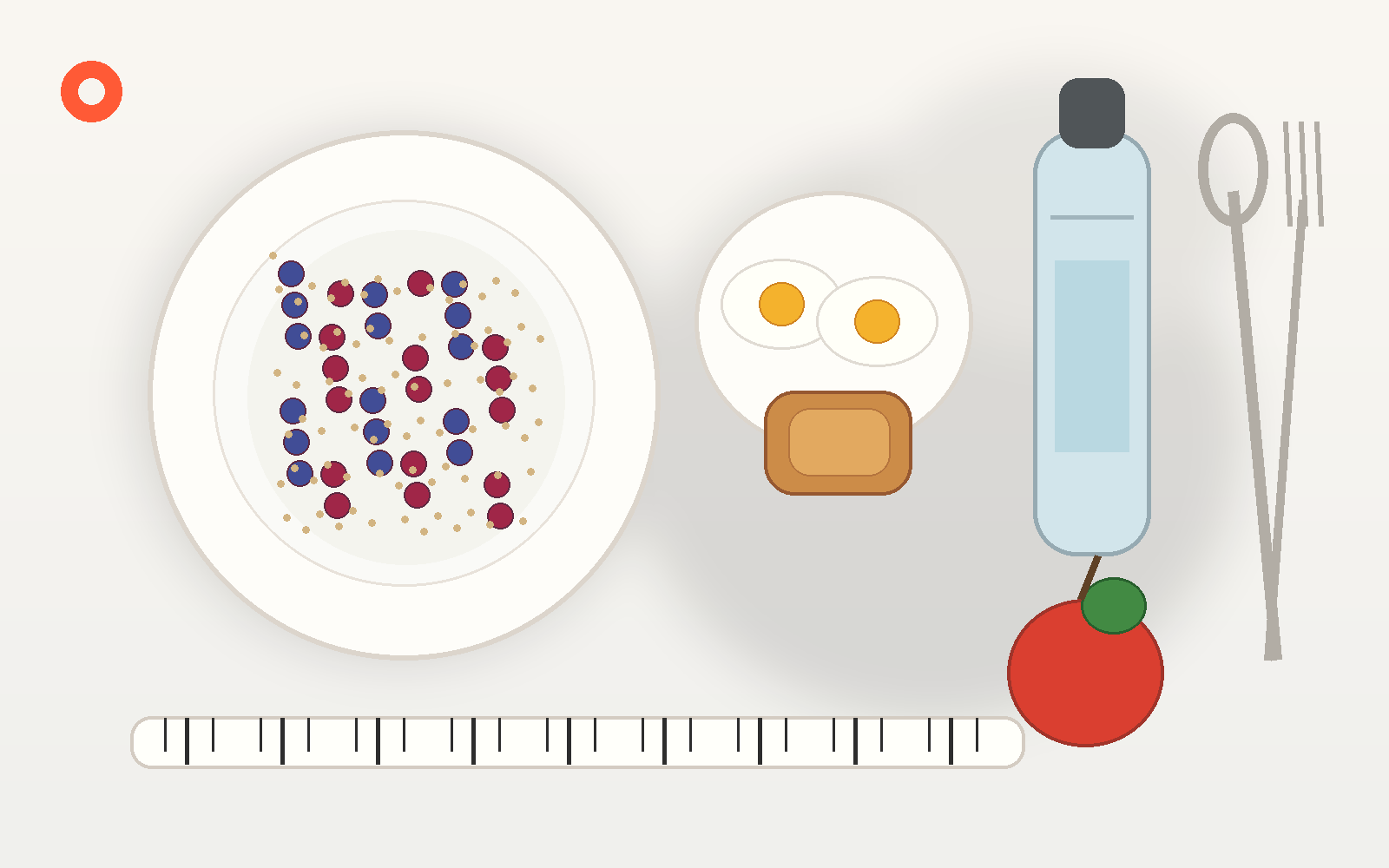
  • Bol de yogur con frutos rojos, huevos, tostada, manzana, botella de agua y cinta métrica sobre una mesa

    Por qué tienes hambre todo el día cuando intentas adelgazar

    Tener hambre todo el día cuando intentas adelgazar no significa necesariamente que te falte fuerza de voluntad. Muchas veces significa que tu estrategia está mal construida: comes demasiado poco, eliges comidas poco saciantes, no priorizas proteína o estás intentando cambiarlo todo demasiado rápido.

    La pérdida de grasa requiere cierto déficit, pero no debería sentirse como una pelea constante contra el hambre desde que te levantas hasta que te acuestas. Si eso ocurre, el problema no suele ser que “no valgas para esto”, sino que necesitas una estructura más inteligente.

    Respuesta rápida

    Si tienes hambre todo el día al adelgazar, revisa estas cinco cosas: tu déficit puede ser demasiado agresivo, comes poca proteína, faltan alimentos con volumen, duermes mal o tus comidas están demasiado improvisadas.

    Nota: este contenido es informativo y no sustituye asesoramiento médico, nutricional o deportivo individualizado. Si tienes una condición médica o necesidades específicas, consulta con un profesional cualificado.

    Un poco de hambre puede ser normal. Hambre constante no

    Cuando comes menos de lo que gastas, es normal que en algunos momentos tengas más apetito. Pero si cada día se convierte en una lucha, es muy probable que el plan sea demasiado agresivo o que tus comidas estén mal diseñadas.

    Déficit sostenible

    Perder grasa no exige comer poquísimo. Exige comer un poco menos de lo que gastas y poder mantenerlo.

    Comidas saciantes

    La misma cantidad de calorías puede llenar mucho o muy poco según cómo esté construida la comida.

    Estructura diaria

    Improvisar con hambre suele acabar peor que tener 3 o 4 comidas base ya pensadas.

    7 razones por las que tienes hambre todo el día al intentar adelgazar

    1. Tu déficit es demasiado agresivo

    Si recortas demasiadas calorías desde el principio, puedes bajar rápido unos días, pero el hambre se dispara. Un déficit más moderado suele ser menos espectacular, pero mucho más sostenible.

    2. Comes poca proteína

    La proteína ayuda a que las comidas sean más saciantes. Si tus desayunos, comidas o cenas tienen poca proteína, es más fácil llegar con hambre a la siguiente comida.

    3. Tus comidas tienen poco volumen

    Una comida pequeña y densa en calorías puede dejarte con hambre. Verduras, frutas, patata, legumbres, sopas o yogur natural pueden aportar más volumen y saciedad.

    4. Desayunas o cenas demasiado poco

    Algunas personas intentan ahorrar calorías comiendo muy poco en una parte del día, pero luego llegan con hambre excesiva y terminan picando o compensando sin darse cuenta.

    5. Duermes mal

    Dormir poco puede aumentar el apetito, empeorar las decisiones y hacer que el proceso parezca mucho más duro. No es solo comida: el descanso también cuenta.

    6. Bebes muchas calorías sin darte cuenta

    Zumos, alcohol, cafés con extras o bebidas calóricas pueden sumar energía sin aportar demasiada saciedad. No son “prohibidos”, pero conviene tenerlos en cuenta.

    7. No tienes comidas base claras

    Si cada comida depende de lo que te apetece en ese momento, el hambre decide por ti. Tener opciones repetibles reduce el caos y te ayuda a elegir mejor.

    Cómo reducir el hambre sin abandonar la pérdida de grasa

    • Haz el déficit más moderado si el hambre es insoportable.
    • Añade proteína a las comidas principales.
    • Incluye más alimentos con volumen: verduras, fruta, legumbres, patata o sopas.
    • Planifica snacks útiles, no solo “aguantar hasta explotar”.
    • Duerme mejor siempre que puedas: afecta más de lo que parece.

    No se trata de sufrir más, sino de diseñar mejor

    Muchas personas creen que adelgazar consiste en aguantar hambre. Pero si el hambre es constante, el plan suele terminar rompiéndose. Una estrategia más inteligente busca perder grasa con un nivel de hambre manejable.

    La clave es construir comidas que te ayuden: suficiente proteína, buen volumen, horarios razonables y menos improvisación. Eso no hace que el proceso sea mágico, pero sí mucho más sostenible.

    Preguntas frecuentes

    ¿Es normal tener hambre al perder grasa?

    Algo de hambre puede ser normal, pero no debería ser constante ni insoportable. Si lo es, conviene ajustar el plan.

    ¿Comer más proteína ayuda con el hambre?

    Sí, suele ayudar a que las comidas sean más saciantes, especialmente si la combinas con verduras, fruta o carbohidratos simples bien elegidos.

    ¿Debería hacer un déficit más pequeño?

    Si tienes hambre todo el día y no puedes sostener el plan, probablemente sí. Un déficit moderado suele funcionar mejor a largo plazo.

    También te puede ayudar

    Siguiente paso

    No necesitas pasar hambre todo el día. Necesitas una estructura mejor.

    Si quieres perder grasa con comidas más saciantes, menos improvisación y un sistema más claro, Radikal Reset está pensado para ayudarte a ordenar el proceso.

    Ver Radikal Reset
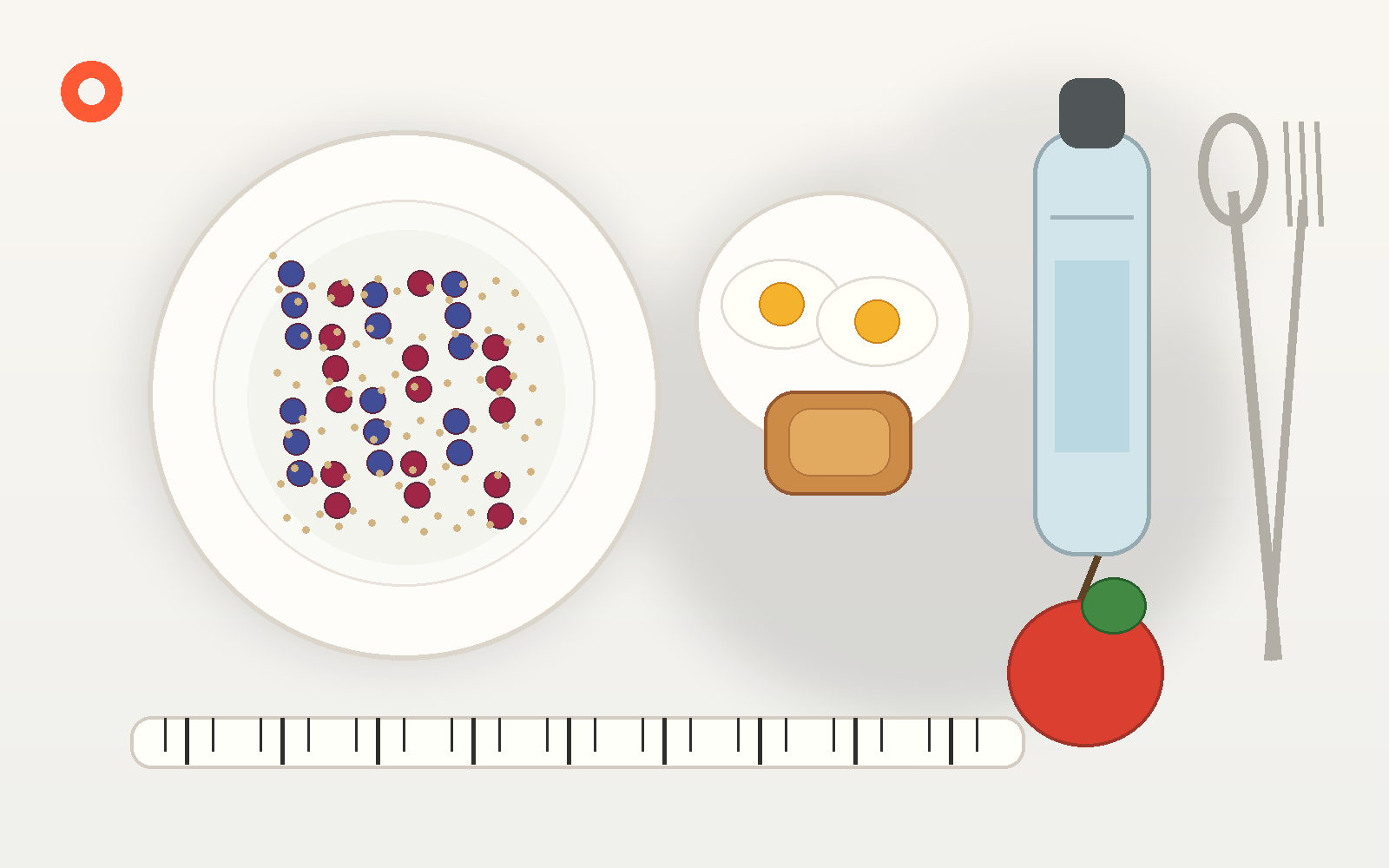
  • Bowl of yogurt with berries, eggs, toast, apple, water bottle and measuring tape on a table

    Why You Feel Hungry All Day When Trying to Lose Weight

    Simple nutrition

    Why You Feel Hungry All Day When Trying to Lose Weight

    Constant hunger does not always mean you lack discipline. It often means your fat loss plan is built in a way that makes hunger harder than it needs to be.

    Hunger is one of the main reasons people quit weight loss plans. Not because they are weak, but because the plan often creates too much hunger too soon.

    You cut calories aggressively. Breakfast becomes too small. Lunch has little protein. You avoid carbs completely. You drink calories without noticing. Then by late afternoon or night, it feels like your body is fighting back.

    The goal is not to remove hunger forever. Some hunger can happen during fat loss. The goal is to make hunger manageable enough that you can actually stay consistent.

    Quick answer

    You feel hungry all day because your meals are probably too low in protein, volume or structure — or your deficit is too aggressive.

    Start by fixing the basics: protein in main meals, more high-volume foods, fewer liquid calories, better meal timing and a calorie deficit you can actually repeat.

    First: hunger during fat loss is normal, but it should not control your day

    A fat loss phase usually involves eating a little less than your body is used to. So yes, some hunger can appear. That does not automatically mean something is wrong.

    But feeling hungry all day, thinking about food constantly, losing control at night or needing willpower for every meal is usually a sign that the plan needs adjustment.

    Normal hunger

    You feel hungry before meals, but you can function, train, sleep and stay consistent.

    Problem hunger

    You think about food all day, snack constantly, feel irritable or lose control at night.

    Useful goal

    You do not need zero hunger. You need hunger low enough that the plan is repeatable.

    Radikal Reset principle

    A good fat loss plan should reduce friction, not turn every evening into a battle.

    If the plan depends on fighting extreme hunger every day, it is fragile. Better meals, better structure and smarter routines make consistency easier.

    1. Your calories may be too low

    The fastest way to feel hungry all day is to cut calories too aggressively. This can feel productive at first because the scale may move quickly, but it often creates a rebound later.

    Signs your deficit is too aggressive

    • You feel hungry soon after every meal.
    • You are thinking about food most of the day.
    • Training performance is dropping fast.
    • You feel irritable, tired or cold more often than usual.
    • You are fine during the day but lose control at night.

    You do not need the biggest possible deficit. You need a deficit you can repeat long enough to see change.

    2. Your meals may be too low in protein

    Protein is one of the most important tools for staying full during fat loss. If breakfast is mostly cereal, lunch is mostly pasta and dinner is mostly bread or snacks, hunger will probably be harder to manage.

    Better breakfast

    Eggs, Greek yogurt, protein yogurt, cottage cheese, turkey, tofu or a protein smoothie with fruit.

    Better lunch

    Chicken, tuna, lean beef, fish, legumes with extra protein, tofu or turkey as the base of the plate.

    Better dinner

    A clear protein source plus vegetables, controlled carbs and a moderate amount of fats or sauce.

    3. You are eating calories, but not enough volume

    Some foods are very calorie-dense but do not fill much space in your stomach. Oils, nuts, cheese, pastries, sauces, chocolate, chips and small snacks can add up quickly without making you feel full.

    High-volume foods help because they let you eat a bigger plate for fewer calories.

    Vegetables and salads.
    Soups and broths.
    Potatoes or boiled rice in controlled portions.
    Fruit.
    Lean proteins.
    Low-fat high-protein dairy.

    4. You may be drinking calories without noticing

    Liquid calories are one of the easiest ways to stay hungry while still consuming more calories than you think.

    Sweet coffees

    Milk, sugar, syrups and cream can turn coffee into a snack without making you feel like you ate.

    Juice and regular soft drinks

    They can add calories quickly but usually do not reduce hunger as much as solid food.

    Alcohol

    Alcohol adds calories and can make food choices harder later in the day.

    You do not need to drink only water forever. But during fat loss, swapping most calorie drinks for water, coffee, tea or zero-calorie options can make hunger easier to manage.

    If your calories are low but your meals are small, sweet, liquid or low in protein, hunger will feel much harder.

    The fix is not always “eat less.” Sometimes the fix is building your meals better so the calories you eat actually help you stay full.

    5. You are saving too many calories for later

    Some people try to “be good” all day by barely eating, then arrive at dinner starving. This often leads to overeating, grazing or feeling out of control at night.

    A better approach

    • Start the day with a protein-based meal if breakfast helps you control hunger.
    • Do not let lunch become too small or too low in protein.
    • Use a planned snack if it prevents evening overeating.
    • Build dinner before you are already starving.

    6. Your sleep and stress may be making hunger worse

    Poor sleep and high stress can make cravings and hunger feel stronger. They can also make it harder to choose the meal you planned instead of the food that gives quick comfort.

    When sleep is poor

    Do not make the day harder with a very low-calorie plan. Keep meals simple and high in protein.

    When stress is high

    Reduce food decisions. Repeat easy meals, prepare defaults and avoid leaving everything for willpower.

    When cravings hit

    Check whether you are truly hungry, underfed, tired, stressed or just looking for relief.

    How to build meals that keep you full

    Use this simple plate structure for most main meals. It is not a strict diet. It is a way to make your meals more filling without overcomplicating things.

    Protein
    A clear source in every main meal: eggs, chicken, fish, turkey, tofu, lean meat, yogurt or legumes with extra protein.
    Volume
    Vegetables, salad, soup, fruit or other foods that fill the plate without adding too many calories.
    Carbs
    Potatoes, rice, oats, bread, pasta, beans or fruit in portions that fit your goal and training.
    Fats
    Olive oil, avocado, nuts, cheese or sauces in controlled amounts so flavor does not become accidental overeating.

    Simple hunger fixes you can use this week

    Add protein to breakfast

    If you get hungry early, do not start the day with only coffee, toast or cereal. Add a clear protein source.

    Make lunch bigger in volume

    Add vegetables, salad, soup or fruit so lunch is not just a small calorie-dense plate.

    Plan an afternoon snack

    A high-protein snack can prevent uncontrolled evening eating if the gap between lunch and dinner is long.

    Stop drinking calories most days

    Use water, coffee, tea, zero-calorie drinks or sugar-free options to save calories for real food.

    Do not make dinner tiny

    A satisfying dinner with protein and volume can reduce late-night grazing better than a tiny plate.

    Hunger management is not cheating. It is what makes fat loss sustainable.

    The goal is not to see who can suffer more. The goal is to build meals and routines that help you stay consistent long enough to see change.

    Hunger checklist

    Are your calories too low to repeat?
    Do your main meals include protein?
    Do your meals have enough volume?
    Are you drinking calories without noticing?
    Are you saving too much food for night?
    Are sleep, stress or training making hunger harder?

    Related guides

    You do not need to spend the whole day hungry to lose fat.

    Radikal Reset uses simple nutrition rules, strength training, movement and structure so you can lose fat without relying on extreme hunger or daily willpower battles.

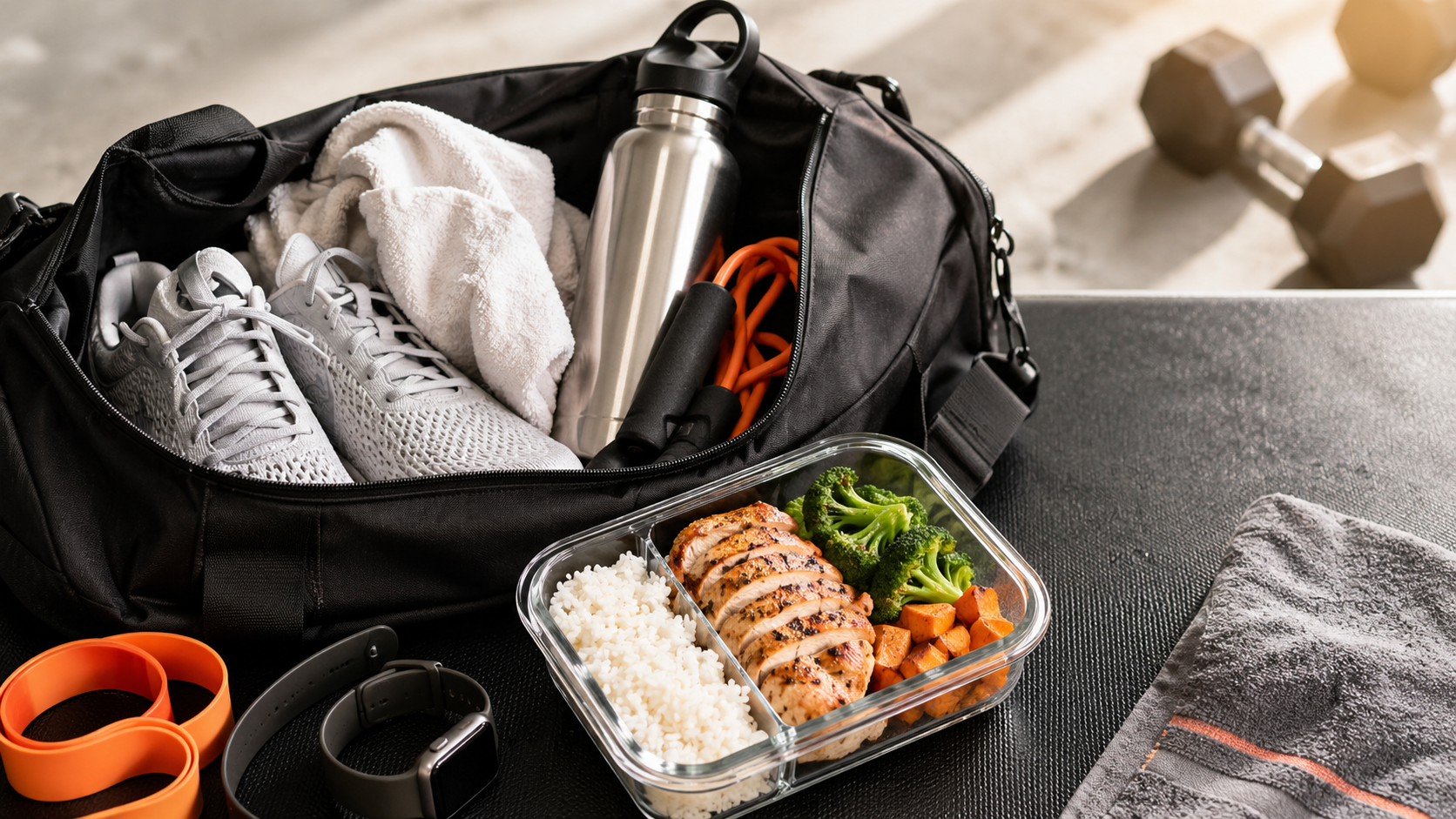
  • Open gym bag with training shoes, towel, water bottle, jump rope, dumbbell and a healthy meal prep container with chicken, rice, broccoli and sweet potato.

    Why You\’re Not Losing Weight Even Though You Train

    Fat loss

    Why You’re Not Losing Weight Even Though You Train

    Training matters, but it does not automatically guarantee fat loss. If your weight is not changing, the problem is usually not effort — it is the gap between training, food, movement and recovery.

    It is frustrating when you train several times per week and the scale barely moves. You feel like you are doing the hard part, but your body does not seem to respond.

    This is where many people assume something is wrong with their metabolism, their workouts or their discipline. Sometimes the issue is much simpler: training is only one part of the fat loss equation.

    You can train hard and still not lose weight if your food intake, daily movement, recovery or tracking are not aligned with the goal.

    Quick answer

    If you are training but not losing weight, you are probably not in a consistent calorie deficit.

    Training helps you build muscle, burn calories and improve your body, but fat loss still depends on your overall energy balance. Food, steps, liquid calories, weekends and recovery all matter.

    Training is powerful, but it is not a magic fat loss switch

    Strength training is one of the best things you can do when you want to look better. It helps you build or maintain muscle, improve shape, increase performance and feel more capable.

    But training does not cancel unlimited calories. A hard session can be wiped out very easily by extra snacks, bigger portions, weekend eating, alcohol or drinks that do not feel like “food.”

    Training changes your body

    It improves strength, muscle tone, posture and performance.

    Nutrition controls the deficit

    Your meals and portions decide whether fat loss actually happens.

    Movement supports the process

    Steps and daily activity often matter more than people expect.

    Radikal Reset principle

    Do not ask only, “Am I training?” Ask, “Is my whole week aligned with fat loss?”

    A few good workouts cannot always overcome seven days of random eating, low steps, poor sleep and inconsistent routines. The body responds to the full pattern.

    1. You may be eating back the calories you burn

    Exercise can increase hunger. After training, it is easy to feel like you “earned” more food. That is not morally wrong, but it can stop fat loss if the extra calories remove the deficit.

    Common examples

    • A bigger dinner because you trained.
    • Extra snacks after the gym.
    • A smoothie or shake that becomes a high-calorie dessert.
    • Weekend meals that cancel the deficit from Monday to Friday.
    • Using cardio as permission to eat without structure.

    The solution is not to fear food after training. It is to build post-workout meals with protein, structure and portions that fit your goal.

    2. Your weekends may be cancelling your weekdays

    Many people are consistent from Monday to Thursday, then much looser from Friday night to Sunday. The problem is not enjoying food. The problem is not realizing how much the weekly average can change.

    Weekdays
    Structured meals, workouts, better water intake and more control.
    Weekend
    Bigger portions, alcohol, takeaway, snacks, desserts and less movement.
    Result
    The weekly deficit disappears even though you feel like you trained hard.

    3. You may be moving less outside the gym

    This is easy to miss. You train, but the rest of the day becomes more sedentary. You sit more, walk less or feel tired and unconsciously reduce movement.

    Workouts matter, but daily movement matters too. A person who trains for one hour but barely moves the rest of the day may burn less overall than they think.

    Check your steps

    Do not guess. Look at your real average across the week.

    Add easy movement

    Walks, stairs, short breaks and easy cardio can support fat loss without destroying recovery.

    Avoid compensation

    Training should not become an excuse to move less for the rest of the day.

    4. You are relying on workouts instead of nutrition structure

    Some people train consistently but eat with no real structure. They are not eating badly in an obvious way, but their meals are too random to create reliable progress.

    Low protein meals

    If meals are mostly carbs and fats, hunger usually becomes harder and calories can climb quickly.

    Liquid calories

    Juice, alcohol, sweet coffee and regular soft drinks can slow progress without feeling like a real meal.

    Free-poured fats and sauces

    Olive oil, nuts, cheese, sauces and spreads can be healthy but still calorie-dense.

    Random snacking

    Small bites do not always feel important, but repeated every day they can erase the deficit.

    You do not need a perfect diet. You need enough structure that your training can finally show.

    The goal is not to count every crumb forever. The goal is to stop eating so randomly that you never know why progress is not happening.

    5. You may be gaining muscle or water while losing fat

    This is especially common if you are new to strength training or returning after time off. Your body may store more water in the muscles, recover from soreness and improve muscle tone while the scale changes slowly.

    That does not mean the scale is useless. It means you should not use it alone.

    Track more than weight

    • Waist measurement.
    • Progress photos.
    • How clothes fit.
    • Strength or repetitions in key exercises.
    • Weekly average weight, not one random weigh-in.

    6. You may not be training with enough structure

    Training often fails to create visible change when it is random. Doing different exercises every week, skipping lower body, avoiding progressive overload or turning every session into cardio can make progress harder to measure.

    Repeat key movements

    You need enough repetition to know whether you are improving.

    Track performance

    Weights, reps, control and technique tell you whether the body is adapting.

    Avoid random intensity

    Sweating is not the same as progressing. Structure matters more than chaos.

    A good fat loss plan combines strength training, simple nutrition, daily movement and tracking.

    If one part is missing, progress can slow down even when you feel like you are working hard.

    What to do this week if you train but are not losing weight

    Do not change everything at once. Use one week to collect better information and tighten the basics.

    1. Track your weekly weight average

    Weigh several mornings if possible and look at the average instead of reacting to one number.

    2. Measure your waist

    If your waist is dropping, progress may be happening even if the scale is slow.

    3. Add protein to every main meal

    This helps with fullness, recovery and meal structure.

    4. Check liquid calories and snacks

    Do not obsess. Just notice whether extra calories are coming from easy-to-miss places.

    5. Increase daily movement slightly

    Add walks or 1,500-2,500 steps per day if your current activity is low.

    The simple audit

    Training
    Are you following a repeatable plan and tracking progress?
    Nutrition
    Are meals structured, high in protein and controlled enough for fat loss?
    Movement
    Are your steps and daily activity consistent, or do they drop outside workouts?
    Tracking
    Are you looking at weight averages, waist, photos, clothing and performance?

    The answer is usually not “train harder.” It is “make the whole system clearer.”

    More effort without better structure can simply create more hunger, fatigue and frustration. Start by making the basics visible.

    Checklist: why you train but are not losing weight

    You are eating back the calories from training.
    Weekends are cancelling your weekday deficit.
    Daily movement is too low outside the gym.
    Protein and meal structure are inconsistent.
    You are relying only on the scale.
    Your training is hard, but not structured.

    Related guides

    Training is a powerful tool. Radikal Reset helps you connect it to the rest of the system.

    The program combines strength training, cardio support, simple nutrition, movement and progress tracking so your effort has a clear direction.

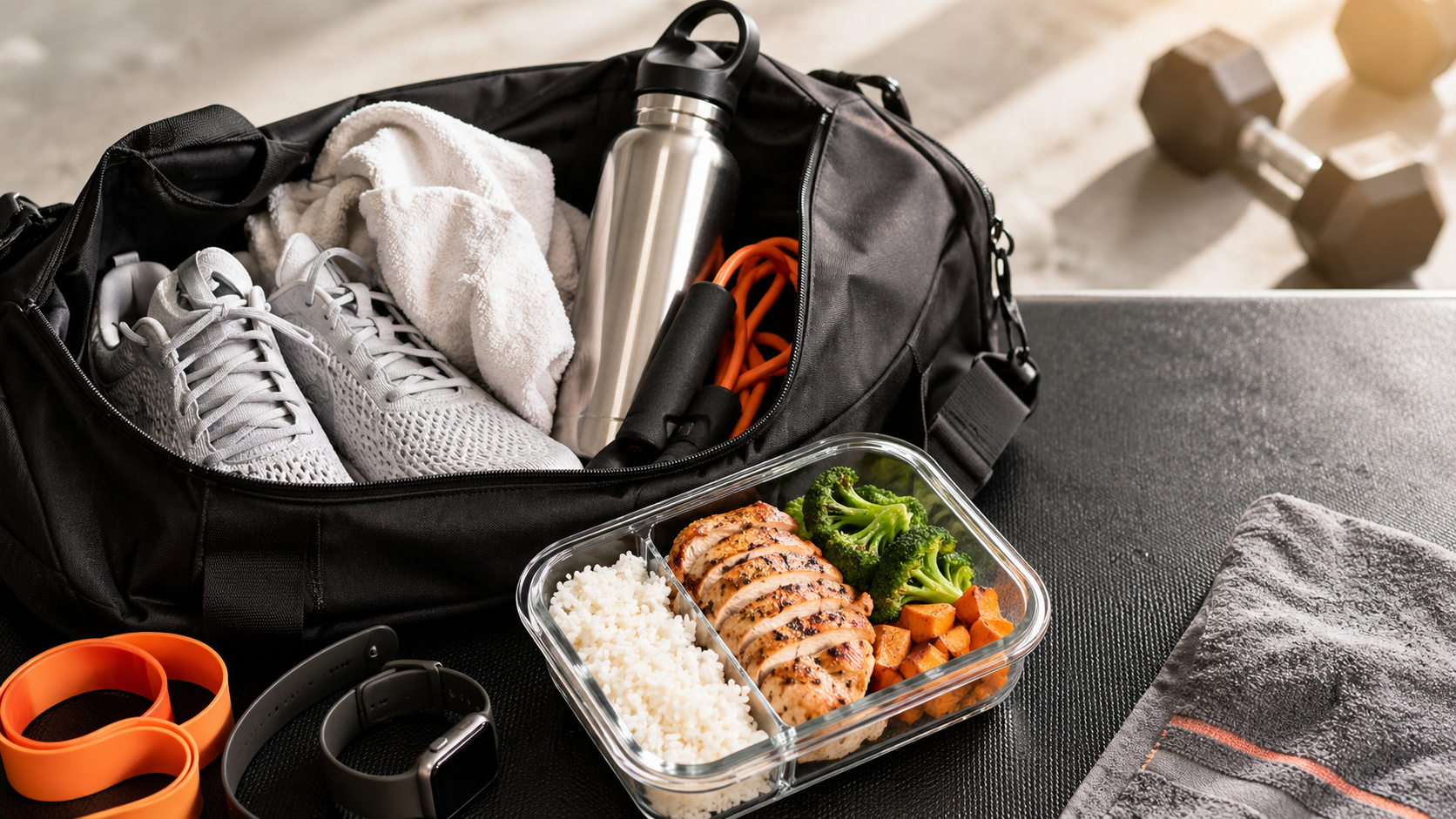
  • Bolsa de gimnasio abierta con zapatillas, toalla, botella, cuerda de saltar, mancuerna y tupper saludable con pollo, arroz, brócoli y boniato.

    Por qué no bajas de peso aunque estés entrenando

    Entrenar y no bajar de peso puede ser frustrante. Sientes que estás haciendo el esfuerzo, sudas, vas al gimnasio, sales a caminar o haces cardio, pero la báscula apenas se mueve. Y entonces aparece la duda: “¿estoy haciendo algo mal?”.

    La respuesta corta es que entrenar ayuda mucho, pero no garantiza por sí solo la pérdida de grasa. Para perder grasa necesitas que tu alimentación, tu actividad diaria, tu descanso y tu constancia estén alineados. Si una de esas piezas falla, el entrenamiento puede no traducirse en el cambio que esperas.

    Respuesta rápida

    Si entrenas pero no bajas de peso, las causas más comunes son: no estás en déficit calórico, comes más después de entrenar, te mueves menos el resto del día, mides mal el progreso o esperas cambios demasiado rápidos.

    Nota: este contenido es informativo y no sustituye asesoramiento médico, nutricional o deportivo individualizado. Si tienes una condición médica o necesidades específicas, consulta con un profesional cualificado.

    Entrenar no es lo mismo que estar en déficit

    Este es el punto principal. El entrenamiento mejora tu salud, tu fuerza, tu condición física y tu gasto energético. Pero si después comes más de lo que gastas, la pérdida de peso no aparecerá. No es falta de esfuerzo: es falta de alineación.

    El ejercicio suma

    Pero no siempre suma tanto como imaginas, sobre todo si el resto del día eres muy sedentario.

    El hambre puede subir

    Algunas personas comen más tras entrenar y neutralizan sin darse cuenta parte del déficit.

    El peso fluctúa

    Entrenar puede aumentar retención de líquidos temporal, especialmente si empiezas fuerza o subes intensidad.

    7 razones por las que no bajas de peso aunque entrenes

    1. No estás en déficit calórico

    Puedes entrenar cuatro o cinco días por semana y aun así no perder grasa si tu ingesta total sigue igualando o superando tu gasto. El déficit no se crea solo por entrenar: se crea por el equilibrio entre lo que gastas y lo que comes.

    2. Comes más después de entrenar

    Es habitual sentir que “te lo has ganado” después de una sesión dura. El problema aparece cuando ese extra supera lo que has gastado entrenando. No se trata de castigarte, sino de no usar el entrenamiento como cheque en blanco.

    3. Te mueves menos el resto del día

    Algunas personas entrenan una hora, pero luego pasan el resto del día sentadas. La actividad diaria fuera del entrenamiento también cuenta: caminar, subir escaleras y moverte más puede marcar diferencia.

    4. Solo miras la báscula

    Si haces fuerza, puedes mejorar composición corporal aunque el peso no baje rápido. Medidas, fotos, ropa y rendimiento también ayudan a entender el progreso real.

    5. No priorizas la proteína

    Entrenar sin una base suficiente de proteína puede hacer que tengas más hambre y peor recuperación. Una buena ingesta proteica facilita la saciedad y ayuda a mantener masa muscular.

    6. Duermes poco o gestionas mal el estrés

    Dormir mal no bloquea mágicamente la pérdida de grasa, pero puede aumentar hambre, reducir energía, empeorar decisiones y dificultar la recuperación. Todo eso afecta al proceso.

    7. Cambias de plan demasiado pronto

    Si cambias rutina, dieta o estrategia cada semana, nunca das tiempo a que el proceso se estabilice. Un plan razonable necesita continuidad antes de evaluar si funciona.

    Qué hacer si entrenas y no ves cambios

    • Revisa tu ingesta real, no solo si comes “sano”.
    • Aumenta proteína y construye comidas más saciantes.
    • Camina más y mejora tu actividad diaria fuera del entrenamiento.
    • Mide progreso con varias señales: peso promedio, medidas, fotos y ropa.
    • Mantén el plan varias semanas antes de cambiarlo todo.

    El entrenamiento funciona mejor cuando no va solo

    Entrenar es una de las mejores decisiones que puedes tomar, pero para cambiar tu físico necesitas que vaya acompañado de una alimentación adecuada, un mínimo de organización y suficiente constancia.

    Si estás entrenando y no ves resultados, no significa que el entrenamiento no sirva. Significa que probablemente necesitas ajustar el sistema completo.

    Preguntas frecuentes

    ¿Por qué entreno y peso igual?

    Puede ser por falta de déficit, retención de líquidos, aumento de masa muscular inicial o porque estás midiendo el progreso con muy pocos datos.

    ¿Necesito hacer más cardio?

    No necesariamente. Puede ayudarte, pero antes conviene revisar alimentación, actividad diaria y consistencia.

    ¿Cuánto tiempo debo esperar para ver resultados?

    Lo razonable es observar tendencias durante varias semanas. Evaluar después de pocos días suele llevar a conclusiones equivocadas.

    También te puede ayudar

    Siguiente paso

    Entrenar ayuda. Pero una estructura completa ayuda mucho más.

    Si quieres dejar de entrenar a ciegas y empezar a ordenar alimentación, actividad y hábitos, Radikal Reset está pensado para darte una estructura clara y sostenible.

    Ver Radikal Reset
  • Healthy plate with chicken, rice, broccoli and sweet potato next to a measuring tape, planning notebook and dumbbell

    Fat Loss Mistakes That Stop Progress Even When You Eat Well

    Fat loss mistakes

    Fat loss mistakes that stop progress even when you eat well.

    Eating “healthy” is not the same as being in a consistent fat-loss structure. If your progress has stalled even though your food looks better, these are the mistakes worth checking first.

    A lot of people improve their diet and still do not lose fat. They stop eating obvious junk, add salads, buy “healthier” foods and train more consistently. But after a few weeks, the scale barely moves and their body does not look very different.

    That does not mean the effort is useless. It usually means the process is missing structure. Fat loss is not only about food quality. It is about energy balance, portions, consistency, hunger management, activity and the ability to repeat the plan for long enough.

    Key idea

    Healthy food can still be too much food.

    Nuts, olive oil, avocado, granola, smoothies, protein bars and homemade meals can all fit into fat loss. But if portions are too high, they can still erase the calorie deficit you need.

    10 mistakes that stop fat loss progress

    You do not need to fix everything at once. Start by identifying the two or three mistakes that are most likely happening in your week.

    1. You are eating healthy foods, but portions are too high.

    Food quality matters, but portions still matter. A healthy meal can support fat loss, maintain weight or create a surplus depending on the quantities.

    2. You forget liquid calories.

    Juices, sugary coffees, alcohol, smoothies and “small” drinks can quietly add calories without making you feel full.

    3. Your weekends undo your weekdays.

    A good Monday to Friday can be erased by two days of uncontrolled meals, alcohol, snacks and low activity.

    4. You rely on training to fix food chaos.

    Training is essential for shape, strength and health, but it is very easy to eat back the calories burned in a workout.

    5. You are too aggressive during the week.

    Eating too little can lead to hunger, cravings, low energy and a rebound later. A moderate plan is often easier to repeat.

    6. You do not eat enough protein.

    Protein helps with satiety, muscle retention and meal structure. Without it, fat loss usually feels harder.

    7. You snack without counting it as food.

    Small bites, handfuls, tastes and “just a little” snacks can add up across the day.

    8. Your activity outside the gym drops.

    When dieting, some people move less without noticing. Steps and daily movement matter more than most people think.

    9. You judge progress from one weigh-in.

    Water, salt, digestion and training stress can move the scale. Look at weekly averages, photos, measurements and performance.

    10. You keep changing the plan too soon.

    If you change your diet every few days, you never know what is working. Give a simple plan enough time before adjusting.

    Radikal Reset principle

    Fat loss needs consistency, not random perfection.

    You do not need a perfect diet. You need a repeatable structure that keeps you in control most of the time and helps you recover quickly when a day goes wrong.

    How to fix it without starting over

    Do not respond to a plateau by destroying your whole routine. Start with the simplest checks.

    Check protein first

    Add a clear protein source to each main meal before changing everything else.

    Review portions

    Look at oil, sauces, nuts, snacks, carbs and drinks. These are common hidden areas.

    Track one normal week

    Do not track a perfect week. Track a normal one so you can see what is really happening.

    Keep training consistent

    Strength training helps preserve muscle and gives your body shape as fat comes down.

    What not to do

    • Do not slash calories aggressively after one bad weigh-in.
    • Do not add huge amounts of cardio overnight.
    • Do not remove every food you enjoy.
    • Do not restart every Monday as if the previous week taught you nothing.
    • Do not confuse “healthy” with “automatic fat loss”.

    Related guides

    Continue with these guides if you want to understand fat loss with more structure.

    Want a clearer structure?

    Radikal Reset helps you organize training, nutrition and habits into one 8-week plan.

    If you are tired of guessing, the full program gives you the weekly structure to stop improvising.

  • Plato saludable con pollo, arroz, brócoli y boniato junto a cinta métrica, libreta de planificación y mancuerna

    Errores comunes que te impiden perder grasa aunque comas bien

    Hay una frase que se repite mucho cuando alguien intenta perder grasa y no ve cambios: “pero si yo como bien”. Y muchas veces es verdad. La persona no vive a base de comida basura, no cena pizza cada noche y no bebe refrescos todo el día. El problema es que comer “bien” no siempre significa comer de una forma que favorezca la pérdida de grasa.

    Puedes elegir alimentos saludables y aun así no estar en déficit. Puedes entrenar con frecuencia y aun así compensarlo comiendo más. Puedes tener buenas intenciones y seguir atrapado en pequeños errores que se acumulan cada semana.

    Respuesta rápida

    Si no pierdes grasa aunque comes “bien”, normalmente el problema está en una de estas áreas: comes más calorías de las que crees, no priorizas suficiente proteína, improvisas demasiado, mides mal el progreso o esperas resultados demasiado rápido.

    Nota: este contenido es informativo y no sustituye asesoramiento médico, nutricional o deportivo individualizado. Si tienes una condición médica o necesidades específicas, consulta con un profesional cualificado.

    Comer bien no siempre significa comer para perder grasa

    Este es el punto que más cuesta aceptar. La calidad de los alimentos importa, pero la pérdida de grasa depende también de la cantidad total, la saciedad, la proteína, la constancia y el contexto de toda la semana.

    Saludable no significa bajo en calorías

    Frutos secos, aceite de oliva, aguacate o granola pueden ser alimentos útiles, pero también muy densos en calorías.

    Entrenar no lo compensa todo

    Una sesión de entrenamiento puede ayudarte mucho, pero no neutraliza automáticamente una semana desordenada.

    La semana completa cuenta

    De lunes a jueves puedes hacerlo bien, pero el fin de semana puede borrar el déficit si no hay cierto control.

    8 errores que te impiden perder grasa aunque comas bien

    1. Comer más de lo que necesitas sin darte cuenta

    Las porciones, los “picoteos pequeños”, los aceites, las salsas y las bebidas calóricas suman más de lo que parece. No necesitas obsesionarte, pero sí tener una referencia realista.

    2. No priorizar suficiente proteína

    La proteína ayuda a la saciedad y a mantener masa muscular. Si tus comidas son saludables pero pobres en proteína, es más fácil pasar hambre.

    3. Improvisar demasiadas comidas

    Improvisar a diario aumenta las probabilidades de elegir peor, comer más rápido o resolver con lo primero que encuentras.

    4. Medir mal el progreso

    Pesarte un solo día, ignorar medidas o no mirar tendencias puede darte una imagen falsa del proceso.

    5. Esperar resultados demasiado rápido

    La pérdida de grasa sostenible suele necesitar semanas, no días. Si esperas cambios enormes en una semana, es fácil frustrarte.

    6. Entrenar mucho y descuidar la comida

    Entrenar ayuda, pero no sustituye una estructura básica en la comida.

    7. Subestimar alcohol y fines de semana

    Si cada fin de semana se descontrola, es fácil que el déficit de lunes a viernes desaparezca.

    8. No tener un plan claro

    Muchas personas no necesitan más fuerza de voluntad. Necesitan menos decisiones caóticas y una estructura simple.

    Qué hacer en su lugar

    • Crea una referencia calórica, aunque sea aproximada.
    • Prioriza proteína en desayunos, comidas y cenas.
    • Planifica varias comidas de la semana para improvisar menos.
    • Mide progreso con tendencia, no con un solo peso aislado.
    • Ten paciencia: si el plan es razonable, dale tiempo suficiente.

    El problema no suele ser falta de intención

    Muchas personas quieren cambiar de verdad. Lo que ocurre es que intentan hacerlo con demasiada improvisación y poca estructura.

    Cuando ordenas las comidas, reduces errores repetidos y tienes una forma clara de actuar, el proceso se vuelve menos caótico y mucho más sostenible.

    Preguntas frecuentes

    ¿Por qué no pierdo grasa si como saludable?

    Porque comer saludable no garantiza un déficit calórico. Puedes elegir buenos alimentos y aun así comer más energía de la que gastas.

    ¿Tengo que contar calorías para solucionarlo?

    No siempre, pero tener una referencia durante un tiempo puede ayudarte a detectar errores que no ves a simple vista.

    ¿Cuánto tarda en verse el cambio?

    Depende del punto de partida, pero conviene valorar tendencias de varias semanas, no cambios de pocos días.

    También te puede ayudar

    Siguiente paso

    No necesitas hacerlo perfecto. Necesitas dejar de repetir los mismos errores.

    Si quieres perder grasa con menos caos y más dirección, Radikal Reset está pensado para ayudarte a crear una estructura clara: mejores comidas, mejores hábitos y un proceso más fácil de sostener.

    Ver Radikal Reset
  • Healthy meal prep container with grilled chicken, rice, broccoli and sweet potato next to a dumbbell and a shaker

    How to Calculate Your Calories to Lose Fat Without Going Crazy

    Fat loss calories

    How to calculate your calories to lose fat without going crazy.

    You do not need to obsess over every gram forever. But understanding your calories can help you stop guessing, control fat loss and adjust your plan without panic.

    Calories are not the whole story, but they are part of the story. If you want to lose fat, your body needs to use more energy than it takes in over time. That does not mean you need to become obsessive. It means you need enough awareness to stop eating completely blind.

    The problem is that many people treat calories in two extreme ways: either they ignore them completely, or they track everything so aggressively that food becomes stressful. The useful middle ground is learning how calories work, using them as a tool, and then building repeatable meals around that understanding.

    Simple rule

    Use calories to create clarity, not obsession.

    Counting calories can be useful for a short period because it shows you what is really happening. But the final goal is not to live inside an app. The goal is to understand portions, protein, snacks, oils, drinks and patterns well enough to make better decisions.

    A simple way to estimate your fat-loss calories

    This is not a perfect formula. No formula is. It gives you a starting point that you can adjust based on real progress.

    Step 1

    Estimate your maintenance calories

    Maintenance calories are roughly the calories your body needs to maintain your current weight. A simple starting estimate is:

    Body weight in kg × 28-33

    Use the lower end if you are less active. Use the higher end if you train and move more.

    Step 2

    Create a moderate deficit

    Once you have an estimated maintenance number, subtract a moderate amount:

    Start with 300-500 calories below maintenance.

    This is usually more repeatable than cutting too aggressively from day one.

    Step 3

    Track the trend, not one day

    Your first target is only a starting point. Use 2-3 weeks of data before making big changes. Weight can move up and down because of water, salt, digestion, menstrual cycle, stress and training.

    Radikal Reset principle

    Your calorie target is a starting point, not a prison.

    The number helps you start. Your real progress tells you whether to adjust. Do not treat a formula as more important than what your body and your week are showing you.

    Example calculation

    Imagine someone weighs 80 kg and trains a few times per week but does not move a lot outside the gym.

    Maintenance estimate

    80 × 30 = around 2,400 calories.

    Fat-loss target

    2,400 – 400 = around 2,000 calories.

    Adjustment

    Review after 2-3 weeks of consistent tracking.

    How much protein should you eat?

    Calories control the direction of fat loss, but protein helps the process feel easier and supports muscle retention. A practical range for many people is:

    1.6-2.2 g of protein per kg of body weight

    You do not need to hit the exact number perfectly. Start by adding a clear protein source to each main meal.

    What to track without becoming obsessive

    Tracking can be useful, but it does not need to control your life. Start with the variables that give you the most clarity.

    Body weight trend

    Use weekly averages instead of reacting to one weigh-in.

    Protein

    Make sure your meals are not just carbs and fats with little protein.

    Hidden calories

    Oils, sauces, drinks, snacks, nuts and weekend meals often matter.

    Steps and training

    Low movement can slow progress even when your diet looks good.

    When should you adjust calories?

    Do not adjust after one bad day.

    One high-salt meal, one stressful day or one hard workout can affect the scale temporarily.

    Wait for a real trend.

    If your weekly average does not change after 2-3 consistent weeks, then adjust.

    Adjust gently.

    Reduce 100-200 calories, increase steps, or improve accuracy before making extreme changes.

    Common calorie mistakes

    • Choosing a target that is too low and then bingeing later.
    • Tracking Monday to Thursday but ignoring weekends.
    • Forgetting oils, sauces, drinks and snacks.
    • Changing calories every few days instead of watching the trend.
    • Using exercise calories as permission to eat much more.
    • Thinking calories matter but protein, fiber and food quality do not.

    Related guides

    Continue with these guides if you want fat loss to feel less confusing.

    Want the full structure?

    Radikal Reset helps you organize nutrition, training and habits without guessing.

    Calories matter, but the full process works better when they are connected to meals, training, movement and weekly consistency.

  • Tupper de comida saludable con pollo a la plancha, arroz, brócoli y boniato junto a una mancuerna y un shaker

    Cómo calcular tus calorías para perder grasa sin volverte loco

    Calcular calorías para perder grasa no tiene por qué ser un proceso obsesivo ni una condena a vivir pendiente del móvil y la báscula. Bien entendido, es simplemente una forma de orientarte para comer un poco menos de lo que gastas, sin hacerlo al azar.

    El problema es que mucha gente entra en este tema con una mentalidad demasiado extrema: o lo calcula todo al gramo o lo deja completamente al azar. Y normalmente, ni una cosa ni la otra suele ayudar demasiado.

    Respuesta rápida

    Para perder grasa necesitas comer algo menos de lo que gastas, mantener una ingesta de proteína razonable y sostener ese proceso el tiempo suficiente. No hace falta clavar el número exacto. Hace falta acertar la dirección y mantener cierta consistencia.

    Nota: este contenido es informativo y no sustituye asesoramiento médico, nutricional o deportivo individualizado. Si tienes una condición médica o necesidades específicas, consulta con un profesional cualificado.

    Qué significa realmente “calcular tus calorías”

    Significa tener una referencia aproximada de cuánto comes y cuánto podrías necesitar para empezar a perder grasa. No es una cifra mágica ni una verdad absoluta. Es un punto de partida útil.

    Gasto diario

    Es una estimación de la energía que gastas entre metabolismo, actividad y entrenamiento.

    Déficit calórico

    Es comer un poco menos de lo que gastas para favorecer la pérdida de grasa.

    Ajuste

    La primera cifra rara vez es perfecta. Lo normal es ajustar según evolución real.

    Los 3 pasos básicos para calcular tus calorías

    1. Estima tu gasto diario

    Puedes usar una calculadora online como referencia inicial. No será exacta, pero sí suficientemente útil para empezar con una idea razonable.

    2. Crea un déficit pequeño o moderado

    En muchos casos, empezar con un 10–20% menos de tu gasto estimado ya es suficiente. No hace falta bajar muchísimo para empezar a ver cambios.

    3. Observa y ajusta

    Si pasan dos o tres semanas y no hay cambios, ajustas un poco. Si bajas demasiado rápido y te sientes mal, ajustas también. Esto va más de corregir bien que de acertar a la primera.

    Ejemplo simple

    Imagina que estimas que tu gasto diario ronda las 2.400 kcal.

    Un inicio razonable podría ser moverte alrededor de 2.000–2.150 kcal al día y observar qué ocurre durante dos semanas. No necesitas obsesionarte con alcanzar exactamente 2.073. Necesitas una referencia útil.

    Idea clave: perder grasa no suele depender de una precisión quirúrgica, sino de una dirección correcta mantenida con suficiente constancia.

    Qué importa más que contar cada caloría

    Proteína suficiente

    Te ayuda a mantener masa muscular y a llevar mejor la saciedad.

    Comida real y saciante

    Si tu dieta está llena de ultraprocesados, el déficit suele hacerse más cuesta arriba.

    Constancia

    Un plan razonable seguido durante semanas suele ganar a uno perfecto seguido tres días.

    Errores comunes al calcular calorías

    • Bajar demasiado las calorías y aguantar solo unos días.
    • Pensar que la cifra inicial es exacta y no querer ajustar.
    • Olvidar la proteína y centrarte solo en el total calórico.
    • Confiar solo en la motivación en vez de tener estructura.
    • Abandonar por un mal día, como si eso arruinara todo el proceso.

    No necesitas volverte loco para hacerlo bien

    Mucha gente mejora muchísimo su proceso solo con una referencia razonable, unas cuantas comidas repetibles y una estructura mínima. No hace falta convertir cada comida en una hoja de cálculo.

    Lo importante no es vivir pendiente de números todo el día. Lo importante es que el sistema que uses te ayude a sostener mejores decisiones durante suficiente tiempo.

    Preguntas frecuentes

    ¿Tengo que pesar toda la comida para perder grasa?

    No necesariamente. Puede ayudarte al principio, pero muchas personas progresan bien usando estimaciones razonables y repitiendo comidas similares.

    ¿Cuánto déficit debería hacer?

    Suele funcionar mejor un déficit pequeño o moderado que uno agresivo. Lo importante es que puedas sostenerlo.

    ¿Y si no bajo nada la primera semana?

    No saques conclusiones demasiado rápido. Mira tendencias de dos o tres semanas antes de tocar nada.

    También te puede ayudar

    Siguiente paso

    Perder grasa no suele requerir más obsesión. Suele requerir más estructura.

    Si quieres organizar mejor tus calorías, tus comidas y tus hábitos sin complicarte la vida, Radikal Reset está pensado precisamente para eso: convertir la teoría en un sistema más claro y más sostenible.

    Ver Radikal Reset