• Person strength training in a bright gym with a stationary bike in the background and dumbbells nearby

    Cardio or Weights for Fat Loss: What Should You Prioritize?

    Fat loss training

    Cardio or weights for fat loss: what should you prioritize?

    If your goal is losing fat and looking better, the answer is not “cardio only” or “weights only”. The best approach is usually strength training as the foundation, cardio as a tool, and nutrition as the driver of fat loss.

    Many people start a fat-loss phase by adding more and more cardio. Others avoid cardio completely and only lift weights. Both approaches can work in the right context, but both can also fail when they are used without structure.

    The real question is not which one burns more calories in one session. The real question is which combination helps you lose fat, keep muscle, train consistently and not quit after two weeks.

    Simple answer

    Prioritize weights. Use cardio to support the process.

    If you want to lose fat and improve how your body looks, strength training should usually come first. It helps you keep or build muscle, improves your shape and gives your body a reason to hold on to lean mass while you are in a calorie deficit.

    Cardio is still useful. It helps increase energy expenditure, improves fitness and can make fat loss easier. But if cardio replaces strength training completely, you may lose weight without getting the look you actually want.

    What weights do for fat loss

    Muscle

    They help protect muscle

    During fat loss, lifting gives your body a reason to maintain muscle instead of just becoming smaller.

    Shape

    They change how you look

    Fat loss reveals the body underneath. Strength training helps that body look stronger and more athletic.

    Progress

    They give you measurable progress

    Even when the scale is slow, better reps, better form and better strength show that the process is working.

    What cardio does for fat loss

    Cardio is not a punishment for eating. It is a tool. Used well, it can help you create a calorie deficit, improve conditioning and make your weekly activity more consistent.

    Cardio increases energy expenditure.

    Walking, cycling, incline treadmill, swimming or easy intervals can help you burn more energy without cutting food too aggressively.

    Cardio improves fitness.

    Better conditioning can help you feel better in training, recover between sets and move more during daily life.

    Cardio can be easier to recover from when it is low intensity.

    Walking is underrated because it supports fat loss without making you feel destroyed.

    Radikal Reset principle

    Do not use cardio to compensate. Use it to support your structure.

    When cardio becomes punishment, people usually burn out. When cardio becomes a simple weekly tool, it becomes much easier to repeat.

    Best weekly structure for most people

    The exact plan depends on your level, recovery and schedule, but most people do well with a simple structure like this:

    Strength training

    3-4 sessions per week depending on your level and time.

    Steps

    Increase daily movement instead of relying only on gym sessions.

    Cardio

    2-3 easy sessions per week if recovery and schedule allow it.

    Common mistakes

    Mistake 1: doing only cardio.

    You may lose weight, but you risk ending up smaller without the shape or strength you wanted.

    Mistake 2: lifting weights but ignoring food.

    Training helps, but fat loss still needs a calorie deficit over time.

    Mistake 3: adding too much cardio too soon.

    If you start with a huge amount of cardio, you leave yourself with fewer adjustments later and may burn out early.

    Mistake 4: treating sweat as progress.

    A hard session can feel productive, but results come from repeatable weeks, not one brutal workout.

    So what should you do first?

    If you are a beginner

    Start with 3 strength sessions and walking. Do not rush into intense cardio.

    If you already train

    Keep lifting, add cardio gradually and organize your nutrition before adding more volume.

    If you are exhausted

    Reduce intensity. Walking and moderate lifting may work better than trying to destroy yourself.

    Related guides

    Continue with these guides if you want to build a complete training and fat-loss structure.

    Want a complete structure?

    Radikal Reset combines training, cardio, nutrition and habits into one 8-week plan.

    You do not need to guess whether to do cardio or weights. You need a structure that tells you how to combine them.

  • Persona entrenando fuerza en un gimnasio con bicicleta estática al fondo, mancuernas y ambiente luminoso

    Cardio o pesas para perder grasa: qué priorizar

    Si quieres perder grasa, es normal preguntarte qué deberías priorizar: cardio o pesas. Mucha gente piensa que el cardio “quema grasa” y las pesas son solo para ganar músculo, pero esa visión se queda corta.

    La realidad es que tanto el cardio como las pesas pueden ayudarte, pero cumplen funciones distintas. El error está en elegir uno como si el otro no importara, o en hacer demasiado de todo sin una estructura clara.

    Respuesta rápida

    Para perder grasa, deberías priorizar pesas o entrenamiento de fuerza para mantener músculo y mejorar tu composición corporal, y usar el cardio como complemento para aumentar gasto, salud cardiovascular y adherencia. La pérdida de grasa dependerá sobre todo del déficit calórico y la constancia.

    Nota: este contenido es informativo y no sustituye asesoramiento médico, nutricional o deportivo individualizado. Si tienes dolor, lesión previa o una condición médica, consulta con un profesional cualificado antes de empezar.

    La pérdida de grasa no depende de elegir cardio o pesas

    Perder grasa depende principalmente de mantener un déficit calórico durante suficiente tiempo. Eso puede lograrse comiendo mejor, moviéndote más, entrenando mejor o combinando todo de forma inteligente.

    La pregunta útil no es “qué quema más calorías en una sesión”, sino qué combinación te ayuda a perder grasa sin perder músculo, sin agotarte y sin abandonar.

    Las pesas protegen músculo

    Ayudan a mantener masa muscular mientras bajas grasa.

    El cardio aumenta gasto

    Puede facilitar el déficit y mejorar tu salud cardiovascular.

    La dieta decide mucho

    Sin una alimentación alineada, ni cardio ni pesas compensan el caos.

    Por qué las pesas deberían ser la base

    Cuando pierdes peso, no quieres perder cualquier peso. Quieres perder grasa y conservar la mayor cantidad posible de masa muscular. Ahí el entrenamiento de fuerza es clave.

    1. Mejora la composición corporal

    Dos personas pueden pesar lo mismo y verse muy distintas. La fuerza ayuda a que el cambio no sea solo bajar kilos, sino verte mejor.

    2. Ayuda a mantener músculo en déficit

    Si comes menos y no das estímulo a tus músculos, el cuerpo no tiene tantos motivos para conservarlos.

    3. Hace el proceso más sostenible

    Entrenar fuerza 3 o 4 días por semana suele ser más fácil de sostener que vivir haciendo cardio extremo.

    Entonces, ¿para qué sirve el cardio?

    El cardio no es malo ni innecesario. El problema es usarlo como castigo por comer o como única herramienta para perder grasa. Bien usado, es un complemento excelente.

    • Aumenta el gasto energético sin tener que recortar tanta comida.
    • Mejora la salud cardiovascular y la condición física general.
    • Puede reducir estrés si eliges una intensidad manejable.
    • Ayuda a crear rutina, especialmente con caminatas diarias.

    Cómo combinar cardio y pesas para perder grasa

    Opción simple para principiantes

    Haz 3 días de fuerza por semana y añade caminatas diarias o 2 sesiones suaves de cardio. Esto suele ser suficiente para empezar sin agotarte.

    Opción intermedia

    Haz 3–4 días de fuerza, 2–3 sesiones de cardio moderado y controla pasos diarios. El cardio debe apoyar el plan, no impedir que recuperes.

    Si tienes poco tiempo

    Prioriza fuerza y pasos. Si solo puedes elegir una cosa en el gimnasio, empieza por fuerza. El cardio puede entrar como caminatas o sesiones cortas.

    Errores comunes al combinar cardio y pesas

    Hacer tanto cardio que no recuperas

    Más no siempre es mejor. Si el cardio te deja sin energía para fuerza, puede estar perjudicando el plan.

    Usar el cardio como castigo

    Entrenar para “pagar” comidas suele crear una relación caótica con el proceso.

    Olvidar la alimentación

    Ni las pesas ni el cardio funcionan bien si la comida no acompaña el objetivo.

    Preguntas frecuentes

    ¿Puedo perder grasa solo con pesas?

    Sí, si tu alimentación crea un déficit. El cardio no es obligatorio, pero puede ayudar.

    ¿Puedo perder grasa solo con cardio?

    Puedes perder peso, pero sin fuerza es más fácil perder músculo y no lograr el aspecto físico que buscas.

    ¿Qué hago primero, cardio o pesas?

    Si tu prioridad es mejorar composición corporal, normalmente conviene hacer fuerza primero y cardio después o en días separados.

    También te puede ayudar

    Siguiente paso

    No necesitas elegir entre cardio y pesas. Necesitas una estructura que combine lo importante.

    Radikal Reset está pensado para ayudarte a ordenar entrenamiento, actividad, alimentación y hábitos sin depender de improvisar cada semana.

    Ver Radikal Reset
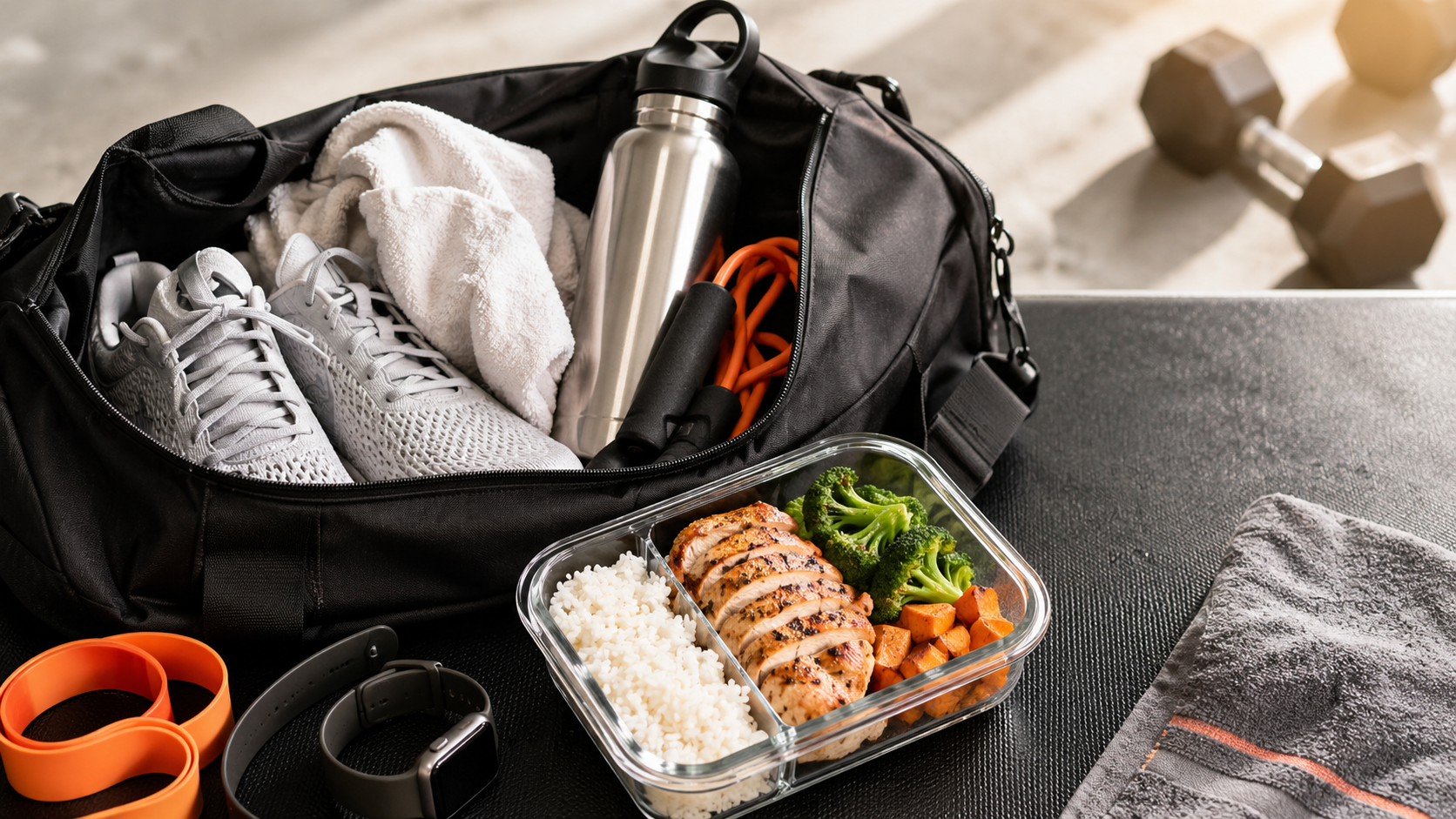
  • Open gym bag with training shoes, towel, water bottle, jump rope, dumbbell and a healthy meal prep container with chicken, rice, broccoli and sweet potato.

    Why You\’re Not Losing Weight Even Though You Train

    Fat loss

    Why You’re Not Losing Weight Even Though You Train

    Training matters, but it does not automatically guarantee fat loss. If your weight is not changing, the problem is usually not effort — it is the gap between training, food, movement and recovery.

    It is frustrating when you train several times per week and the scale barely moves. You feel like you are doing the hard part, but your body does not seem to respond.

    This is where many people assume something is wrong with their metabolism, their workouts or their discipline. Sometimes the issue is much simpler: training is only one part of the fat loss equation.

    You can train hard and still not lose weight if your food intake, daily movement, recovery or tracking are not aligned with the goal.

    Quick answer

    If you are training but not losing weight, you are probably not in a consistent calorie deficit.

    Training helps you build muscle, burn calories and improve your body, but fat loss still depends on your overall energy balance. Food, steps, liquid calories, weekends and recovery all matter.

    Training is powerful, but it is not a magic fat loss switch

    Strength training is one of the best things you can do when you want to look better. It helps you build or maintain muscle, improve shape, increase performance and feel more capable.

    But training does not cancel unlimited calories. A hard session can be wiped out very easily by extra snacks, bigger portions, weekend eating, alcohol or drinks that do not feel like “food.”

    Training changes your body

    It improves strength, muscle tone, posture and performance.

    Nutrition controls the deficit

    Your meals and portions decide whether fat loss actually happens.

    Movement supports the process

    Steps and daily activity often matter more than people expect.

    Radikal Reset principle

    Do not ask only, “Am I training?” Ask, “Is my whole week aligned with fat loss?”

    A few good workouts cannot always overcome seven days of random eating, low steps, poor sleep and inconsistent routines. The body responds to the full pattern.

    1. You may be eating back the calories you burn

    Exercise can increase hunger. After training, it is easy to feel like you “earned” more food. That is not morally wrong, but it can stop fat loss if the extra calories remove the deficit.

    Common examples

    • A bigger dinner because you trained.
    • Extra snacks after the gym.
    • A smoothie or shake that becomes a high-calorie dessert.
    • Weekend meals that cancel the deficit from Monday to Friday.
    • Using cardio as permission to eat without structure.

    The solution is not to fear food after training. It is to build post-workout meals with protein, structure and portions that fit your goal.

    2. Your weekends may be cancelling your weekdays

    Many people are consistent from Monday to Thursday, then much looser from Friday night to Sunday. The problem is not enjoying food. The problem is not realizing how much the weekly average can change.

    Weekdays
    Structured meals, workouts, better water intake and more control.
    Weekend
    Bigger portions, alcohol, takeaway, snacks, desserts and less movement.
    Result
    The weekly deficit disappears even though you feel like you trained hard.

    3. You may be moving less outside the gym

    This is easy to miss. You train, but the rest of the day becomes more sedentary. You sit more, walk less or feel tired and unconsciously reduce movement.

    Workouts matter, but daily movement matters too. A person who trains for one hour but barely moves the rest of the day may burn less overall than they think.

    Check your steps

    Do not guess. Look at your real average across the week.

    Add easy movement

    Walks, stairs, short breaks and easy cardio can support fat loss without destroying recovery.

    Avoid compensation

    Training should not become an excuse to move less for the rest of the day.

    4. You are relying on workouts instead of nutrition structure

    Some people train consistently but eat with no real structure. They are not eating badly in an obvious way, but their meals are too random to create reliable progress.

    Low protein meals

    If meals are mostly carbs and fats, hunger usually becomes harder and calories can climb quickly.

    Liquid calories

    Juice, alcohol, sweet coffee and regular soft drinks can slow progress without feeling like a real meal.

    Free-poured fats and sauces

    Olive oil, nuts, cheese, sauces and spreads can be healthy but still calorie-dense.

    Random snacking

    Small bites do not always feel important, but repeated every day they can erase the deficit.

    You do not need a perfect diet. You need enough structure that your training can finally show.

    The goal is not to count every crumb forever. The goal is to stop eating so randomly that you never know why progress is not happening.

    5. You may be gaining muscle or water while losing fat

    This is especially common if you are new to strength training or returning after time off. Your body may store more water in the muscles, recover from soreness and improve muscle tone while the scale changes slowly.

    That does not mean the scale is useless. It means you should not use it alone.

    Track more than weight

    • Waist measurement.
    • Progress photos.
    • How clothes fit.
    • Strength or repetitions in key exercises.
    • Weekly average weight, not one random weigh-in.

    6. You may not be training with enough structure

    Training often fails to create visible change when it is random. Doing different exercises every week, skipping lower body, avoiding progressive overload or turning every session into cardio can make progress harder to measure.

    Repeat key movements

    You need enough repetition to know whether you are improving.

    Track performance

    Weights, reps, control and technique tell you whether the body is adapting.

    Avoid random intensity

    Sweating is not the same as progressing. Structure matters more than chaos.

    A good fat loss plan combines strength training, simple nutrition, daily movement and tracking.

    If one part is missing, progress can slow down even when you feel like you are working hard.

    What to do this week if you train but are not losing weight

    Do not change everything at once. Use one week to collect better information and tighten the basics.

    1. Track your weekly weight average

    Weigh several mornings if possible and look at the average instead of reacting to one number.

    2. Measure your waist

    If your waist is dropping, progress may be happening even if the scale is slow.

    3. Add protein to every main meal

    This helps with fullness, recovery and meal structure.

    4. Check liquid calories and snacks

    Do not obsess. Just notice whether extra calories are coming from easy-to-miss places.

    5. Increase daily movement slightly

    Add walks or 1,500-2,500 steps per day if your current activity is low.

    The simple audit

    Training
    Are you following a repeatable plan and tracking progress?
    Nutrition
    Are meals structured, high in protein and controlled enough for fat loss?
    Movement
    Are your steps and daily activity consistent, or do they drop outside workouts?
    Tracking
    Are you looking at weight averages, waist, photos, clothing and performance?

    The answer is usually not “train harder.” It is “make the whole system clearer.”

    More effort without better structure can simply create more hunger, fatigue and frustration. Start by making the basics visible.

    Checklist: why you train but are not losing weight

    You are eating back the calories from training.
    Weekends are cancelling your weekday deficit.
    Daily movement is too low outside the gym.
    Protein and meal structure are inconsistent.
    You are relying only on the scale.
    Your training is hard, but not structured.

    Related guides

    Training is a powerful tool. Radikal Reset helps you connect it to the rest of the system.

    The program combines strength training, cardio support, simple nutrition, movement and progress tracking so your effort has a clear direction.


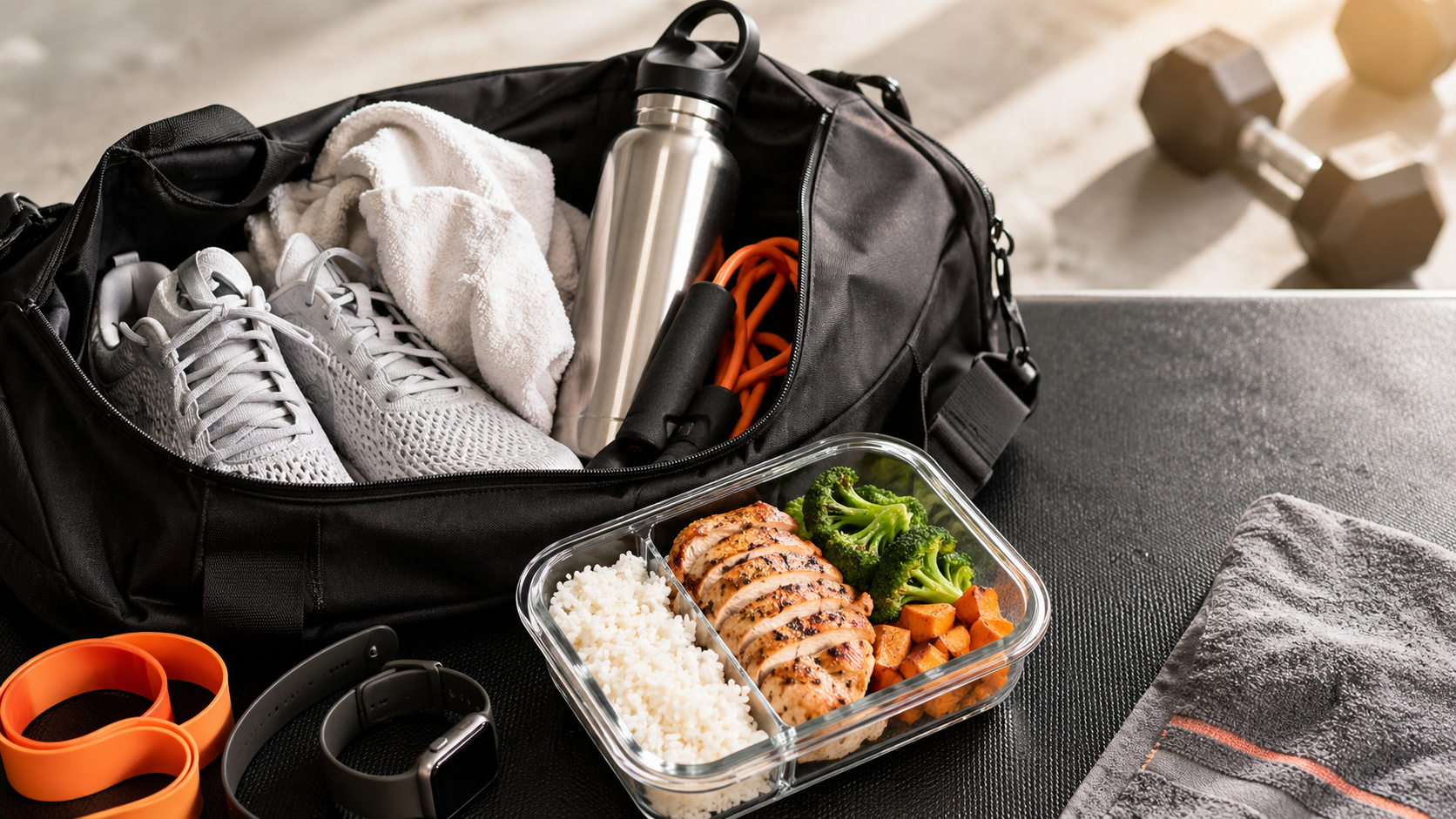
  • Bolsa de gimnasio abierta con zapatillas, toalla, botella, cuerda de saltar, mancuerna y tupper saludable con pollo, arroz, brócoli y boniato.

    Por qué no bajas de peso aunque estés entrenando

    Entrenar y no bajar de peso puede ser frustrante. Sientes que estás haciendo el esfuerzo, sudas, vas al gimnasio, sales a caminar o haces cardio, pero la báscula apenas se mueve. Y entonces aparece la duda: “¿estoy haciendo algo mal?”.

    La respuesta corta es que entrenar ayuda mucho, pero no garantiza por sí solo la pérdida de grasa. Para perder grasa necesitas que tu alimentación, tu actividad diaria, tu descanso y tu constancia estén alineados. Si una de esas piezas falla, el entrenamiento puede no traducirse en el cambio que esperas.

    Respuesta rápida

    Si entrenas pero no bajas de peso, las causas más comunes son: no estás en déficit calórico, comes más después de entrenar, te mueves menos el resto del día, mides mal el progreso o esperas cambios demasiado rápidos.

    Nota: este contenido es informativo y no sustituye asesoramiento médico, nutricional o deportivo individualizado. Si tienes una condición médica o necesidades específicas, consulta con un profesional cualificado.

    Entrenar no es lo mismo que estar en déficit

    Este es el punto principal. El entrenamiento mejora tu salud, tu fuerza, tu condición física y tu gasto energético. Pero si después comes más de lo que gastas, la pérdida de peso no aparecerá. No es falta de esfuerzo: es falta de alineación.

    El ejercicio suma

    Pero no siempre suma tanto como imaginas, sobre todo si el resto del día eres muy sedentario.

    El hambre puede subir

    Algunas personas comen más tras entrenar y neutralizan sin darse cuenta parte del déficit.

    El peso fluctúa

    Entrenar puede aumentar retención de líquidos temporal, especialmente si empiezas fuerza o subes intensidad.

    7 razones por las que no bajas de peso aunque entrenes

    1. No estás en déficit calórico

    Puedes entrenar cuatro o cinco días por semana y aun así no perder grasa si tu ingesta total sigue igualando o superando tu gasto. El déficit no se crea solo por entrenar: se crea por el equilibrio entre lo que gastas y lo que comes.

    2. Comes más después de entrenar

    Es habitual sentir que “te lo has ganado” después de una sesión dura. El problema aparece cuando ese extra supera lo que has gastado entrenando. No se trata de castigarte, sino de no usar el entrenamiento como cheque en blanco.

    3. Te mueves menos el resto del día

    Algunas personas entrenan una hora, pero luego pasan el resto del día sentadas. La actividad diaria fuera del entrenamiento también cuenta: caminar, subir escaleras y moverte más puede marcar diferencia.

    4. Solo miras la báscula

    Si haces fuerza, puedes mejorar composición corporal aunque el peso no baje rápido. Medidas, fotos, ropa y rendimiento también ayudan a entender el progreso real.

    5. No priorizas la proteína

    Entrenar sin una base suficiente de proteína puede hacer que tengas más hambre y peor recuperación. Una buena ingesta proteica facilita la saciedad y ayuda a mantener masa muscular.

    6. Duermes poco o gestionas mal el estrés

    Dormir mal no bloquea mágicamente la pérdida de grasa, pero puede aumentar hambre, reducir energía, empeorar decisiones y dificultar la recuperación. Todo eso afecta al proceso.

    7. Cambias de plan demasiado pronto

    Si cambias rutina, dieta o estrategia cada semana, nunca das tiempo a que el proceso se estabilice. Un plan razonable necesita continuidad antes de evaluar si funciona.

    Qué hacer si entrenas y no ves cambios

    • Revisa tu ingesta real, no solo si comes “sano”.
    • Aumenta proteína y construye comidas más saciantes.
    • Camina más y mejora tu actividad diaria fuera del entrenamiento.
    • Mide progreso con varias señales: peso promedio, medidas, fotos y ropa.
    • Mantén el plan varias semanas antes de cambiarlo todo.

    El entrenamiento funciona mejor cuando no va solo

    Entrenar es una de las mejores decisiones que puedes tomar, pero para cambiar tu físico necesitas que vaya acompañado de una alimentación adecuada, un mínimo de organización y suficiente constancia.

    Si estás entrenando y no ves resultados, no significa que el entrenamiento no sirva. Significa que probablemente necesitas ajustar el sistema completo.

    Preguntas frecuentes

    ¿Por qué entreno y peso igual?

    Puede ser por falta de déficit, retención de líquidos, aumento de masa muscular inicial o porque estás midiendo el progreso con muy pocos datos.

    ¿Necesito hacer más cardio?

    No necesariamente. Puede ayudarte, pero antes conviene revisar alimentación, actividad diaria y consistencia.

    ¿Cuánto tiempo debo esperar para ver resultados?

    Lo razonable es observar tendencias durante varias semanas. Evaluar después de pocos días suele llevar a conclusiones equivocadas.

    También te puede ayudar

    Siguiente paso

    Entrenar ayuda. Pero una estructura completa ayuda mucho más.

    Si quieres dejar de entrenar a ciegas y empezar a ordenar alimentación, actividad y hábitos, Radikal Reset está pensado para darte una estructura clara y sostenible.

    Ver Radikal Reset