The Radikal Reset Program

  • Person facing a text-free training crossroads with workout equipment and a clear path symbolizing how to avoid quitting in week 3.

    Why You Always Quit in Week 3 and How to Avoid It

    Many people do not quit on day one. They quit when the initial excitement is gone.

    Week 1 usually comes with motivation. Week 2 still runs on pride. But in week 3, real life appears: fatigue, hunger, work, social plans, less novelty and less drive.

    If you always quit in week 3, you probably do not need more discipline. You need a plan that does not depend on feeling motivated all the time.

    Note: this content is informational and does not replace individualized medical, psychological, nutrition or training advice. If you have a complex medical, emotional or eating-related situation, consult a qualified professional.

    Quick answer

    You quit in week 3 because initial motivation drops, the plan starts feeling heavy and you do not have a strategy for difficult days. The solution is not starting harder, but using a repeatable structure, realistic intensity, base meals and a minimum version to keep the chain alive.

    Why week 3 is so dangerous

    Week 3 is dangerous because you are no longer living off the emotion of starting. The plan no longer feels new. The scale may not be moving as fast as expected. Soreness no longer feels like an epic sign of change, but like accumulated fatigue.

    Also, by then, something has usually gone wrong: a meal out, a missed workout, a bad night of sleep, a stressful day or a messy weekend.

    The problem is not failing. The problem is not having a system to return quickly after failing.

    It is not just lack of discipline

    It is easy to think, “I quit because I have no willpower.” But many times the real problem is different: the plan was poorly designed from the start.

    If your plan requires a perfect life, constant motivation and zero mistakes, it is not a strong plan. It is a fragile plan.

    Initial motivation

    It helps you start, but it cannot be the main engine.

    Realistic structure

    It lets you continue when the emotion drops.

    Rescue plan

    It prevents one bad day from becoming a bad week.

    Reason 1: you start too hard

    One of the most common mistakes is starting as if you wanted to compensate for months or years in one week. You train too much, cut food too hard, use cardio as punishment and demand a version of yourself that does not exist yet.

    What this mistake looks like

    • You go from zero to training 5 or 6 days.
    • You remove too many foods at once.
    • You do cardio even when already exhausted.
    • You confuse ending destroyed with training well.
    • You treat the first week like punishment.

    The result is predictable: you reach week 3 tired, hungry, sore or mentally saturated.

    Reason 2: you change too many things at once

    On Monday you decide to train, eat perfectly, drink more water, sleep eight hours, quit sugar, walk ten thousand steps, prep all meals and never slip.

    The problem is not that those habits are bad. The problem is trying to install them all at once when you do not have a base yet.

    The more extreme changes you add on Monday, the more likely you are to quit by Thursday.

    Reason 3: you have no minimum version

    Many people only have two modes: do it perfectly or disappear. If they cannot complete the full workout, they do nothing. If lunch goes badly, the whole day falls apart. If Monday fails, they wait for next Monday.

    That all-or-nothing mindset is one of the main reasons people quit in week 3.

    Minimum rescue version

    • Do 2 exercises from the planned workout.
    • Walk 8-10 minutes.
    • Eat one protein-based meal.
    • Prepare the next useful decision.

    It is not perfect. But it keeps the chain alive.

    Reason 4: you use the scale as the final judge

    If you expected a huge drop in week 3 and the scale does not cooperate, you may feel everything was useless. But body weight fluctuates for many reasons: water, salt, digestion, menstrual cycle, stress, sleep, training or inflammation.

    If you decide based on one isolated number, you may quit right when you were starting to build rhythm.

    Track better

    • Weekly weight average.
    • Waist measurement.
    • Comparison photos.
    • Reference clothing.
    • Energy and performance.
    • Completed workouts.

    Reason 5: the plan does not fit your real life

    A plan can look perfect on paper and be useless in your life. If it requires cooking two hours a day, training six times, weighing every gram and avoiding every social meal, maybe the plan was not designed for you.

    Week 3 often reveals this. Your body is not the only thing that quits. Your schedule, energy and environment quit too.

    The best plan is not the one that looks most impressive. It is the one you can complete even during a normal week.

    This is where Radikal Reset makes sense

    Radikal Reset is not designed for you to have one perfect week and then disappear. It is designed to give you an 8-week structure with training, simple nutrition, habits and rules to continue even when a week gets difficult.

    See Radikal Reset

    How to avoid quitting in week 3

    1. Start with margin

    Week 1 should not be an ego test. It should leave you wanting to repeat.

    2. Design a repeatable week

    Three well-done workouts and base meals usually beat an impossible perfect plan.

    3. Have a minimum version

    When you cannot do everything, do enough to stay inside the process.

    4. Do not punish mistakes

    One worse meal or missed workout does not need punishment. It needs a quick return.

    5. Review on Sunday

    Do not wait until everything falls apart. Review what failed, what worked and what you will simplify.

    Rescue plan if you are in week 3 and want to quit

    If you are at that point right now, do not try to fix it with a huge promise. Do something much simpler.

    During the next 24 hours

    • Take a 10-minute walk.
    • Eat one protein-based meal.
    • Drink water.
    • Sleep as well as you can.
    • Do a short version of your workout tomorrow.

    You do not need to restart. You need to return.

    You may also find useful

    Frequently asked questions

    Is it normal to lose motivation in week 3?

    Yes. Initial motivation usually drops. That is why you need structure, not just desire.

    What if I already missed several days?

    Do not restart from zero. Eat one structured meal, take a short walk or do a minimum workout. Return with one small action.

    Do I need to make up missed workouts?

    Not always. Often it is better to continue with the next planned workout than to compensate for everything and get more exhausted.

    Does quitting in week 3 mean the plan is not for me?

    Not necessarily. It may mean the plan needs a more realistic version, better progression or a strategy for difficult weeks.

    You do not need another restart. You need a structure that survives week 3.

    Radikal Reset is designed to help you keep going when motivation drops: progressive training, simple nutrition, habits and an 8-week structure.

    Start Radikal Reset
  • Table with different text-free high-protein meals including yogurt, eggs, chicken, rice, vegetables, fish and fruit.

    20 High-Protein Meals to Lose Fat Without Living on a Diet

    high-protein meals, lose fat, simple nutrition, protein, Radikal Reset, fitness meals

    Eating better should not mean living on dry chicken, sad salad and constant hunger.

    If you want to lose fat, look better and control hunger, having high-protein meals helps a lot. Not because protein is magic, but because it usually supports fullness, helps maintain muscle and makes it easier to organize your day.

    This guide is not a strict diet. It is a practical list of ideas so you have real options: breakfasts, lunches, dinners, emergency meals and eating-out solutions.

    Note: this content is informational and does not replace individualized nutrition advice. If you have a medical condition, allergies, intolerances or specific needs, consult a qualified professional.

    Quick answer

    To lose fat without living on a diet, use simple meals built around protein + vegetables or fruit + adjusted carbs + reasonable fat. You do not need perfect meals: you need meals that keep you full, fit your life and can be repeated without overthinking.

    The simple plate rule

    Before looking at the meal ideas, keep one simple rule in mind. Most of your meals should look something like this:

    • Protein: chicken, eggs, yogurt, fish, turkey, lean beef, legumes, tofu, cottage cheese or protein powder if it suits you.
    • Vegetables or fruit: for volume, fiber and fullness.
    • Adjusted carbs: rice, potatoes, bread, pasta, oats, fruit or legumes.
    • Reasonable fat: olive oil, avocado, nuts, cheese or egg yolk.

    Every meal does not need to be perfect. The overall day needs to make sense.

    High-protein breakfasts

    1. Greek yogurt with fruit and oats

    A quick, filling and easy-to-adjust option. Use plain Greek yogurt, fruit, oats and cinnamon. Add protein powder or more yogurt if needed.

    2. Egg omelet with vegetables

    A good choice if you prefer a savory breakfast. Use whole eggs, egg whites, spinach, mushrooms, peppers or onion.

    3. High-protein dairy with fruit

    Very practical when you have little time. Add fruit, cinnamon, some oats or berries to make it more complete.

    4. Whole-grain toast with turkey, egg or tuna

    Simple, familiar and easy to repeat. The key is not making the toast just bread with a symbolic amount of protein.

    High-protein lunches and dinners

    5. Chicken with rice or potatoes and salad

    A classic base because it works. Adjust the rice or potato amount based on your goal, hunger and activity.

    6. Turkey bowl with vegetables and potatoes

    Ground turkey, sautéed vegetables and boiled or roasted potatoes. Easy to cook in batches.

    7. Fish with vegetables and rice

    Use hake, salmon, tuna, cod or white fish. Add vegetables and a carb serving if you need it.

    8. Lean beef with sautéed vegetables

    A good option if you want a break from chicken. Choose lean cuts and control oil so calories do not climb too high.

    9. Large salad with tuna, egg and legumes

    It does not have to be a sad salad. Use a large vegetable base, add real protein and complete it with legumes or potatoes.

    10. Chicken wraps with vegetables

    Wheat or corn tortilla, chicken, vegetables and spiced yogurt or a light sauce. Useful when you want something tasty without overcomplicating it.

    11. Lentils with vegetables and extra protein

    Legumes help, but if you want more protein, add egg, chicken, turkey, tofu or fish on the side.

    12. Tofu or tempeh with rice and vegetables

    A useful plant-based option if you do not eat meat or want to rotate protein sources.

    Eating better helps, but it is not everything

    If you want to change your body, eating more protein is not enough. You need simple nutrition, strength training, steps, recovery and a structure you can maintain.

    See Radikal Reset

    Emergency and quick options

    13. Protein shake with fruit

    It does not have to be mandatory, but it can help when you have little time or are short on protein.

    14. Tuna can with whole-grain bread and tomato

    A quick, cheap and no-cooking solution. Add fruit or salad if you want more volume.

    15. Boiled eggs with fruit

    Prepare them in advance and use them when you need something quick and filling.

    16. High-protein dairy with berries

    Useful as a snack or dessert when you want something sweet without derailing the day.

    17. Rotisserie chicken with prepared salad

    Not everything needs to be cooked from scratch. Knowing how to solve meals is part of adherence.

    18. Edamame or ready legumes with extra protein

    A quick option to add fiber, volume and plant-based protein.

    19. High-protein sandwich

    Bread, turkey, chicken, tuna, egg, cottage cheese or hummus with a main protein source. Simple beats perfect.

    20. Eating out: a main protein plate

    When eating out, look for a clear base: meat, fish, chicken, eggs, seafood, tofu or legumes, and add a simple side.

    How to use these meals without living on a diet

    The key is not having twenty perfect recipes. The key is having 4 or 5 meals you can repeat for weeks without feeling punished.

    • Choose 2 easy breakfasts.
    • Choose 2 base lunches or dinners.
    • Keep 2 emergency options.
    • Do not change everything at once.
    • Repeat what works.

    Repeating meals is not a problem. In fact, it is often an advantage when you want to lose fat without thinking about food all day.

    Common mistakes when trying to eat more protein

    Mistake 1: thinking only about protein and forgetting calories

    A meal can be high in protein and still very calorie-dense. The whole day still matters.

    Mistake 2: eating too little

    If you cut too hard, you will feel hungry, perform worse and be more likely to quit.

    Mistake 3: relying only on shakes

    They can be useful, but they should not always replace real, filling food.

    Mistake 4: looking for endless variety

    Too many options can make things harder. Start with a few base meals and improve later.

    You may also find useful

    Frequently asked questions

    Do I need to weigh all my food?

    Not necessarily. You can start with simple plates and reasonable portions. If you do not progress, measuring for a while can help.

    Does protein make you lose fat by itself?

    No. It helps fullness and muscle retention, but fat loss depends on the whole day and week.

    Can I lose fat while eating carbs?

    Yes. You can eat rice, potatoes, bread, pasta or fruit if the amounts fit your goal and weekly average.

    How many high-protein meals do I need per day?

    For many people, adding protein to main meals already improves fullness and daily structure a lot.

    Eating better is part of the change. The complete structure is what sustains it.

    Radikal Reset combines training, simple nutrition, steps and habits so you do not have to improvise every meal or every week.

    See Radikal Reset
  • Three text-free visual paths symbolizing different training and body transformation routes.

    Radikal Reset Test: Discover Which Route You Need to Start

    Not everyone needs to start the same way. A person who has not trained for months does not need the same route as someone who already trains but feels disorganized. And someone who always quits in week two or three does not need more intensity: they need a structure they can sustain.

    This Radikal Reset test helps you identify which type of route fits you right now: a Base Route, a Standard Route or a Controlled Intense Route.

    This is not a medical diagnosis or a perfect assessment. It is a practical way to stop improvising and choose a realistic starting point.

    Note: this content is informational and does not replace individualized medical, nutrition, or training advice. If you have injuries, pain, a medical condition or major doubts, consult a qualified professional before starting.

    Quick answer

    Answer the questions, count whether you choose more A, B or C answers, and check your final result. Mostly A means you probably need a Base Route. Mostly B means a Standard Route. Mostly C means a Controlled Intense Route.

    How to take the test

    Read each question and choose the option that best matches your current situation. Do not answer based on your ideal version. Answer based on what you can actually do this week.

    • Count how many A, B and C answers you choose.
    • Do not try to look “better”. The test only works if you are realistic.
    • If you are between two options, choose the more conservative one.
    • At the end, check which letter appears most.

    Question 1: how long have you been inconsistent with training?

    A) Months or years. Even starting again feels hard.
    B) A few weeks or months, but I have trained before.
    C) I train sometimes, but without clear structure or progress.

    Question 2: how is your daily energy?

    A) Low. Moving, training or keeping a routine feels difficult.
    B) Irregular. Some days are fine and others disappear.
    C) Decent, but I need structure to use it well.

    Question 3: what usually breaks your attempts?

    A) I get overwhelmed, it feels too big, and I quit.
    B) I start well, but work, hunger, fatigue or social life throw me off.
    C) I lack progression, focus or a more serious structure.

    Question 4: how many days can you realistically train?

    A) 2 or 3 days if they are realistic and do not destroy me.
    B) 3 days most weeks if I know exactly what to do.
    C) 3 or 4 days if the plan is well organized.

    Question 5: how are you eating right now?

    A) Quite chaotic. I improvise a lot and struggle with hunger.
    B) Average. I do not eat terribly, but there are clear things to improve.
    C) Not bad, but I need to connect it better with training.

    Question 6: what happens when you miss a day?

    A) It is hard to return. I feel like I already ruined it.
    B) I can return, but sometimes it takes several days.
    C) I return fairly quickly, but I want better consistency.

    Question 7: what do you need most right now?

    A) Start moving again without quitting.
    B) Organize training, food and habits.
    C) A more serious plan with progression and controlled intensity.

    Result: mostly A — Base Route

    If you mostly chose A answers, you probably need a Base Route. You do not need to destroy yourself. You need to build continuity, basic strength and weekly movement without quitting in week two.

    Your priority is not training harder. It is getting back to completing the plan. Start with 2 or 3 realistic workouts, easy walks and very simple food rules.

    Your initial focus

    • Full-body workouts.
    • Moderate loads.
    • More steps, without obsessing over hard cardio.
    • Protein in main meals.
    • Main goal: finish the week, not prove anything.

    Result: mostly B — Standard Route

    If you mostly chose B answers, you probably need a Standard Route. You can move forward well, but you need to stop improvising.

    Your priority is building a repeatable week: 3 workouts, steps, base meals, enough protein and tracking without obsession.

    Your initial focus

    • 3 well-distributed weekly workouts.
    • Gradual progress in loads or reps.
    • 2 or 3 base meals to avoid improvising.
    • Walks or easy cardio as support.
    • Main goal: keep rhythm when motivation drops.

    Result: mostly C — Controlled Intense Route

    If you mostly chose C answers, you probably need a Controlled Intense Route. You already have some base, but you need direction, progression and a structure that does not depend only on motivation.

    You may tolerate more work, but that does not mean week one should become an ego test.

    Your initial focus

    • 3 or 4 workouts depending on recovery.
    • Clear progression in main exercises.
    • Intensity control, not destruction.
    • Simple but more precise nutrition.
    • Main goal: channel intensity without burning out.
    What matters

    Your route matters, but what matters most is having a structure.

    The problem for many people is not that they do not know they should train or eat better. The problem is that they do not have a clear route for their real starting point.

    Start my reset

    What to do now based on your result

    If you are Base Route

    Do not start at maximum intensity. Start with a week you can complete. Two workouts done are worth more than five imagined.

    If you are Standard Route

    Organize 3 workouts, 2 base meals and a simple way to track progress. Your enemy is improvisation.

    If you are Controlled Intense Route

    Use your energy, but do not turn the plan into a competition against yourself. Progressing is not destroying yourself.

    You may also find useful

    Frequently asked questions

    What if I get a tie between two routes?

    Choose the more conservative route for the first week. You can always increase demands later, but starting too hard often breaks continuity.

    Is the Base Route only for beginners?

    No. It may also be the best route if you are coming from a bad period, high stress, low energy or several failed attempts.

    Is the Controlled Intense Route better?

    Not necessarily. It is better only if you can recover, maintain technique and sustain the plan without burning out.

    Can I change route later?

    Yes. It is normal to start more conservatively and adjust based on energy, recovery, adherence and progress.

    You do not need to copy someone else’s route. You need to start from your real point.

    Radikal Reset is designed to help you train, eat and build habits with a structure that makes sense for your starting point.

    Start Radikal Reset
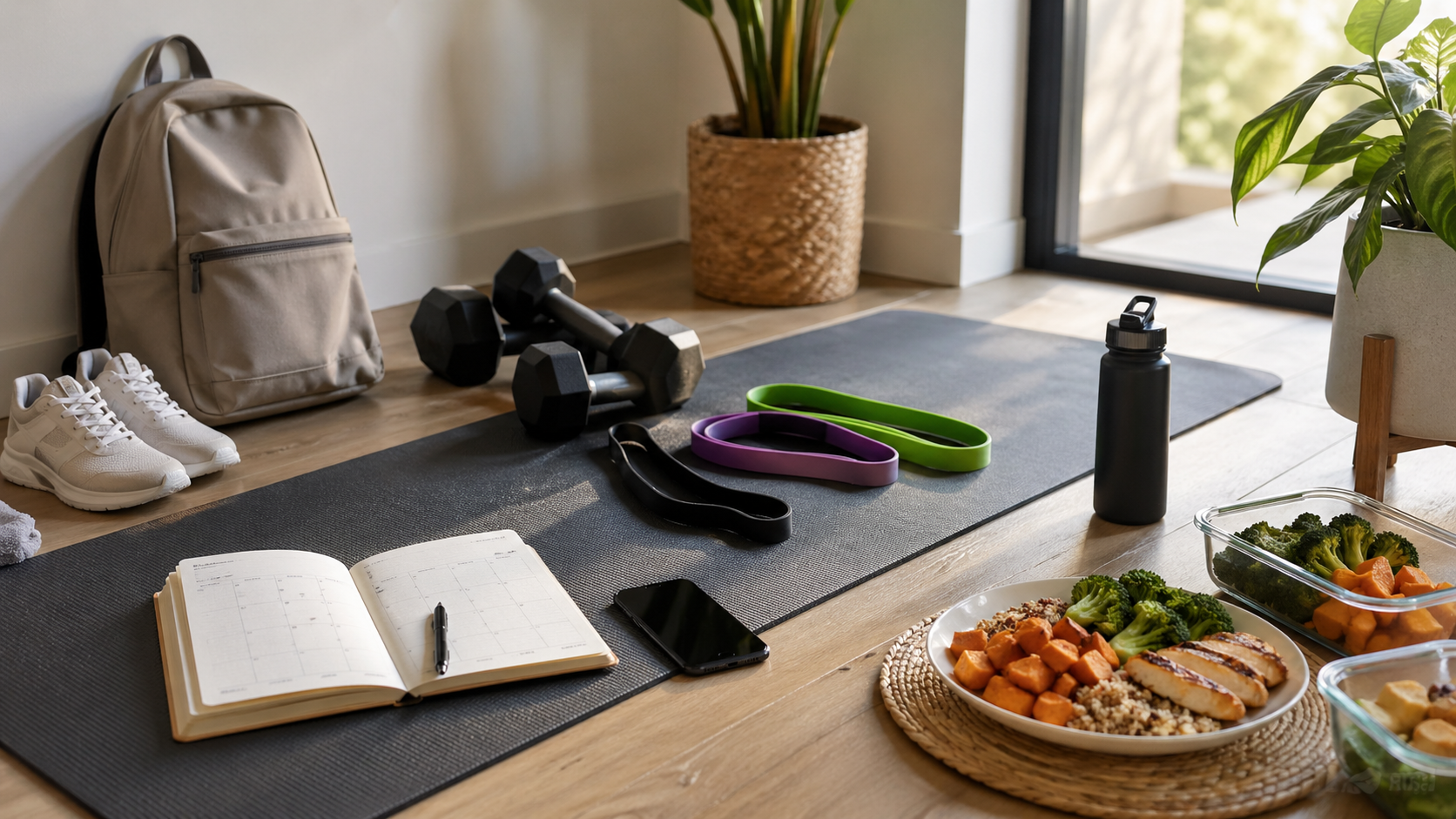
  • Text-free workout space with dumbbells, sneakers, backpack, exercise mat and healthy food prepared for week 1 of Radikal Reset

    Week 1 of Radikal Reset: Start HereS

    You do not need to change your whole life this week. You need to stop improvising.

    This Week 1 of Radikal Reset is designed to help you start with a simple structure: training, steps, basic food, and a realistic way to track progress.

    You do not need to do it perfectly. You need to start in a way you can repeat.

    Note: this content is informational and does not replace individualized medical, nutrition, or training advice. If you have injuries, significant joint pain or a relevant medical condition, adapt the exercises and consult a qualified professional before starting.

    Quick answer

    Week 1 of Radikal Reset means completing 3 workouts, walking more than usual, adding protein to your main meals, and tracking progress without obsessing. The goal is not to train like a beast: it is to finish the week thinking, “I can keep going.”

    Before you start: choose your situation

    Not everyone starts from the same place. This guide gives you two routes:

    Gym

    If you have access to machines, dumbbells, cables, a barbell or a treadmill.

    Home

    If you are starting with bodyweight, a backpack, bands or basic equipment.

    If you are very deconditioned, have a lot of weight to lose, or have not moved much for months, start with the easier version. That is not less valid. It is the smart entry point.

    The Week 1 rule

    Your goal this week is not to train like a beast. Your goal is to complete a realistic first week.

    • Train 3 days.
    • Walk more than usual.
    • Add protein to your main meals.
    • Do not compensate if you slip.
    • Track without obsessing.
    • Finish the week thinking, “I can keep going.”

    You are not trying to win a perfect week. You are trying to build a repeatable week.

    Week 1 plan

    • Monday: Workout 1.
    • Tuesday: walk or active recovery.
    • Wednesday: Workout 2.
    • Thursday: walk or mobility.
    • Friday: Workout 3.
    • Saturday: longer walk or easy activity.
    • Sunday: rest, review and prepare.

    If you cannot train Monday, Wednesday and Friday, that is fine. Use three separated days when you can. The important thing is to avoid placing all three workouts back-to-back if possible.

    Week 1 — gym option

    Workout 1 — Gym

    • Leg press or goblet squat — 3 sets of 8 to 12 reps.
    • Machine chest press — 3×8-12.
    • Seated row — 3×8-12.
    • Dumbbell Romanian deadlift — 2×10.
    • Lateral raises — 2×12-15.
    • Plank — 3 sets of 20-30 seconds.
    • Easy cardio — 10 minutes.

    Workout 2 — Gym

    • Hack squat, leg press or box squat — 3×8-12.
    • Lat pulldown — 3×8-12.
    • Machine shoulder press — 3×8-10.
    • Leg curl — 2×10-12.
    • Hip thrust or glute bridge — 3×10.
    • Machine or floor crunch — 3×12-15.
    • Easy cardio — 10 minutes.

    Workout 3 — Gym

    • Leg press or squat — 3×10.
    • Incline machine or dumbbell press — 3×8-12.
    • Supported row or seated row — 3×8-12.
    • Romanian deadlift or hip thrust — 3×10.
    • Biceps curl — 2×12-15.
    • Triceps extension — 2×12-15.
    • Easy walk — 10-15 minutes.

    Use a weight that lets you finish each set with around 2 reps in reserve. If you finish destroyed, you went too hard. If you feel nothing, you probably went too light.

    Week 1 — home option

    Workout 1 — Home

    • Chair squat or bodyweight squat — 3×10-15.
    • Incline push-ups on a table, wall or bench — 3×8-12.
    • Backpack row — 3×10-15 per side.
    • Backpack Romanian deadlift — 2×10-12.
    • Bottle lateral raises — 2×12-20.
    • Plank — 3×20-30 seconds.
    • Walk — 10 minutes.

    Workout 2 — Home

    • Reverse lunges or low step-up — 3×8-10 per leg.
    • Easy pike push-up or backpack press — 3×8-12.
    • Backpack row — 3×10-15.
    • Glute bridge — 3×12.
    • Dead bug — 3×8 per side.
    • Calf raises — 3×15-20.
    • Walk — 10 minutes.

    Workout 3 — Home

    • Pause squat — 3×10-15.
    • Incline or regular push-ups — 3×8-12.
    • Backpack row — 3×10-15.
    • Backpack hip thrust — 3×10-12.
    • Backpack curl — 2×12-15.
    • Backpack or band triceps extension — 2×12-15.
    • Side plank — 2 sets per side.

    If an exercise is too hard, reduce the range of motion, use support, or choose an easier version. Progressing from a simple version is still progress.

    Minimum version for difficult days

    If you do not have time, do not turn that into an excuse to disappear.

    • First exercise of the day.
    • Second exercise of the day.
    • 8-10 minutes of walking.

    An imperfect week completed is worth more than a perfect week imagined.

    What to eat in Week 1

    This week you do not need an extreme diet. You need to stop eating completely blind.

    • Add protein to each main meal.
    • Swap calorie drinks for water, coffee, tea or zero-calorie drinks.
    • Use a simple plate: protein + vegetables/fruit + adjusted carbs + reasonable fat.
    • Do not turn one free meal into a free weekend.
    • If you slip, return at the next meal.

    Simple example day

    • Breakfast: high-protein yogurt with fruit.
    • Lunch: chicken, rice or potato and salad.
    • Snack: fruit or high-protein dairy.
    • Dinner: omelet, fish or lean meat with vegetables.

    Do not chase perfect eating. Aim for a way of eating you can repeat tomorrow.

    If you want the complete structure

    Eating better helps. Training helps too. But if you want to change your body, you need to combine training, nutrition and habits with a clear progression.

    See Radikal Reset

    Steps and cardio

    Cardio is not punishment for eating. It is a tool.

    This week, do 2 walks of 20 to 30 minutes or add 1,000-2,000 daily steps compared with your usual average.

    • If you are very deconditioned: walk 10-20 minutes.
    • If you already move a bit: walk 25-30 minutes.
    • If you have trained before: use incline treadmill, bike or easy elliptical.

    How to track this first week

    Do not judge progress by one single scale weight.

    • Initial weight.
    • Waist measurement.
    • One front photo.
    • One side photo.
    • One back photo.
    • How one reference item of clothing fits.

    Do not make decisions based on one day of scale weight. Compare weekly averages, waist, photos, clothing and performance.

    Mistakes to avoid in Week 1

    Mistake 1: starting too hard

    If you end so destroyed that you cannot repeat it, you were not disciplined. You designed the entry point badly.

    Mistake 2: changing all your food at once

    The more extreme changes you add on Monday, the more likely you are to quit by Thursday.

    Mistake 3: punishing yourself if you slip

    Missing a meal or workout does not break the process. Disappearing does.

    Mistake 4: tracking only the scale

    If you strength train, your body can change even when scale weight is not linear.

    Mistake 5: searching for the perfect routine

    The best routine is not the most complex one. It is the one you can repeat.

    What to do on Sunday

    Sunday is not for punishment. It is for reviewing and preparing.

    • Did I train at least 2 or 3 days?
    • Did I walk more than before?
    • Did I add protein to most meals?
    • Did I return quickly after slipping?
    • What obstacle appeared most: time, hunger, fatigue, embarrassment or lack of organization?

    If you completed this first week, you do not need to look for another plan. You need to follow a structure.

    Complete Radikal Reset

    This guide helps you start. Radikal Reset is designed so you do not have to improvise the next 8 weeks.

    Inside the program you get progressive training, routes based on your starting point, gym and home versions, simple nutrition rules, weekly structure and tools to continue even when a week gets difficult.

    I want the complete 8 weeks See how Radikal Reset works

    Frequently asked questions

    Can I do this Week 1 if I am very out of shape?

    Yes. Start with the easiest version, use moderate loads and prioritize completion before intensity.

    Is gym or home better?

    The gym makes progression easier through machines, cables and loads. Home can work if you are consistent and adjust difficulty well.

    How many days should I train?

    To start, 3 well-done days are enough. The full program can later adapt to 3 or 4 days depending on your situation.

    Do I need to do cardio every day?

    No. Start with walks and 2 easy sessions. Cardio should help you, not destroy you.

    What if I miss a day?

    Do not restart. Continue with the next workout or use the minimum version.

    When will I see results?

    In one week, you can notice more control, energy and direction. Visible changes take longer, which is why Radikal Reset works in an 8-week block.

    You do not need another Monday. You need a structure you can complete.

    Start Radikal Reset