Fat Loss

  • Man reviewing his weekly plan with healthy food and workout gear, representing balance between consistency and flexibility

    The 80% Rule: How to Make Progress Without Chasing Perfection

    Habits and consistency

    The 80% Rule: How to Make Progress Without Chasing Perfection

    You do not need a perfect week to change your body. You need enough good decisions, repeated often enough, for long enough.

    One of the biggest reasons people quit is not lack of discipline. It is the belief that the plan only counts if they do it perfectly.

    They miss one workout and think the week is ruined. They eat one meal off plan and decide to restart on Monday. They have one stressful day and disappear for four more.

    The 80% rule is a more realistic way to think about progress: most of your results come from doing the important things consistently, not from trying to control every single detail of your life.

    Quick answer

    The 80% rule means you focus on doing the basics well most of the time.

    You train regularly, eat enough protein, move more, sleep when you can, and return quickly after bad days. You stop treating small mistakes like total failure.

    What the 80% rule actually means

    The 80% rule does not mean “do the plan badly.” It means you stop demanding a perfect environment before you take action.

    It means showing up

    Even if the session is shorter, even if the meal is not perfect, even if the day is not ideal.

    It means protecting momentum

    The goal is not to avoid every mistake. The goal is to avoid letting one mistake become a full reset.

    It means prioritizing the basics

    Training, protein, steps, simple meals, sleep when possible, and fast recovery after difficult days.

    Perfection usually sounds disciplined, but it often creates quitting

    Perfection feels attractive at the beginning because it gives you a sense of control. You want the perfect diet, the perfect training plan, the perfect schedule and the perfect start date.

    The problem is that real life does not cooperate. Work gets busy. Sleep gets worse. Family plans appear. Hunger changes. Motivation drops. A perfect plan that cannot survive normal life is not a strong plan.

    The better question is not: “Can I follow this perfectly?”
    The better question is: “Can I keep going when the week gets messy?”

    Radikal Reset principle

    The plan is not broken because one day went badly. The plan breaks when you disappear.

    This is why Radikal Reset is built around structure, minimum versions, simple nutrition rules and realistic progress tracking. The goal is not to make you perfect. It is to make you harder to derail.

    How to apply the 80% rule to training

    Training progress does not require you to destroy yourself every session. It requires enough quality work, repeated consistently, with a way to keep going when time or energy drops.

    1. Complete the main work first

    If time is limited, do the first two important exercises instead of skipping everything.

    2. Leave some reps in reserve

    You do not need to train to failure every day. Controlled effort is easier to repeat.

    3. Use a minimum version when needed

    A reduced workout keeps the chain alive. Skipping completely makes it easier to disappear.

    4. Do not change the plan every week

    Progress needs repetition. Random workouts make it harder to know whether you are improving.

    How to apply the 80% rule to nutrition

    Nutrition is where perfectionism destroys many people. They do not fail because of one imperfect meal. They fail because one imperfect meal becomes a weekend, then a week, then another restart.

    Your nutrition priorities

    • Get protein into your main meals.
    • Reduce liquid calories most of the time.
    • Build simple meals you can repeat.
    • Do not turn one off-plan meal into an off-plan day.
    • Return to normal at the next meal instead of waiting for Monday.

    A useful eating plan is not the one that looks perfect on paper. It is the one you can return to quickly after normal life happens.

    What an 80% week looks like

    An 80% week is not lazy. It is structured, realistic and repeatable.

    Training
    You complete most planned sessions. If a day is difficult, you do the minimum version.
    Nutrition
    Most meals have protein and structure. One imperfect meal does not turn into a spiral.
    Movement
    You walk more than before and use cardio as support, not punishment.
    Mindset
    You stop restarting from zero every time something goes wrong.

    The difference between flexible and careless

    The 80% rule is not an excuse to do whatever you want and hope results appear. Flexibility still needs direction.

    Careless

    Skipping sessions, eating randomly, ignoring progress and calling it balance.

    Flexible

    Keeping the main structure, adjusting when needed and returning quickly after imperfect moments.

    Simple rules to use this week

    If you miss a workout

    Do not restart the week. Do the next planned session or use the minimum version.

    If you overeat

    Do not punish yourself. Go back to a normal meal with protein and structure.

    If motivation drops

    Lower the friction. Shorten the session, simplify meals and keep the chain alive.

    If the scale does not move

    Check waist, photos, clothing, strength and weekly averages before assuming nothing is working.

    The goal is not to lower your standards. It is to make your standards survivable.

    If your standards only work when life is calm, they are too fragile. Real transformation needs a system that can survive busy weeks, bad meals, low motivation and normal human days.

    Related guides

    You do not need a perfect reset. You need a reset you can continue.

    Radikal Reset is built around training, movement, simple nutrition and structure so you can make progress without depending on perfect weeks.

  • Person sitting next to a gym bag and notebook, preparing to restart healthy habits without taking an extreme approach

    Why You Start Strong and Always Quit

    Habits and consistency

    Why You Start Strong and Always Quit

    Starting strong is easy when motivation is high. The real challenge is building a plan that still works when the excitement fades.

    You know the pattern. You get tired of how you look or feel. You decide that this time will be different. You plan the workouts, clean up your food, promise yourself a fresh start and go all in.

    For a few days, it works. You feel focused. You feel disciplined. You feel like the old version of you is finally gone.

    Then real life comes back. Work gets busy. Sleep gets worse. Hunger rises. One workout is missed. One meal goes off plan. Suddenly, the plan that felt exciting starts to feel heavy — and you slowly disappear.

    Quick answer

    You start strong and quit because your plan is built for motivation, not for normal life.

    The solution is not to become more extreme. It is to build a structure that survives low motivation, busy days, imperfect meals and weeks that do not go exactly as planned.

    Starting strong is not the problem

    Starting with energy is not bad. Motivation can help you take the first step. The problem begins when your whole plan depends on that feeling staying high.

    Motivation is usually strongest at the beginning because the decision is new. You have not yet faced the boring part, the tired days, the social meals, the slow scale weeks or the moments where nobody is watching.

    Motivation starts the process

    It gives you energy, urgency and the feeling that change is possible.

    Structure continues it

    A repeatable plan keeps you moving when the original excitement fades.

    Flexibility protects it

    Backup options stop one imperfect day from turning into a full restart.

    Radikal Reset principle

    Do not build your plan for the version of you that feels unstoppable. Build it for the version of you that is tired on a Thursday.

    That is the version that decides whether the process continues or collapses. A strong plan makes the right action easier even when your mood is not perfect.

    Why the “all in” approach usually fails

    Going all in feels powerful because it creates a clear break from the past. But it often creates too many changes at once.

    You train too hard too soon

    The first sessions feel heroic, but soreness, fatigue and pressure make the next sessions less likely.

    You change your entire diet overnight

    You remove too much, get hungry, feel restricted and eventually rebound.

    You leave no room for imperfect days

    If the only acceptable version is perfect, then one bad day feels like failure.

    You depend on emotion

    When the emotional high disappears, there is no system left to guide the next action.

    The real reason you quit

    Most people think they quit because they lack discipline. Usually, the real reason is simpler: the plan has too much friction.

    Too many decisions. Too many rules. Too much intensity. Too much hunger. Too much guilt when something goes wrong.

    The plan does not need to be easier in the lazy sense.
    It needs to be easier to repeat.

    What to do instead

    If you always start strong and quit, your goal is not to add more intensity. Your goal is to build a system that keeps you moving after the first emotional wave fades.

    1. Start with a realistic weekly structure

    Choose training days you can actually repeat. A plan you can complete beats a perfect plan you abandon.

    2. Stop training like every session is a test

    Controlled effort is not weakness. Leaving a little in reserve often makes consistency easier.

    3. Build simple meals before chasing perfect nutrition

    Protein in main meals, fewer liquid calories and repeatable plates will do more than a complicated diet you hate.

    4. Create a minimum version

    When life gets messy, do the smallest useful version instead of skipping completely.

    5. Return fast after bad days

    The goal is not to avoid every mistake. The goal is to stop letting mistakes become restarts.

    Consistency is not built by making the first week impressive. It is built by making the second, third and fourth week possible.

    If your plan only works while you are excited, it is not a plan. It is a mood. A real system survives ordinary days.

    How to build a plan that survives low motivation

    Training
    Use a clear weekly structure and repeat exercises long enough to progress.
    Food
    Use simple meal rules instead of trying to eat perfectly every day.
    Movement
    Walk more and use easy cardio as support, not as punishment.
    Bad days
    Have a minimum version ready before you need it.

    The minimum version rule

    One of the biggest mistakes is having only two options: do everything perfectly or do nothing.

    A minimum version gives you a third option. On a bad day, you do enough to keep the process alive.

    Minimum workout

    Do the first main exercise, the second main exercise and 8-12 minutes of easy movement.

    Minimum nutrition

    Keep protein in the next meal and return to a normal plate instead of waiting for Monday.

    Minimum movement

    Take a short walk instead of doing nothing and calling the day ruined.

    The first sign you are about to quit

    Quitting rarely begins with a dramatic decision. It usually begins with negotiation.

    “I’ll restart Monday.”

    This sounds harmless, but it teaches you that one mistake cancels the whole process.

    “If I cannot do the full workout, it is not worth it.”

    A shorter session is still a vote for the person you are trying to become.

    “I already messed up today.”

    A bad meal does not require a bad day. The next action can still be useful.

    You do not need a stronger start. You need a better comeback.

    Everyone can start when the mood is right. The difference is whether you know what to do after the first imperfect day.

    A better way to start this time

    Before you start again, do not ask, “How hard can I go?” Ask, “What structure can I still follow when this gets boring?”

    Choose your training route: gym, home or a softer starting point.
    Plan your weekly training days before the week starts.
    Prepare 2 or 3 simple meals you can repeat.
    Add walking or easy cardio without using it as punishment.
    Track more than the scale: waist, photos, clothing and performance.
    Write your minimum version before you need it.

    Related guides

    Stop building plans that only work when you feel inspired.

    Radikal Reset is designed to help you train, move, eat better and keep going through imperfect weeks with structure instead of relying on another short burst of motivation.

  • Person preparing a healthy week with notebook, workout clothes, meal prep and water bottle

    How to Stay Consistent With Weight Loss When You Have No Motivation

    Fat Loss Consistency Guide

    How to Stay Consistent With Weight Loss When You Have No Motivation

    Motivation is useful at the start, but it is not reliable enough to carry your whole weight loss journey. If you want to stay consistent, you need a system that still works when you feel tired, busy or bored.

    If you only lose weight when motivation is high, the process will always feel unstable. You start strong, follow the plan for a few days, feel proud, and then real life gets in the way.

    The answer is not to wait until you feel motivated again. The answer is to make your plan smaller, clearer and easier to repeat when motivation disappears.

    Why motivation disappears during weight loss

    Motivation usually feels strongest at the beginning because everything is new. You imagine the result, you feel ready, and the first few days create a sense of control. But motivation naturally drops when the plan becomes normal, progress slows or the week gets stressful.

    The novelty fades

    The first week feels exciting. The third week feels like normal life with more effort.

    Progress is not always visible

    You may be improving habits, strength and control before the mirror shows a dramatic change.

    The plan feels too heavy

    If your diet and training plan require perfect energy every day, they will collapse on normal days.

    Radikal Reset principle

    Do not build your weight loss plan for your best mood. Build it for your normal life.

    Consistency does not mean feeling motivated every day. It means having a realistic structure that helps you keep going even when motivation is low.

    Step 1: Lower the entry barrier

    When motivation is low, the first step feels bigger than it really is. That is why your plan needs a minimum version.

    Create a minimum version of your plan

    • If you cannot train for 60 minutes, do 25 minutes.
    • If you cannot cook a perfect meal, build a simple high-protein plate.
    • If you cannot hit your ideal step count, go for a short walk.
    • If you overeat at one meal, return to normal at the next one.
    • If the week is chaotic, protect the two or three actions that matter most.

    This is not lowering your standards. It is protecting the habit. A smaller version keeps the identity alive: you are still someone who shows up.

    Step 2: Stop trying to restart perfectly every Monday

    One of the biggest reasons people fail with weight loss is the all-or-nothing cycle. They eat well for a few days, make one mistake, feel they have ruined everything, and decide to start again next week.

    Old pattern

    Mistake → guilt → restart

    You treat one imperfect day as proof that the whole plan has failed.

    Better pattern

    Mistake → adjust → continue

    You correct the next decision instead of throwing away the whole week.

    Real consistency

    Return quickly

    The faster you return to the basics, the less damage one bad moment can do.

    Step 3: Use simple rules instead of constant willpower

    Willpower is expensive. If every meal requires a full internal debate, you will eventually get tired. Simple rules reduce the number of decisions you need to make.

    Meals
    Build most meals around protein, vegetables or fruit, and a controlled carb or fat source.
    Training
    Schedule your sessions before the week starts. Do not decide only when you feel like it.
    Bad days
    Use the minimum version instead of skipping completely.
    Weekends
    Keep flexibility, but protect protein, movement and one planned meal.

    Step 4: Make hunger easier to manage

    Many people think they lack motivation when the real problem is that their diet makes them too hungry. If your meals are tiny, low in protein or random, staying consistent becomes much harder.

    Protein first

    Protein helps meals feel more satisfying and makes it easier to stay on track.

    Add volume

    Vegetables, fruit, soups, salads and high-fiber foods can make dieting feel less aggressive.

    Avoid extreme cuts

    A plan that makes you miserable may create fast movement at first, but it usually damages consistency.

    What to do when you have zero motivation

    On low-motivation days, do not ask yourself whether you feel like doing the full plan. Ask yourself what the smallest useful version would be.

    If training feels impossible

    Do a short session, walk, or complete only the first two exercises. Starting often changes how you feel.

    If cooking feels impossible

    Use a simple emergency meal: protein, fruit or vegetables, and a portion you can control.

    If you feel behind

    Do not try to compensate aggressively. Return to the next normal decision.

    If the scale frustrates you

    Look at the weekly trend, your photos, your waist, your training and your adherence before judging the process.

    Step 5: Track actions before emotions

    If you only track how you feel, weight loss will look chaotic. Some days you will feel motivated, some days you will feel flat, and some days you will feel impatient. Actions give you a clearer picture.

    Track these simple consistency markers

    • Training sessions completed.
    • Protein meals completed.
    • Steps or daily movement.
    • Sleep and recovery.
    • How quickly you return after a bad day.

    The last one matters more than most people think. You do not need a perfect record. You need a fast return.

    Step 6: Stop making the plan harder every time you feel guilty

    A very common trap is reacting to guilt by making the plan more extreme. You miss workouts, overeat, feel disappointed, and then decide the answer is a stricter diet or more cardio.

    Use correction instead of punishment

    Do not starve yourself Return to normal meals instead of creating another binge cycle.
    Do not punish with cardio Use movement as a tool, not as revenge for eating.
    Do not restart the whole plan Restart the next decision. That is enough.
    Do not chase perfection The best plan is the one you can repeat while still living your life.

    A simple no-motivation weight loss plan

    When motivation is low, your plan should become simpler, not more complicated. Start with these anchors.

    Training
    3 planned sessions per week, with a shorter backup version.
    Nutrition
    Protein at most meals, simple dinners and fewer random snacks.
    Movement
    Daily walking or light activity, especially on non-training days.
    Recovery
    Protect sleep where possible. Low recovery makes motivation feel worse.

    Frequently asked questions

    How do I lose weight if I have no motivation?

    Do not rely on motivation as your main strategy. Use a simple plan with scheduled workouts, easy high-protein meals, a minimum version for bad days and quick recovery after mistakes.

    Is it normal to lose motivation during weight loss?

    Yes. Motivation often drops after the first excitement fades. That does not mean the plan is failing. It means you need structure, habits and realistic expectations.

    What should I do after a bad eating day?

    Return to your normal meals at the next opportunity. Do not punish yourself, skip meals aggressively or wait until Monday. The faster you return, the better.

    How can I stay consistent when I am busy?

    Reduce the plan to the essentials: scheduled short workouts, simple meals, walking and a few default food options. Busy weeks need a simpler system, not a perfect one.

    Related guides

    Want a plan that does not depend on motivation?

    Radikal Reset gives you an 8-week structure for training, cardio and practical nutrition, so you can stop improvising and start following a plan built for real life.

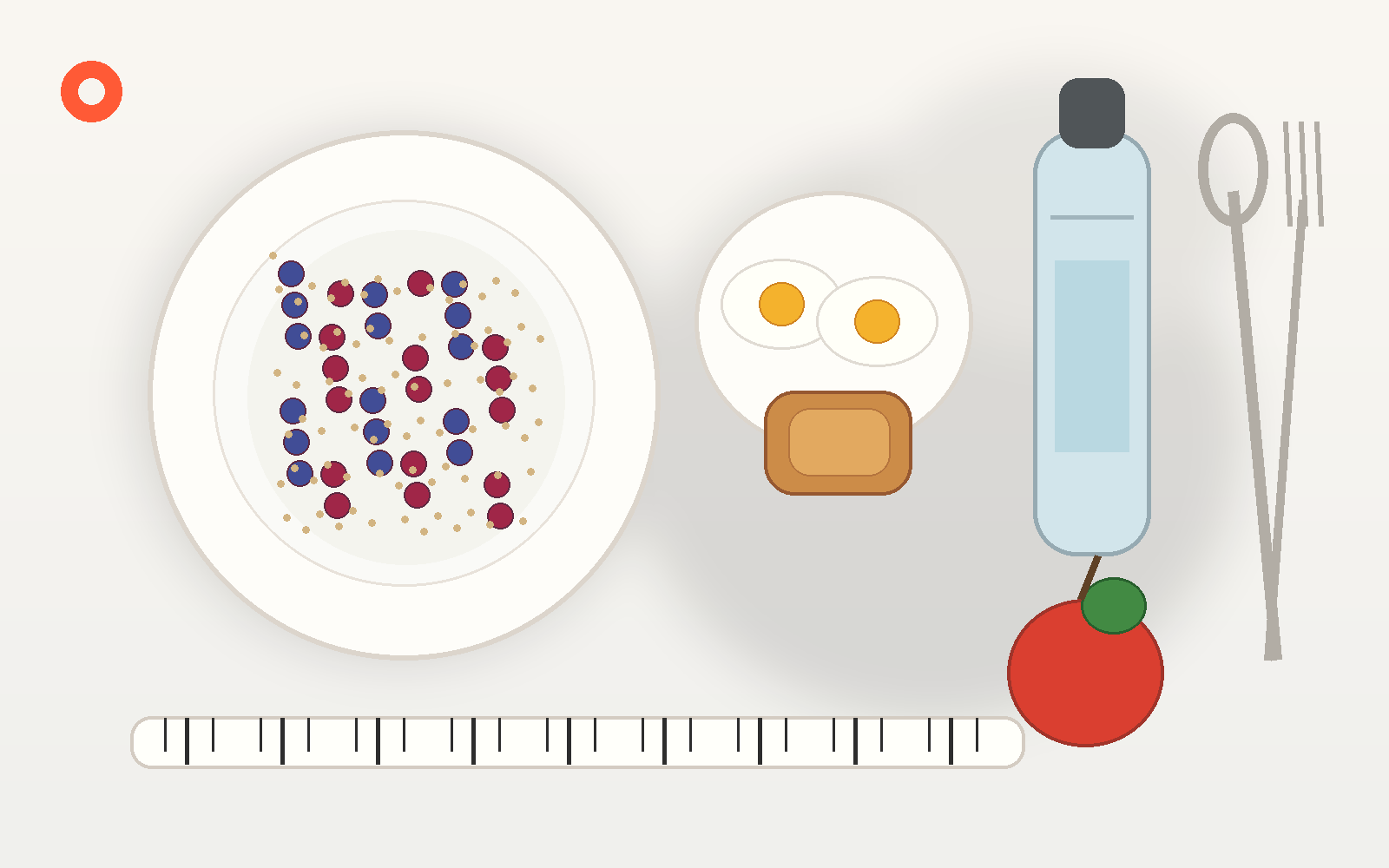
  • Bowl of yogurt with berries, eggs, toast, apple, water bottle and measuring tape on a table

    Why You Feel Hungry All Day When Trying to Lose Weight

    Simple nutrition

    Why You Feel Hungry All Day When Trying to Lose Weight

    Constant hunger does not always mean you lack discipline. It often means your fat loss plan is built in a way that makes hunger harder than it needs to be.

    Hunger is one of the main reasons people quit weight loss plans. Not because they are weak, but because the plan often creates too much hunger too soon.

    You cut calories aggressively. Breakfast becomes too small. Lunch has little protein. You avoid carbs completely. You drink calories without noticing. Then by late afternoon or night, it feels like your body is fighting back.

    The goal is not to remove hunger forever. Some hunger can happen during fat loss. The goal is to make hunger manageable enough that you can actually stay consistent.

    Quick answer

    You feel hungry all day because your meals are probably too low in protein, volume or structure — or your deficit is too aggressive.

    Start by fixing the basics: protein in main meals, more high-volume foods, fewer liquid calories, better meal timing and a calorie deficit you can actually repeat.

    First: hunger during fat loss is normal, but it should not control your day

    A fat loss phase usually involves eating a little less than your body is used to. So yes, some hunger can appear. That does not automatically mean something is wrong.

    But feeling hungry all day, thinking about food constantly, losing control at night or needing willpower for every meal is usually a sign that the plan needs adjustment.

    Normal hunger

    You feel hungry before meals, but you can function, train, sleep and stay consistent.

    Problem hunger

    You think about food all day, snack constantly, feel irritable or lose control at night.

    Useful goal

    You do not need zero hunger. You need hunger low enough that the plan is repeatable.

    Radikal Reset principle

    A good fat loss plan should reduce friction, not turn every evening into a battle.

    If the plan depends on fighting extreme hunger every day, it is fragile. Better meals, better structure and smarter routines make consistency easier.

    1. Your calories may be too low

    The fastest way to feel hungry all day is to cut calories too aggressively. This can feel productive at first because the scale may move quickly, but it often creates a rebound later.

    Signs your deficit is too aggressive

    • You feel hungry soon after every meal.
    • You are thinking about food most of the day.
    • Training performance is dropping fast.
    • You feel irritable, tired or cold more often than usual.
    • You are fine during the day but lose control at night.

    You do not need the biggest possible deficit. You need a deficit you can repeat long enough to see change.

    2. Your meals may be too low in protein

    Protein is one of the most important tools for staying full during fat loss. If breakfast is mostly cereal, lunch is mostly pasta and dinner is mostly bread or snacks, hunger will probably be harder to manage.

    Better breakfast

    Eggs, Greek yogurt, protein yogurt, cottage cheese, turkey, tofu or a protein smoothie with fruit.

    Better lunch

    Chicken, tuna, lean beef, fish, legumes with extra protein, tofu or turkey as the base of the plate.

    Better dinner

    A clear protein source plus vegetables, controlled carbs and a moderate amount of fats or sauce.

    3. You are eating calories, but not enough volume

    Some foods are very calorie-dense but do not fill much space in your stomach. Oils, nuts, cheese, pastries, sauces, chocolate, chips and small snacks can add up quickly without making you feel full.

    High-volume foods help because they let you eat a bigger plate for fewer calories.

    Vegetables and salads.
    Soups and broths.
    Potatoes or boiled rice in controlled portions.
    Fruit.
    Lean proteins.
    Low-fat high-protein dairy.

    4. You may be drinking calories without noticing

    Liquid calories are one of the easiest ways to stay hungry while still consuming more calories than you think.

    Sweet coffees

    Milk, sugar, syrups and cream can turn coffee into a snack without making you feel like you ate.

    Juice and regular soft drinks

    They can add calories quickly but usually do not reduce hunger as much as solid food.

    Alcohol

    Alcohol adds calories and can make food choices harder later in the day.

    You do not need to drink only water forever. But during fat loss, swapping most calorie drinks for water, coffee, tea or zero-calorie options can make hunger easier to manage.

    If your calories are low but your meals are small, sweet, liquid or low in protein, hunger will feel much harder.

    The fix is not always “eat less.” Sometimes the fix is building your meals better so the calories you eat actually help you stay full.

    5. You are saving too many calories for later

    Some people try to “be good” all day by barely eating, then arrive at dinner starving. This often leads to overeating, grazing or feeling out of control at night.

    A better approach

    • Start the day with a protein-based meal if breakfast helps you control hunger.
    • Do not let lunch become too small or too low in protein.
    • Use a planned snack if it prevents evening overeating.
    • Build dinner before you are already starving.

    6. Your sleep and stress may be making hunger worse

    Poor sleep and high stress can make cravings and hunger feel stronger. They can also make it harder to choose the meal you planned instead of the food that gives quick comfort.

    When sleep is poor

    Do not make the day harder with a very low-calorie plan. Keep meals simple and high in protein.

    When stress is high

    Reduce food decisions. Repeat easy meals, prepare defaults and avoid leaving everything for willpower.

    When cravings hit

    Check whether you are truly hungry, underfed, tired, stressed or just looking for relief.

    How to build meals that keep you full

    Use this simple plate structure for most main meals. It is not a strict diet. It is a way to make your meals more filling without overcomplicating things.

    Protein
    A clear source in every main meal: eggs, chicken, fish, turkey, tofu, lean meat, yogurt or legumes with extra protein.
    Volume
    Vegetables, salad, soup, fruit or other foods that fill the plate without adding too many calories.
    Carbs
    Potatoes, rice, oats, bread, pasta, beans or fruit in portions that fit your goal and training.
    Fats
    Olive oil, avocado, nuts, cheese or sauces in controlled amounts so flavor does not become accidental overeating.

    Simple hunger fixes you can use this week

    Add protein to breakfast

    If you get hungry early, do not start the day with only coffee, toast or cereal. Add a clear protein source.

    Make lunch bigger in volume

    Add vegetables, salad, soup or fruit so lunch is not just a small calorie-dense plate.

    Plan an afternoon snack

    A high-protein snack can prevent uncontrolled evening eating if the gap between lunch and dinner is long.

    Stop drinking calories most days

    Use water, coffee, tea, zero-calorie drinks or sugar-free options to save calories for real food.

    Do not make dinner tiny

    A satisfying dinner with protein and volume can reduce late-night grazing better than a tiny plate.

    Hunger management is not cheating. It is what makes fat loss sustainable.

    The goal is not to see who can suffer more. The goal is to build meals and routines that help you stay consistent long enough to see change.

    Hunger checklist

    Are your calories too low to repeat?
    Do your main meals include protein?
    Do your meals have enough volume?
    Are you drinking calories without noticing?
    Are you saving too much food for night?
    Are sleep, stress or training making hunger harder?

    Related guides

    You do not need to spend the whole day hungry to lose fat.

    Radikal Reset uses simple nutrition rules, strength training, movement and structure so you can lose fat without relying on extreme hunger or daily willpower battles.

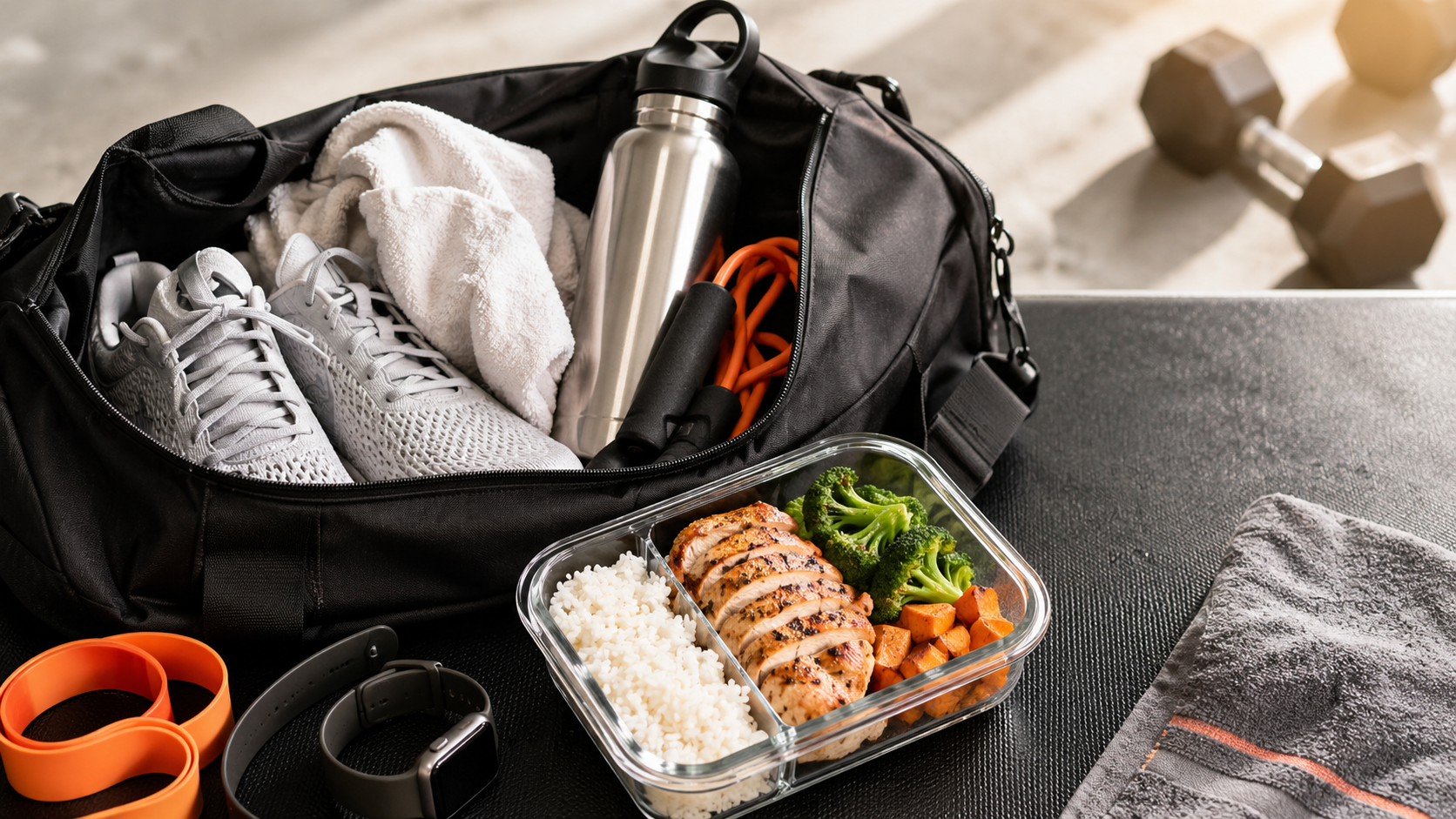
  • Open gym bag with training shoes, towel, water bottle, jump rope, dumbbell and a healthy meal prep container with chicken, rice, broccoli and sweet potato.

    Why You\’re Not Losing Weight Even Though You Train

    Fat loss

    Why You’re Not Losing Weight Even Though You Train

    Training matters, but it does not automatically guarantee fat loss. If your weight is not changing, the problem is usually not effort — it is the gap between training, food, movement and recovery.

    It is frustrating when you train several times per week and the scale barely moves. You feel like you are doing the hard part, but your body does not seem to respond.

    This is where many people assume something is wrong with their metabolism, their workouts or their discipline. Sometimes the issue is much simpler: training is only one part of the fat loss equation.

    You can train hard and still not lose weight if your food intake, daily movement, recovery or tracking are not aligned with the goal.

    Quick answer

    If you are training but not losing weight, you are probably not in a consistent calorie deficit.

    Training helps you build muscle, burn calories and improve your body, but fat loss still depends on your overall energy balance. Food, steps, liquid calories, weekends and recovery all matter.

    Training is powerful, but it is not a magic fat loss switch

    Strength training is one of the best things you can do when you want to look better. It helps you build or maintain muscle, improve shape, increase performance and feel more capable.

    But training does not cancel unlimited calories. A hard session can be wiped out very easily by extra snacks, bigger portions, weekend eating, alcohol or drinks that do not feel like “food.”

    Training changes your body

    It improves strength, muscle tone, posture and performance.

    Nutrition controls the deficit

    Your meals and portions decide whether fat loss actually happens.

    Movement supports the process

    Steps and daily activity often matter more than people expect.

    Radikal Reset principle

    Do not ask only, “Am I training?” Ask, “Is my whole week aligned with fat loss?”

    A few good workouts cannot always overcome seven days of random eating, low steps, poor sleep and inconsistent routines. The body responds to the full pattern.

    1. You may be eating back the calories you burn

    Exercise can increase hunger. After training, it is easy to feel like you “earned” more food. That is not morally wrong, but it can stop fat loss if the extra calories remove the deficit.

    Common examples

    • A bigger dinner because you trained.
    • Extra snacks after the gym.
    • A smoothie or shake that becomes a high-calorie dessert.
    • Weekend meals that cancel the deficit from Monday to Friday.
    • Using cardio as permission to eat without structure.

    The solution is not to fear food after training. It is to build post-workout meals with protein, structure and portions that fit your goal.

    2. Your weekends may be cancelling your weekdays

    Many people are consistent from Monday to Thursday, then much looser from Friday night to Sunday. The problem is not enjoying food. The problem is not realizing how much the weekly average can change.

    Weekdays
    Structured meals, workouts, better water intake and more control.
    Weekend
    Bigger portions, alcohol, takeaway, snacks, desserts and less movement.
    Result
    The weekly deficit disappears even though you feel like you trained hard.

    3. You may be moving less outside the gym

    This is easy to miss. You train, but the rest of the day becomes more sedentary. You sit more, walk less or feel tired and unconsciously reduce movement.

    Workouts matter, but daily movement matters too. A person who trains for one hour but barely moves the rest of the day may burn less overall than they think.

    Check your steps

    Do not guess. Look at your real average across the week.

    Add easy movement

    Walks, stairs, short breaks and easy cardio can support fat loss without destroying recovery.

    Avoid compensation

    Training should not become an excuse to move less for the rest of the day.

    4. You are relying on workouts instead of nutrition structure

    Some people train consistently but eat with no real structure. They are not eating badly in an obvious way, but their meals are too random to create reliable progress.

    Low protein meals

    If meals are mostly carbs and fats, hunger usually becomes harder and calories can climb quickly.

    Liquid calories

    Juice, alcohol, sweet coffee and regular soft drinks can slow progress without feeling like a real meal.

    Free-poured fats and sauces

    Olive oil, nuts, cheese, sauces and spreads can be healthy but still calorie-dense.

    Random snacking

    Small bites do not always feel important, but repeated every day they can erase the deficit.

    You do not need a perfect diet. You need enough structure that your training can finally show.

    The goal is not to count every crumb forever. The goal is to stop eating so randomly that you never know why progress is not happening.

    5. You may be gaining muscle or water while losing fat

    This is especially common if you are new to strength training or returning after time off. Your body may store more water in the muscles, recover from soreness and improve muscle tone while the scale changes slowly.

    That does not mean the scale is useless. It means you should not use it alone.

    Track more than weight

    • Waist measurement.
    • Progress photos.
    • How clothes fit.
    • Strength or repetitions in key exercises.
    • Weekly average weight, not one random weigh-in.

    6. You may not be training with enough structure

    Training often fails to create visible change when it is random. Doing different exercises every week, skipping lower body, avoiding progressive overload or turning every session into cardio can make progress harder to measure.

    Repeat key movements

    You need enough repetition to know whether you are improving.

    Track performance

    Weights, reps, control and technique tell you whether the body is adapting.

    Avoid random intensity

    Sweating is not the same as progressing. Structure matters more than chaos.

    A good fat loss plan combines strength training, simple nutrition, daily movement and tracking.

    If one part is missing, progress can slow down even when you feel like you are working hard.

    What to do this week if you train but are not losing weight

    Do not change everything at once. Use one week to collect better information and tighten the basics.

    1. Track your weekly weight average

    Weigh several mornings if possible and look at the average instead of reacting to one number.

    2. Measure your waist

    If your waist is dropping, progress may be happening even if the scale is slow.

    3. Add protein to every main meal

    This helps with fullness, recovery and meal structure.

    4. Check liquid calories and snacks

    Do not obsess. Just notice whether extra calories are coming from easy-to-miss places.

    5. Increase daily movement slightly

    Add walks or 1,500-2,500 steps per day if your current activity is low.

    The simple audit

    Training
    Are you following a repeatable plan and tracking progress?
    Nutrition
    Are meals structured, high in protein and controlled enough for fat loss?
    Movement
    Are your steps and daily activity consistent, or do they drop outside workouts?
    Tracking
    Are you looking at weight averages, waist, photos, clothing and performance?

    The answer is usually not “train harder.” It is “make the whole system clearer.”

    More effort without better structure can simply create more hunger, fatigue and frustration. Start by making the basics visible.

    Checklist: why you train but are not losing weight

    You are eating back the calories from training.
    Weekends are cancelling your weekday deficit.
    Daily movement is too low outside the gym.
    Protein and meal structure are inconsistent.
    You are relying only on the scale.
    Your training is hard, but not structured.

    Related guides

    Training is a powerful tool. Radikal Reset helps you connect it to the rest of the system.

    The program combines strength training, cardio support, simple nutrition, movement and progress tracking so your effort has a clear direction.

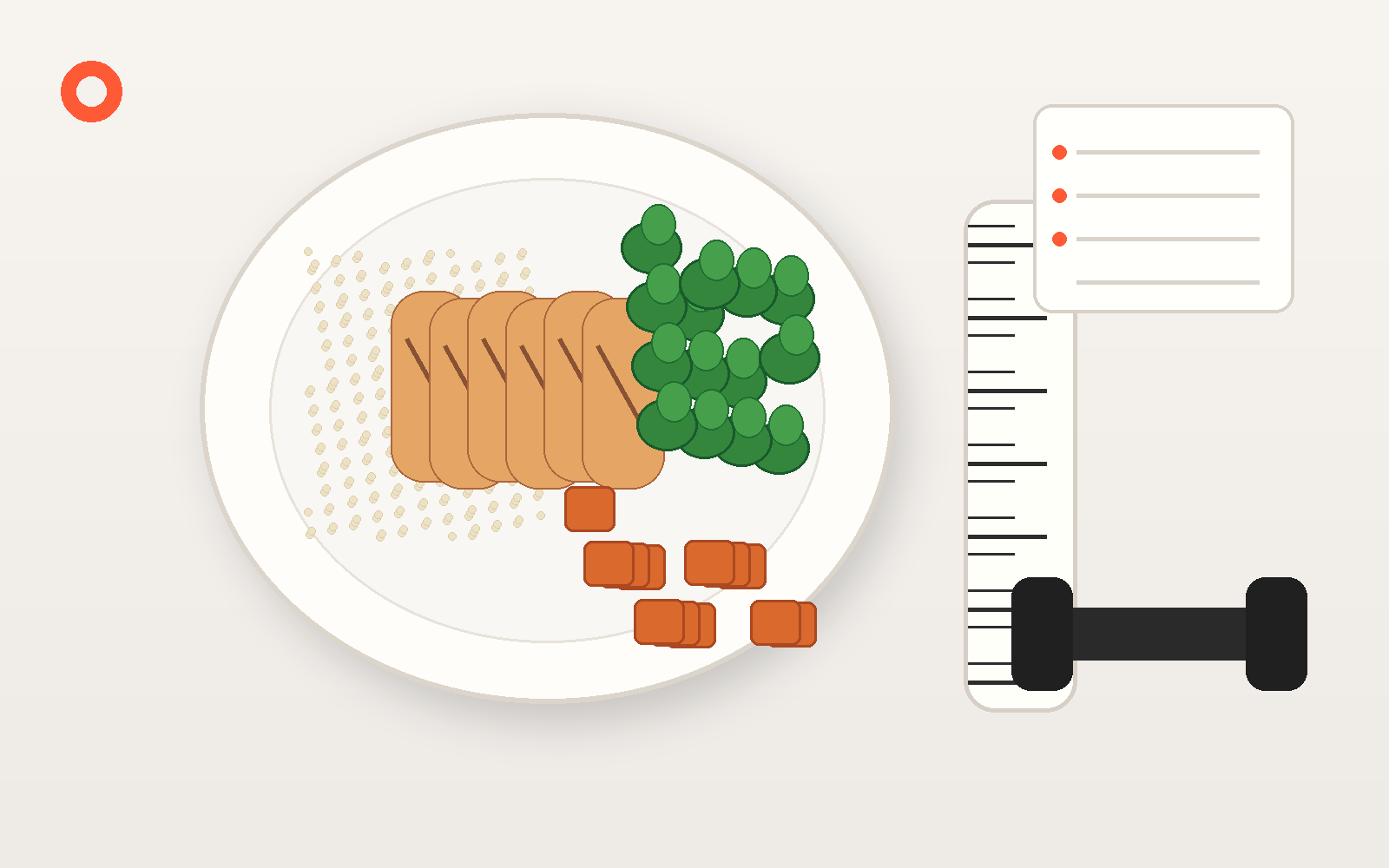
  • Healthy plate with chicken, rice, broccoli and sweet potato next to a measuring tape, planning notebook and dumbbell

    Fat Loss Mistakes That Stop Progress Even When You Eat Well

    Fat loss mistakes

    Fat loss mistakes that stop progress even when you eat well.

    Eating “healthy” is not the same as being in a consistent fat-loss structure. If your progress has stalled even though your food looks better, these are the mistakes worth checking first.

    A lot of people improve their diet and still do not lose fat. They stop eating obvious junk, add salads, buy “healthier” foods and train more consistently. But after a few weeks, the scale barely moves and their body does not look very different.

    That does not mean the effort is useless. It usually means the process is missing structure. Fat loss is not only about food quality. It is about energy balance, portions, consistency, hunger management, activity and the ability to repeat the plan for long enough.

    Key idea

    Healthy food can still be too much food.

    Nuts, olive oil, avocado, granola, smoothies, protein bars and homemade meals can all fit into fat loss. But if portions are too high, they can still erase the calorie deficit you need.

    10 mistakes that stop fat loss progress

    You do not need to fix everything at once. Start by identifying the two or three mistakes that are most likely happening in your week.

    1. You are eating healthy foods, but portions are too high.

    Food quality matters, but portions still matter. A healthy meal can support fat loss, maintain weight or create a surplus depending on the quantities.

    2. You forget liquid calories.

    Juices, sugary coffees, alcohol, smoothies and “small” drinks can quietly add calories without making you feel full.

    3. Your weekends undo your weekdays.

    A good Monday to Friday can be erased by two days of uncontrolled meals, alcohol, snacks and low activity.

    4. You rely on training to fix food chaos.

    Training is essential for shape, strength and health, but it is very easy to eat back the calories burned in a workout.

    5. You are too aggressive during the week.

    Eating too little can lead to hunger, cravings, low energy and a rebound later. A moderate plan is often easier to repeat.

    6. You do not eat enough protein.

    Protein helps with satiety, muscle retention and meal structure. Without it, fat loss usually feels harder.

    7. You snack without counting it as food.

    Small bites, handfuls, tastes and “just a little” snacks can add up across the day.

    8. Your activity outside the gym drops.

    When dieting, some people move less without noticing. Steps and daily movement matter more than most people think.

    9. You judge progress from one weigh-in.

    Water, salt, digestion and training stress can move the scale. Look at weekly averages, photos, measurements and performance.

    10. You keep changing the plan too soon.

    If you change your diet every few days, you never know what is working. Give a simple plan enough time before adjusting.

    Radikal Reset principle

    Fat loss needs consistency, not random perfection.

    You do not need a perfect diet. You need a repeatable structure that keeps you in control most of the time and helps you recover quickly when a day goes wrong.

    How to fix it without starting over

    Do not respond to a plateau by destroying your whole routine. Start with the simplest checks.

    Check protein first

    Add a clear protein source to each main meal before changing everything else.

    Review portions

    Look at oil, sauces, nuts, snacks, carbs and drinks. These are common hidden areas.

    Track one normal week

    Do not track a perfect week. Track a normal one so you can see what is really happening.

    Keep training consistent

    Strength training helps preserve muscle and gives your body shape as fat comes down.

    What not to do

    • Do not slash calories aggressively after one bad weigh-in.
    • Do not add huge amounts of cardio overnight.
    • Do not remove every food you enjoy.
    • Do not restart every Monday as if the previous week taught you nothing.
    • Do not confuse “healthy” with “automatic fat loss”.

    Related guides

    Continue with these guides if you want to understand fat loss with more structure.

    Want a clearer structure?

    Radikal Reset helps you organize training, nutrition and habits into one 8-week plan.

    If you are tired of guessing, the full program gives you the weekly structure to stop improvising.

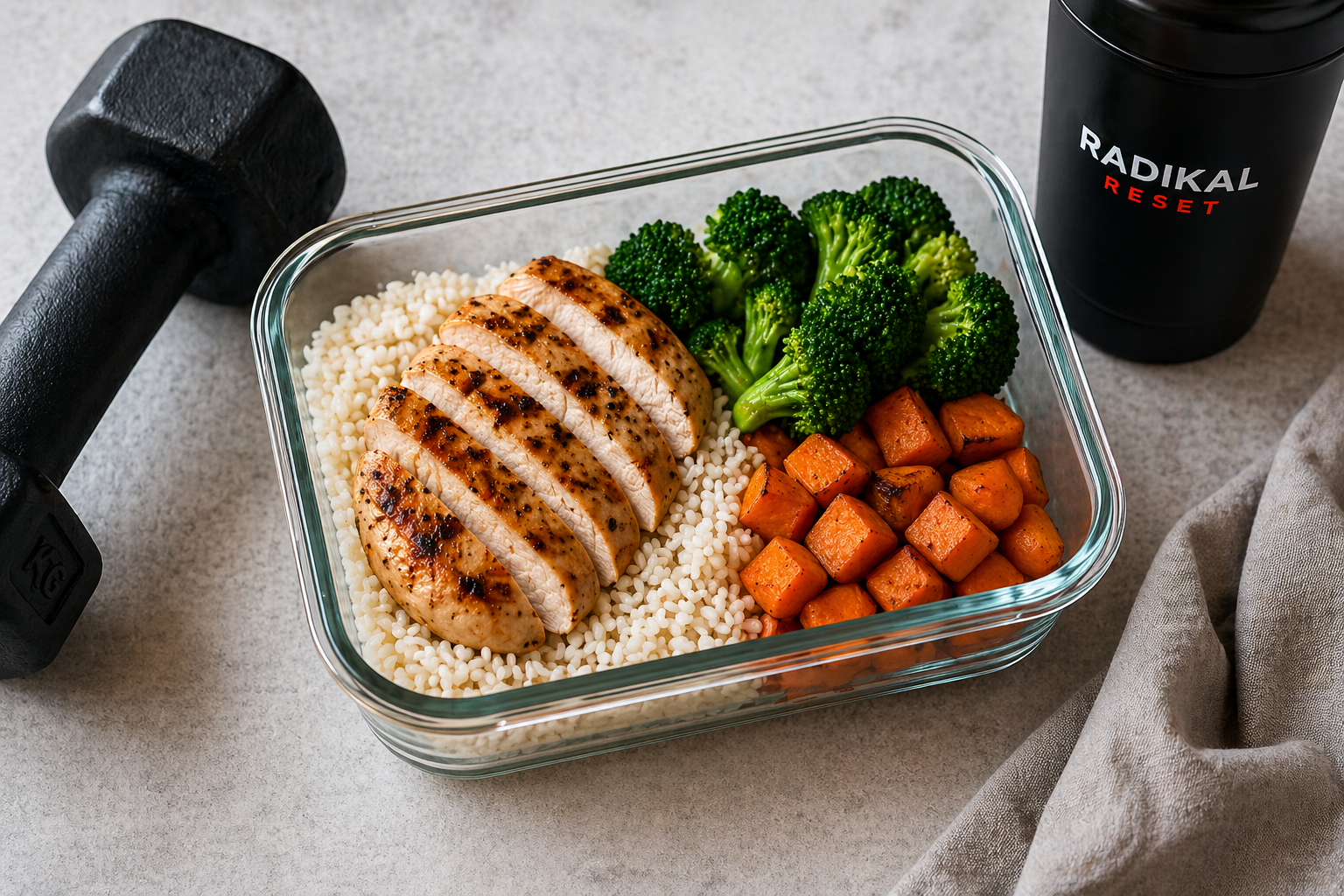
  • Healthy meal prep container with grilled chicken, rice, broccoli and sweet potato next to a dumbbell and a shaker

    How to Calculate Your Calories to Lose Fat Without Going Crazy

    Fat loss calories

    How to calculate your calories to lose fat without going crazy.

    You do not need to obsess over every gram forever. But understanding your calories can help you stop guessing, control fat loss and adjust your plan without panic.

    Calories are not the whole story, but they are part of the story. If you want to lose fat, your body needs to use more energy than it takes in over time. That does not mean you need to become obsessive. It means you need enough awareness to stop eating completely blind.

    The problem is that many people treat calories in two extreme ways: either they ignore them completely, or they track everything so aggressively that food becomes stressful. The useful middle ground is learning how calories work, using them as a tool, and then building repeatable meals around that understanding.

    Simple rule

    Use calories to create clarity, not obsession.

    Counting calories can be useful for a short period because it shows you what is really happening. But the final goal is not to live inside an app. The goal is to understand portions, protein, snacks, oils, drinks and patterns well enough to make better decisions.

    A simple way to estimate your fat-loss calories

    This is not a perfect formula. No formula is. It gives you a starting point that you can adjust based on real progress.

    Step 1

    Estimate your maintenance calories

    Maintenance calories are roughly the calories your body needs to maintain your current weight. A simple starting estimate is:

    Body weight in kg × 28-33

    Use the lower end if you are less active. Use the higher end if you train and move more.

    Step 2

    Create a moderate deficit

    Once you have an estimated maintenance number, subtract a moderate amount:

    Start with 300-500 calories below maintenance.

    This is usually more repeatable than cutting too aggressively from day one.

    Step 3

    Track the trend, not one day

    Your first target is only a starting point. Use 2-3 weeks of data before making big changes. Weight can move up and down because of water, salt, digestion, menstrual cycle, stress and training.

    Radikal Reset principle

    Your calorie target is a starting point, not a prison.

    The number helps you start. Your real progress tells you whether to adjust. Do not treat a formula as more important than what your body and your week are showing you.

    Example calculation

    Imagine someone weighs 80 kg and trains a few times per week but does not move a lot outside the gym.

    Maintenance estimate

    80 × 30 = around 2,400 calories.

    Fat-loss target

    2,400 – 400 = around 2,000 calories.

    Adjustment

    Review after 2-3 weeks of consistent tracking.

    How much protein should you eat?

    Calories control the direction of fat loss, but protein helps the process feel easier and supports muscle retention. A practical range for many people is:

    1.6-2.2 g of protein per kg of body weight

    You do not need to hit the exact number perfectly. Start by adding a clear protein source to each main meal.

    What to track without becoming obsessive

    Tracking can be useful, but it does not need to control your life. Start with the variables that give you the most clarity.

    Body weight trend

    Use weekly averages instead of reacting to one weigh-in.

    Protein

    Make sure your meals are not just carbs and fats with little protein.

    Hidden calories

    Oils, sauces, drinks, snacks, nuts and weekend meals often matter.

    Steps and training

    Low movement can slow progress even when your diet looks good.

    When should you adjust calories?

    Do not adjust after one bad day.

    One high-salt meal, one stressful day or one hard workout can affect the scale temporarily.

    Wait for a real trend.

    If your weekly average does not change after 2-3 consistent weeks, then adjust.

    Adjust gently.

    Reduce 100-200 calories, increase steps, or improve accuracy before making extreme changes.

    Common calorie mistakes

    • Choosing a target that is too low and then bingeing later.
    • Tracking Monday to Thursday but ignoring weekends.
    • Forgetting oils, sauces, drinks and snacks.
    • Changing calories every few days instead of watching the trend.
    • Using exercise calories as permission to eat much more.
    • Thinking calories matter but protein, fiber and food quality do not.

    Related guides

    Continue with these guides if you want fat loss to feel less confusing.

    Want the full structure?

    Radikal Reset helps you organize nutrition, training and habits without guessing.

    Calories matter, but the full process works better when they are connected to meals, training, movement and weekly consistency.

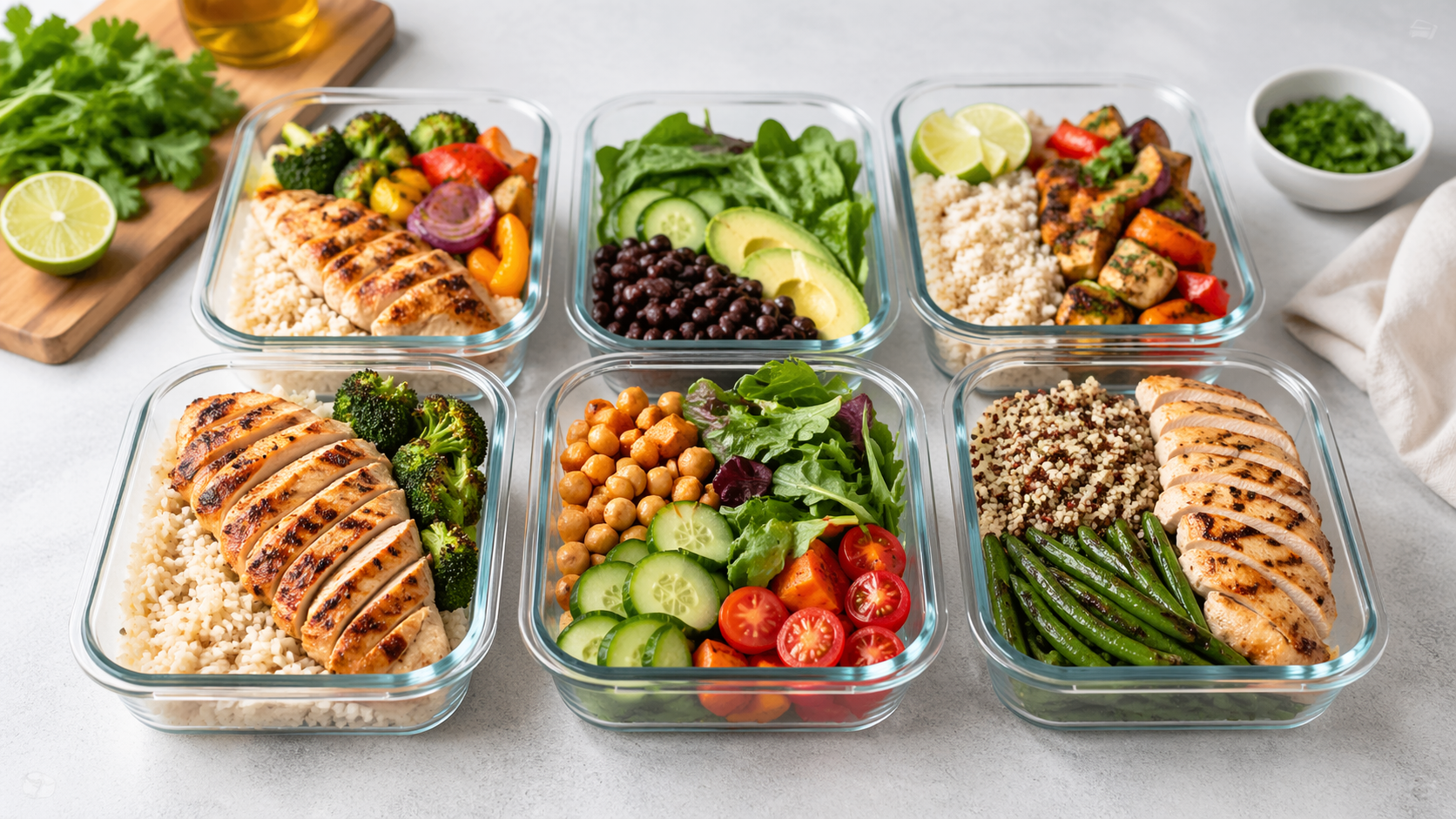
  • Meal prep containers with chicken, rice, vegetables and legumes prepared for several days

    Meal Prep for Fat Loss

    Simple Nutrition Guide

    Meal Prep for Fat Loss

    Meal prep does not need to mean eating the same dry chicken and rice every day. Done properly, it simply means making better food choices easier when the week gets busy.

    Fat loss becomes much harder when every meal is improvised. You get hungry, the day gets stressful, and suddenly the easiest option becomes the one you did not really want to choose.

    Meal prep is not about living like a bodybuilder. It is about reducing decision fatigue. A few prepared foods, some default meals and a simple weekly structure can make fat loss feel much more manageable.

    Why meal prep helps fat loss

    Fat loss depends on consistency. Meal prep helps because it removes some of the most common points of failure: hunger, stress, lack of time and random food decisions.

    Less guessing

    You already know what you can eat, so every meal does not become a new negotiation.

    Better portions

    Preparing food in advance makes it easier to control portions without obsessing over every bite.

    Fewer emergency choices

    When you have useful food ready, hunger does not have as much power over your decisions.

    Radikal Reset principle

    Meal prep is not about perfection. It is about making the next good decision easier.

    You do not need a fridge full of identical boxes. You need enough structure so that busy days do not automatically become chaotic eating days.

    Step 1: Do not prep every meal

    The biggest mistake with meal prep is trying to prepare your entire life in one afternoon. That usually feels overwhelming and makes the habit harder to repeat.

    Start with the meals that usually fail

    • If you skip breakfast and get hungry later, prep breakfast.
    • If lunch becomes takeaway, prep lunch.
    • If dinner collapses when you are tired, prep dinner ingredients.
    • If snacks are the problem, prepare better snack options.
    • If weekends are chaotic, plan one or two anchor meals.

    Meal prep works best when it solves your real problem, not when it copies someone else’s perfect routine.

    Step 2: Build meals around protein

    Protein is one of the most useful anchors for fat loss because it helps meals feel more satisfying and supports training progress. Your meal prep should make protein easy to include.

    Easy proteins

    Cook once, use often

    Chicken, turkey, lean beef, eggs, tofu, fish, tuna or Greek yogurt can become the base of several meals.

    Flexible meals

    Change the format

    The same protein can become a bowl, wrap, salad, omelette, stir-fry or simple dinner plate.

    Emergency options

    Keep backup protein

    Canned tuna, cooked eggs, Greek yogurt or ready-to-eat lean protein can save a chaotic day.

    Step 3: Prep components, not only full meals

    Full meal boxes can work, but many people get bored quickly. Component prep is often easier: you prepare separate foods and combine them in different ways during the week.

    Protein
    Cook chicken, lean meat, tofu, boiled eggs, fish or legumes.
    Carbs
    Prepare rice, potatoes, pasta, oats, wraps or another carb source you can portion easily.
    Vegetables
    Use roasted vegetables, salad bags, frozen vegetables or chopped raw vegetables.
    Flavor
    Keep sauces, spices, salsa, yogurt dressings or low-calorie flavor options ready.

    Step 4: Make your meals satisfying, not tiny

    A common fat loss mistake is making meal prep too small. Tiny meals may look “clean”, but if they leave you hungry all day, consistency becomes harder.

    Use lean protein

    It helps you build meals that are filling without making calories climb too quickly.

    Add volume foods

    Vegetables, salads, soups, fruit and high-fiber foods can make meals feel bigger.

    Control fats carefully

    Olive oil, nuts, cheese and sauces are not bad, but they are easy to overdo if you do not measure them roughly.

    Simple meal prep ideas for fat loss

    These are not strict recipes. They are flexible meal formats you can adapt to your taste, calories and schedule.

    Protein bowls

    Lean protein, rice or potatoes, vegetables and a sauce you enjoy.

    High-protein breakfast boxes

    Greek yogurt, fruit, oats, boiled eggs or cottage cheese depending on your preference.

    Dinner plates

    Protein, vegetables and a controlled carb portion. Simple, repeatable and easy to adjust.

    Wraps or salads

    Use prepped protein and vegetables to build quick lunches without cooking from zero.

    Step 5: Prepare for the moments you usually lose control

    Meal prep is most valuable when it protects the weakest points of your week. For many people, that is not every meal. It is the moment after work, the late-night snack, the rushed lunch or the weekend.

    Ask this before you prep

    • When do I usually make the worst food decisions?
    • Which meal causes the most stress?
    • What food would make that moment easier?
    • What can I prepare in less than one hour?
    • What backup meal can save a chaotic day?

    The best meal prep plan is not the most impressive one. It is the one that solves your repeated problems.

    A simple weekly meal prep structure

    You can adapt this to your schedule, but this kind of structure is enough for most people to start eating better without overcomplicating the week.

    Sunday
    Shop for protein, vegetables, carbs and two easy dinner options.
    Prep 1
    Cook one or two protein sources and one carb source.
    Prep 2
    Prepare vegetables, salad ingredients or frozen vegetable options.
    Backup
    Keep one emergency meal ready for the busiest day of the week.

    Step 6: Keep flavor in the plan

    If your meal prep tastes boring, you will eventually escape from it. Fat loss food does not need to be bland. Flavor matters because it helps you repeat the plan.

    Easy ways to improve meal prep flavor

    Use spices Paprika, garlic, curry, chili, cumin, oregano or mixed seasoning can completely change a meal.
    Rotate sauces Use controlled portions of sauces, salsa, yogurt dressings or hot sauce.
    Change the format Turn the same ingredients into bowls, wraps, salads or stir-fries.
    Add freshness Lemon, herbs, crunchy vegetables or fresh fruit can make prepped meals feel less heavy.

    Common meal prep mistakes

    Preparing meals you do not enjoy If you hate the food, you will not repeat it for long. Fat loss still needs taste.
    Making portions too small Extreme hunger often leads to snacking, overeating or quitting the plan completely.
    Prepping too much at once Start smaller. A plan you can repeat is better than one huge Sunday effort that never happens again.
    Ignoring your real schedule Meal prep should fit your week. If Wednesdays are chaotic, prepare for Wednesdays first.

    Frequently asked questions

    Is meal prep necessary for fat loss?

    No, but it can make fat loss much easier. Meal prep reduces random decisions and helps you stay consistent when you are busy, tired or hungry.

    Do I have to eat the same meal every day?

    No. You can prep components instead of full meals. This lets you combine protein, carbs, vegetables and sauces in different ways.

    What should I meal prep first?

    Start with the meal that usually fails. For many people, that is lunch, dinner or snacks after work.

    How long should meal prep take?

    A useful meal prep session can take 30 to 60 minutes. You do not need to spend an entire afternoon cooking unless you enjoy it.

    Related guides

    Want nutrition to feel simpler?

    Radikal Reset gives you a clear 8-week structure for training, cardio and practical nutrition, so you can stop improvising and start building a routine that fits real life.

  • Scrambled eggs with avocado toast and a yogurt bowl with berries for a high-protein breakfast

    High-Protein Breakfasts for Weight Loss

    High-protein breakfast

    High-protein breakfasts for weight loss.

    A good breakfast will not magically make you lose weight, but it can make the rest of the day much easier. These high-protein breakfast ideas help you control hunger, reduce random snacking and start the day with structure.

    Many people try to lose weight by making breakfast tiny or skipping it completely. That can work for some people, but for others it creates a predictable problem: they arrive at lunch starving, snack all afternoon or lose control at night.

    A high-protein breakfast gives the day a better start. It does not need to be complicated. The goal is to get enough protein, add volume or fiber, and choose something you can repeat without needing chef-level effort every morning.

    Simple rule

    Build breakfast around protein, not just carbs.

    A breakfast made only of cereal, pastries, toast or juice can be easy to overeat and may not keep you full for long. Add a clear protein source first, then build the rest of the meal around it.

    Protein

    Greek yogurt, eggs, cottage cheese, protein powder, turkey, tofu or smoked salmon.

    Fiber

    Fruit, oats, wholegrain bread, chia seeds or vegetables.

    Energy

    Oats, toast, potatoes, fruit or rice cakes depending on your goal and hunger.

    Repeatability

    Choose meals you can make quickly on normal mornings.

    12 high-protein breakfast ideas for weight loss

    Use these ideas as templates. Adjust portions depending on your body size, training, appetite and calorie target.

    1. Greek yogurt with berries and oats

    Greek yogurt, berries, oats and cinnamon. Simple, fast and easy to repeat.

    2. Egg and egg-white omelet

    Eggs, extra egg whites and vegetables. Add toast or potatoes if you need more energy.

    3. Protein oats

    Oats mixed with protein powder or Greek yogurt, plus fruit. Good if you prefer a sweet breakfast.

    4. Cottage cheese toast

    Wholegrain toast, cottage cheese, tomato, pepper and turkey or smoked salmon if you want extra protein.

    5. Breakfast wrap

    Eggs or turkey, tortilla wrap, vegetables and a light sauce. Easy to prepare and take away.

    6. Protein smoothie

    Protein powder or Greek yogurt, fruit, milk or water, and optional oats if you need more calories.

    7. Turkey and egg plate

    Eggs, turkey slices, vegetables and fruit. A simple savory option that keeps protein high.

    8. Skyr bowl with banana

    Skyr or high-protein yogurt, banana, cinnamon and a small portion of granola or oats.

    9. Tofu scramble

    Tofu, vegetables, spices and toast or potatoes. A plant-based high-protein option.

    10. Smoked salmon and eggs

    Eggs, smoked salmon, vegetables and toast. Higher in protein and very satisfying.

    11. High-protein overnight oats

    Oats, Greek yogurt or protein powder, milk, fruit and cinnamon prepared the night before.

    12. Egg, potato and fruit breakfast

    Boiled eggs, potatoes and fruit. Simple, filling and useful if you prefer real food over sweet options.

    Radikal Reset principle

    A good breakfast is not perfect. It is repeatable.

    The best breakfast for weight loss is the one that helps you control hunger, hit protein and make better decisions later in the day.

    Common breakfast mistakes when trying to lose weight

    Mistake 1: eating only carbs.

    Toast, cereal or pastries can fit sometimes, but alone they may not keep you full enough.

    Mistake 2: making breakfast too small.

    A tiny breakfast can backfire if it leads to snacking, cravings or overeating later.

    Mistake 3: drinking calories without noticing.

    Juice, sugary coffee drinks and large smoothies can add calories without enough satiety.

    Mistake 4: choosing “healthy” toppings with no portion control.

    Granola, nut butter, seeds and oils can be useful, but portions matter.

    How to choose the right breakfast for your day

    If you train in the morning

    Choose protein plus some carbs, such as yogurt with oats or eggs with toast.

    If you get hungry at night

    A stronger breakfast may help reduce the feeling of chasing food later in the day.

    If you are short on time

    Use simple options: Greek yogurt, protein smoothie, overnight oats or cottage cheese toast.

    Related guides

    Continue with these guides if you want to make fat-loss nutrition easier.

    Want the full structure?

    Radikal Reset helps you organize meals, training and habits into one 8-week plan.

    Breakfast matters, but the full process works better when nutrition, training and consistency are connected.

  • Chicken breast with vegetables

    High-Protein Dinners Under 500 Calories

    High-protein dinners

    High-protein dinners under 500 calories.

    Dinner can make or break a fat-loss day. These high-protein dinner ideas are designed to be filling, simple and controlled without feeling like punishment food.

    A lot of people do well during the day and lose control at night. They arrive tired, hungry and mentally done. Then dinner becomes whatever is fastest, biggest or most comforting.

    A good fat-loss dinner should help you finish the day in control. It should include enough protein, enough volume and enough flavor to feel like a real meal. Under 500 calories does not mean tiny, boring or miserable. It means structured.

    Simple dinner formula

    Protein first, volume second, calories controlled.

    To build a dinner under 500 calories that still feels satisfying, use this structure:

    Lean protein

    Chicken, turkey, white fish, tuna, eggs, shrimp, tofu or lean beef.

    High volume

    Vegetables, salad, soup, zucchini, mushrooms, peppers or cauliflower rice.

    Controlled carbs

    Potatoes, rice, wraps, pasta or bread in portions that fit your goal.

    Flavor

    Spices, herbs, salsa, mustard, yogurt sauces, lemon, vinegar or hot sauce.

    12 high-protein dinners under 500 calories

    These are templates. Calories depend on exact portions, brands, sauces and cooking oils, so adjust quantities if needed.

    1. Chicken fajita bowl

    Chicken breast, peppers, onions, lettuce, salsa and a small portion of rice or beans.

    2. White fish with potatoes and vegetables

    White fish, boiled or roasted potatoes, vegetables and lemon or yogurt sauce.

    3. Turkey lettuce wrap plate

    Lean turkey, lettuce leaves, vegetables, pickles and a light sauce. Add fruit if needed.

    4. Shrimp stir-fry

    Shrimp, mixed vegetables, soy sauce, spices and a controlled portion of rice or noodles.

    5. Egg-white and vegetable omelet

    Egg whites, one whole egg, vegetables and a side salad or potatoes depending on your hunger.

    6. Tuna potato salad

    Tuna, potatoes, lettuce, tomato, cucumber, onion and a yogurt or mustard-based dressing.

    7. Chicken soup with vegetables

    Chicken, broth, vegetables and a small amount of rice, noodles or potatoes. High volume and filling.

    8. Tofu vegetable bowl

    Tofu, vegetables, soy sauce, spices and cauliflower rice or a small portion of normal rice.

    9. Lean beef taco salad

    Lean beef, lettuce, tomato, salsa, beans and Greek yogurt instead of heavy sour cream.

    10. Turkey meatballs with zucchini

    Turkey meatballs, tomato sauce and zucchini noodles or vegetables. Add carbs if your calories allow.

    11. Greek yogurt chicken salad

    Chicken, Greek yogurt, mustard, vegetables and salad leaves. Serve in a wrap or bowl.

    12. Salmon salad bowl

    A smaller portion of salmon, a large salad, vegetables and a light dressing. Higher fat, but satisfying.

    Radikal Reset principle

    Dinner should help you finish the day, not restart the diet tomorrow.

    The best dinner for fat loss is not the smallest one. It is the one that keeps you full, controlled and able to repeat the process tomorrow.

    How to keep dinner under control

    Use less oil than you think.

    Oil is useful, but it is easy to overdo. Measure it when fat loss is your goal.

    Add vegetables for volume.

    Volume helps dinner feel bigger without needing huge calories.

    Do not remove all carbs automatically.

    A controlled portion of potatoes, rice or bread can make dinner more satisfying and easier to repeat.

    Keep emergency dinners ready.

    Tuna, eggs, frozen vegetables, cooked chicken or Greek yogurt can save a difficult night.

    Common dinner mistakes

    • Making dinner too small and then snacking all night.
    • Forgetting oils, sauces, cheese and toppings.
    • Arriving at dinner starving because the rest of the day was too restrictive.
    • Eating from the pan, bag or container instead of plating the meal.
    • Turning one flexible dinner into a full evening of grazing.

    Related guides

    Continue with these guides if dinner is where your fat-loss process usually breaks.

    Want the full structure?

    Radikal Reset connects dinner, training and weekly habits into one plan.

    Dinner is only one part of the process. The full 8-week program helps you organize nutrition, training and consistency together.