Body Transformation

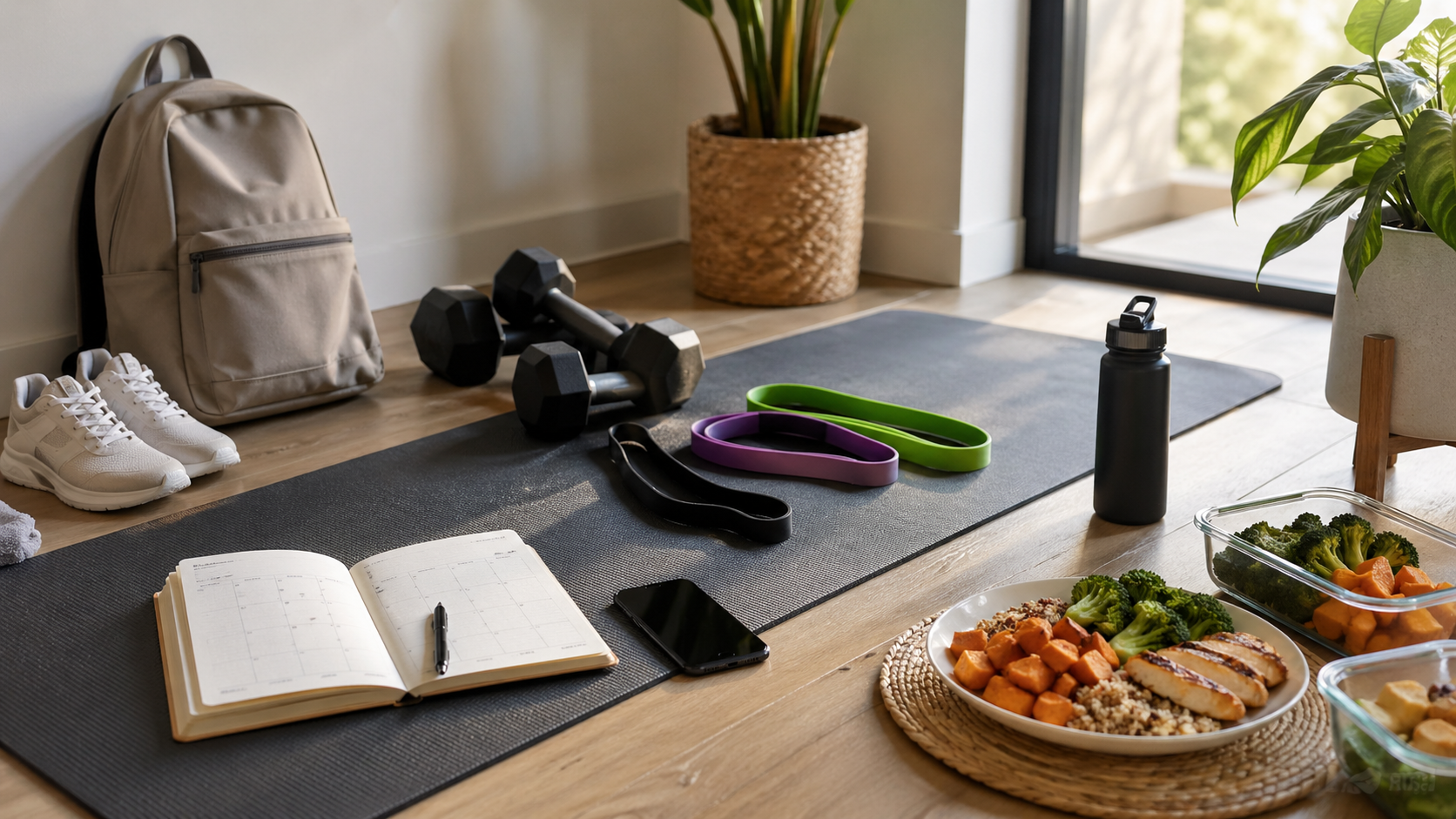
  • Bright workout space with sneakers, dumbbells, resistance band, healthy food and an open door leading to a sunny path, symbolizing a physical reset.

    What Is a Physical Reset and How to Start One for Real

    A physical reset is not a week of punishment, an impossible diet, or a brutal workout plan to compensate for months of chaos. A real physical reset is a way to put your body, nutrition, and habits back in a clear direction.

    The idea is not to erase your previous life or promise a magical transformation. The idea is to create a restart point: stop improvising, regain control, start moving, eat with more intention, and build a structure you can sustain.

    Quick answer

    A physical reset is an organized restart of training, nutrition, and habits to get back in shape, lose fat, and feel in control again. To start one for real, you need clear goals, strength training 2–4 days, simple food, more steps, basic tracking, and a realistic plan to avoid quitting.

    Note: this content is informational and does not replace individualized medical, nutrition, or training advice. If you have pain, a previous injury, a medical condition, or a history of disordered eating, consult a qualified professional before starting.

    What a physical reset is not

    Before defining it clearly, it helps to remove the noise. Many people call any extreme reaction after a bad period a “reset”: eating very little, training every day, doing cardio as punishment, or eliminating foods out of guilt.

    That may give you a sense of control for a few days, but it usually does not build sustainable change. A real reset should not break you. It should organize you.

    It is not punishment

    You do not need to pay for being off track. You need to move forward again.

    It is not perfection

    A good reset allows mistakes and teaches you to return quickly.

    It is not improvisation

    It needs structure, not just Monday motivation.

    What a real physical reset should include

    1. A specific goal

    “I want to get better” is not enough. Define what that means for you: lose fat, regain strength, return to the gym, improve waist measurement, feel more agile, or build a multi-week routine.

    2. Progressive strength training

    Strength is the base for looking better, maintaining muscle, and rebuilding physical confidence. Start with 2–4 sessions per week depending on your level and availability.

    3. Simple, repeatable nutrition

    A reset does not need a weird diet. It needs protein, real food, reasonable portions, quick options, and a moderate deficit if your goal is fat loss.

    4. Daily activity

    Walking more, moving daily, and reducing sedentary time can help a lot without adding as much fatigue as training hard every day.

    5. Tracking without obsession

    Photos, measurements, average weight, clothing, and performance help you know if you are moving in the right direction. You do not need to check everything every hour.

    6. A plan for difficult days

    A real reset does not break because of one meal out or one bad day. It has a clear rule: return at the next meal, next walk, or next workout.

    How to start a physical reset in 7 days

    • Day 1: take an initial photo, measure waist, and decide the main goal.
    • Day 2: plan your real training days and a simple grocery shop.
    • Day 3: do your first strength session with margin, without trying to prove anything.
    • Day 4: add a walk and prepare a high-protein base meal.
    • Day 5: repeat one useful meal and reduce one clear source of unnecessary calories.
    • Day 6: do a second strength session or a longer walk if you feel tired.
    • Day 7: review what worked, what failed, and what you will simplify next week.

    The difference between resetting and starting from zero

    A physical reset does not mean you know nothing or that everything before was useless. Sometimes you already have experience, but you lost rhythm. Other times, you never had a clear structure. In both cases, the reset organizes the starting point.

    It is not about erasing the past. It is about making a practical decision: from today, your habits have direction again.

    Common mistakes when trying a physical reset

    Turning it into an extreme diet

    If the plan makes you hungry and anxious from day one, it will be hard to sustain.

    Training too hard at the beginning

    The first goal is to return to completing sessions, not destroy yourself with soreness.

    Tracking nothing

    Without photos, measurements, or references, you end up deciding by feeling, and feelings change a lot.

    Having no continuity afterward

    A real reset does not end in one week. It should open a more organized stage.

    When a physical reset makes sense

    • When you have spent months without training and do not know how to return.
    • When your eating has no structure and every week ends the same.
    • When you have gained fat and struggle to feel in control again.
    • When you are tired of starting strong and quitting.
    • When you want to change your body but need a clear system.

    Frequently asked questions

    Does a physical reset work for fat loss?

    Yes, if it includes a moderate deficit, strength, protein, steps, and consistency. It does not work if it is just one extreme week with no continuity.

    How long should a physical reset last?

    It can start in 7 days, but it should continue for several weeks. Eight weeks is a useful length for visible changes and stronger habits.

    Do I need to do it perfectly?

    No. The goal is to have direction again. A sustainable reset allows mistakes and teaches you to return quickly.

    You may also find useful

    Next step

    A physical reset should not break you. It should give you direction again.

    Radikal Reset was built around that idea: 8 weeks to organize training, nutrition, and habits and get moving again.

    See Radikal Reset
  • Person tying their shoes at home next to dumbbells, exercise mat, water bottle and healthy food, symbolizing a gradual return to fitness.

    How to Get Back in Shape After a Bad Period

    Getting back in shape after a bad period is not about punishing yourself for what happened. Maybe you spent months without training, eating worse, sleeping poorly, dealing with stress, family changes, work, injuries, or simply low energy. That does not mean you have lost the ability to come back.

    The most common mistake is trying to compensate for the bad period with an extreme reaction: strict dieting, intense workouts, and zero room for error. It may look like “getting serious,” but it often ends in pain, fatigue, and quitting. What you need is an organized return.

    Quick answer

    To get back in shape after a bad period, start with 2–3 weekly strength workouts, walks, simple protein-based meals, better sleep, and small goals. Do not try to compensate for months of chaos in one week: return with progression, structure, and patience.

    Note: this content is informational and does not replace individualized medical, nutrition, or training advice. If you have pain, a previous injury, a medical condition, or major doubts, consult a qualified professional before starting.

    You do not need punishment. You need to rebuild

    After a bad period, guilt is common. You may look at old photos, clothes that no longer fit the same, or weights you used to lift and feel like you are starting from zero. But not everything is lost: your body and mind can regain rhythm faster than you think if you do not go too aggressive.

    The priority is not proving anything in week one. The priority is creating a base you can repeat for several weeks in a row.

    Return without guilt

    Guilt does not train for you. Structure helps you move forward.

    Gradual progression

    Your body needs to readapt before you push hard.

    Realistic consistency

    Three solid weeks beat four extreme days.

    Step 1: accept your current starting point

    You do not have to train like you used to or eat as if you were already at your best. Your current starting point matters. That is not defeat: it is information.

    • Evaluate energy: how you sleep, how you feel, and your stress level.
    • Evaluate movement: how many steps you take and how long you have been off training.
    • Evaluate food: where your eating gets most disorganized.
    • Evaluate real time: how many days you can train without relying on a perfect week.

    Step 2: return to training with less ego

    If you have been inactive, you do not need to test yourself. You need to rebuild tolerance. Brutal soreness or extreme fatigue are not signs of success; often they are signs you pushed too hard.

    Week 1–2

    Do 2–3 full-body sessions, moderate loads, and clean technique. Finish each session feeling like you could have done a little more.

    Week 3–4

    Start increasing a rep, a set, or some load if recovery is good. Do not change every exercise yet.

    After the first month

    Adjust based on response: more volume, more intensity, or a more structured routine. First build continuity, then optimize.

    Step 3: fix food without turning it into punishment

    After a bad period, many people try to compensate with a diet that is too strict. The problem is that hunger, anxiety, and rigidity can lead you back into the same cycle.

    • Add protein to most meals.
    • Prepare 2 base meals you can repeat without overthinking.
    • Reduce liquid and high-calorie snacking before changing everything else.
    • Use vegetables, fruit, and filling plates so you do not live hungry.
    • Do not eliminate foods as punishment: adjust quantities and frequency.

    Step 4: use walks to recover rhythm

    Walking is a very useful tool when you are coming back from a bad period. It helps increase expenditure, recover a sense of movement, clear your head, and improve consistency without adding as much fatigue as hard cardio.

    Start with something as simple as 10–20 minutes per day or a walk after a meal. It does not need to be spectacular to be useful.

    Simple 14-day plan to feel back on track

    Days 1–3

    Basic grocery shop, first walk, initial photo, one protein-based meal, and planning 2 workouts.

    Days 4–7

    First strength sessions, daily steps, and a base dinner you can repeat.

    Days 8–10

    Repeat workouts, adjust hunger, improve sleep, and avoid adding too many new rules.

    Days 11–14

    Review adherence, identify the biggest obstacle, and choose one small improvement for the next week.

    Common mistakes when returning after a bad period

    Trying to compensate for everything in one week

    You do not need to pay a debt. You need to create a new direction.

    Comparing yourself to your previous best version

    Your reference should be your current starting point, not a period when your conditions were different.

    Training too hard too soon

    Initial excess often looks like discipline, but it can break continuity.

    Expecting constant motivation

    Motivation helps you start, but structure is what supports you.

    Frequently asked questions

    How long does it take to get back in shape?

    It depends on your starting point and how long you were inactive, but many people notice better energy and rhythm within a few weeks if they return consistently.

    Is it better to train every day to recover faster?

    Not necessarily. If you are coming from a bad period, 2–3 strength days and more steps are often a smarter return.

    What if I fail again?

    Return at the next useful decision: an ordered meal, a walk, or a short session. Do not wait for another perfect Monday.

    You may also find useful

    Next step

    A bad period does not have to define your next period.

    Radikal Reset is designed to help you return with organized training, nutrition, and habits, without punishing yourself or improvising.

    See Radikal Reset
  • Conceptual image of balance between healthy food, strength training and physical progress without an extreme diet

    How to Lose Fat and Look Better Without an Extreme Diet

    Losing fat and looking better should not force you to live on an extreme diet. Many people believe that to change their body they have to eliminate carbs, eat salad every night, stay hungry, or follow a rigid menu that does not fit real life.

    The reality is simpler: you need a calorie deficit, enough protein, strength training, more daily activity, and a structure you can sustain. If the plan is so hard that you can only tolerate it for ten days, it is not a good strategy.

    Quick answer

    To lose fat and look better without an extreme diet, create a moderate deficit, eat protein in most meals, strength train, increase steps, and use simple meals you can repeat. You do not need to eliminate food groups: you need a structure that reduces chaos and is maintainable.

    Note: this content is informational and does not replace individualized medical, nutrition, or training advice. If you have a medical condition, a history of disordered eating, or specific needs, consult a qualified professional.

    An extreme diet can make you lose weight, but not always look better

    Losing weight is not exactly the same as improving your body. If you lose weight too fast, eat too little protein, skip strength training, and accumulate too much fatigue, you may end up smaller, weaker, and with a worse relationship with food.

    Looking better usually requires losing fat while keeping as much muscle as possible. That is why strategy matters more than speed.

    Moderate deficit

    Enough to move forward without turning every day into a fight.

    Strength

    Key for maintaining muscle and improving body composition.

    Adherence

    The best plan is the one you can repeat when motivation drops.

    What to do to lose fat without going extreme

    1. Do not start by cutting too much

    If you reduce calories aggressively from day one, you can feel hungry, anxious, perform worse, and be more likely to quit. Start with reasonable changes and adjust based on response.

    2. Build meals around protein

    Eggs, Greek yogurt, chicken, fish, legumes, tofu, turkey, cottage cheese, or protein powder if it suits you. Protein supports fullness and muscle maintenance.

    3. Keep useful carbs

    You do not need to eliminate rice, potatoes, oats, bread, pasta, or fruit. Adjust portions and choose options that help you train and maintain energy.

    4. Use volume to control hunger

    Vegetables, salads, fruit, soups, broths, and large but reasonable plates can help you eat fewer calories without feeling punished.

    5. Strength train, not only cardio

    Cardio can help, but strength is essential for looking better. If you only chase calorie burn, you may lose weight without building the body you want.

    6. Leave room for social life

    One meal out does not ruin the process. The danger is turning it into a whole weekend without structure because you feel you already failed.

    Example simple day without an extreme diet

    • Breakfast: Greek yogurt with fruit, oats, and extra protein if needed.
    • Lunch: rice or potatoes with chicken, vegetables, and measured oil.
    • Snack: fruit, cottage cheese, boiled eggs, or a protein shake.
    • Dinner: omelet, fish, legumes, or tofu with vegetables and a carb serving if it fits.
    • Activity: strength training or a walk, depending on the day.

    How to know if the deficit is too aggressive

    Not all fatigue means the plan is wrong, but there are signs that you may be pushing too hard. If several appear at once, you may need to adjust.

    Constant hunger

    If you think about food all day, review calories, protein, fiber, sleep, and food volume.

    Performance collapse

    Some energy loss can happen, but if every workout gets worse, you may be cutting too hard.

    Frequent overeating or loss of control

    If the plan makes you break it hard every few days, it may be too rigid.

    Common mistakes when you want to lose fat and look better

    Eliminating foods you do not need to eliminate

    Removing bread, rice, or fruit is not mandatory. What matters is the full day and week.

    Doing cardio to compensate for meals

    Exercise should not be punishment. Use cardio as a tool, not penance.

    Not strength training

    If you want to look better, you need to give your body a reason to keep muscle.

    Being perfect Monday to Thursday and disappearing on weekends

    The whole week counts. A sustainable plan needs realistic weekends.

    Frequently asked questions

    Can I lose fat without being hungry?

    You can reduce hunger a lot if the deficit is moderate and your meals include protein, fiber, volume, and a clear structure.

    Do I have to remove carbs?

    No. You can lose fat while eating carbs if the amounts fit your goal and weekly average.

    What matters more: diet or training?

    For fat loss, nutrition is decisive. For looking better, strength training is also key.

    You may also find useful

    Next step

    You do not need an extreme diet. You need a system you can repeat.

    Radikal Reset is designed to help you lose fat and look better with training, simple nutrition, and sustainable habits.

    See Radikal Reset
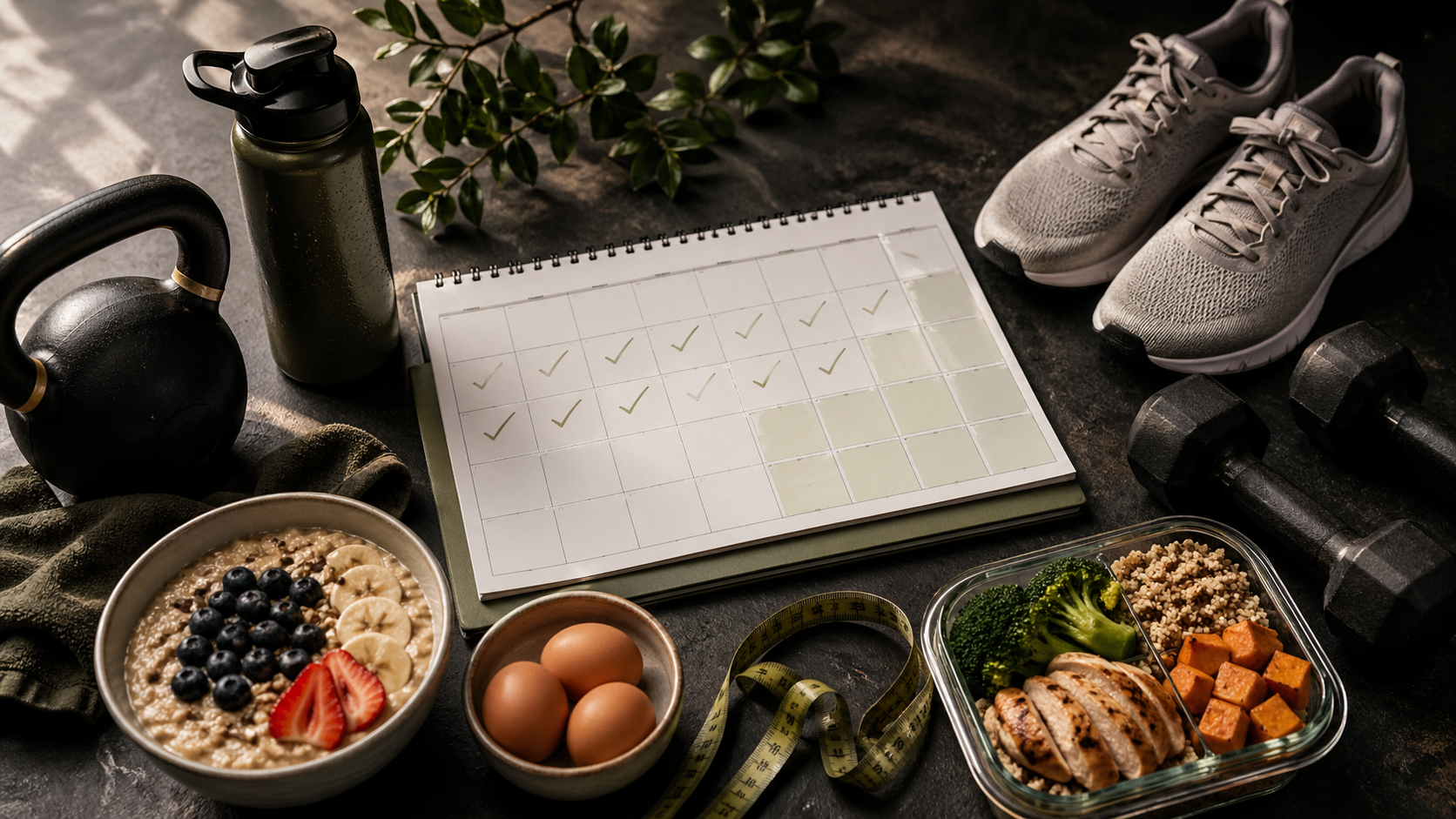
  • Visual concept of a 30-day calendar with workout elements, healthy food and gradual physical progress

    What to Do in the First 30 Days to Change Your Body

    The first 30 days to change your body matter because they set the tone for the process. You do not need to transform completely in one month, but you can build a real base: training regularly, eating better, moving more, and starting to see yourself as someone taking control again.

    The goal of the first 30 days is not perfection. It is to stop improvising. If you try to change everything at once, you may burn out. If you organize the essentials, you are much more likely to reach day 31 with momentum, not with the urge to quit.

    Quick answer

    During the first 30 days to change your body, focus on strength training 2–4 times per week, increasing steps, eating protein in most meals, creating a moderate calorie deficit, sleeping better, and tracking progress without obsessing. Do not chase perfection: chase repetition.

    Note: this content is informational and does not replace individualized medical, nutrition, or training advice. If you have pain, a previous injury, a medical condition, or major doubts, consult a qualified professional before starting.

    What you can realistically expect in 30 days

    In 30 days, you can notice more energy, less bloating, better control with food, early strength gains, better posture, and some visible changes, especially if you are coming from a sedentary or disorganized period.

    What you should avoid is expecting an extreme transformation in four weeks. The first phase should build the structure that makes the bigger change possible later.

    More control

    You start deciding better instead of reacting by impulse.

    Better routine

    Training and eating better depend less on motivation.

    First changes

    How you look, feel, and fit into clothes can begin to improve.

    Week 1: organize the basics

    The first week should not be a suffering test. It should be an adjustment week. You need to know where you are, what you can complete, and which habits are slowing you down.

    • Take an initial photo and basic measurements: waist, weight, and general feeling.
    • Choose 2–3 training days and put them on your calendar.
    • Add protein to at least 2 meals per day.
    • Walk more, even if it is just 10–20 minutes per day.
    • Prepare a simple grocery shop with foods that are easy to repeat.

    Week 2: repeat before adding more

    The second week is often more important than the first. Initial motivation begins to drop and normal excuses appear: fatigue, work, hunger, lack of time, or social life.

    Keep the workouts

    Do not change the whole routine yet. Repeat exercises, improve technique, and finish with margin. Repetition helps you progress.

    Create 2 base meals

    One meal for normal days and another for busy days. Clear options reduce improvisation.

    Control hunger

    If you are hungry all day, check protein, vegetables, fruit, water, sleep, and meal size. Do not turn the deficit into punishment.

    Week 3: begin progressing

    In the third week, it is no longer just about starting. It is about improving something: one more rep, better technique, more steps, better dinners, or less improvisation.

    • Slightly increase a load or a rep if technique is good.
    • Review your steps and increase a little if daily activity is still low.
    • Reduce liquid calories if they are slowing progress.
    • Plan the weekend so you do not lose control for two full days.
    • Do not change plans out of anxiety if you do not have enough data yet.

    Week 4: measure, adjust, and consolidate

    The fourth week is for evaluation. Do not only look at one day of scale weight. Look at weight trend, photos, waist, energy, strength, hunger, sleep, and adherence.

    If things are working

    Do not change everything. Keep what works and increase demands moderately.

    If you see no progress

    Review portions, steps, weekends, snacking, and real adherence before deciding that “nothing works.”

    If you are exhausted

    You probably started too hard. Reduce demands and build from a more sustainable base.

    First 30 days checklist

    • Strength train 2–4 times per week.
    • Walk more or increase steps gradually.
    • Eat protein in most meals.
    • Have 2–3 repeatable base meals.
    • Control portions without extreme dieting.
    • Sleep slightly better than before.
    • Measure progress with trends, photos, measurements, and clothing.
    • Return quickly after a slip.

    Mistakes to avoid in the first month

    Following an overly aggressive diet

    If hunger is unbearable from week one, you probably will not maintain it.

    Training as if you had years of experience

    Your body needs to readapt. Harder is not always smarter.

    Changing plans every few days

    If you do not repeat enough, you will not know what is working and what is not.

    Quitting after a bad day

    One bad meal or missed workout does not ruin the month. Quitting does.

    Frequently asked questions

    Can you change your body in 30 days?

    You can begin noticing changes, but the most important part of the first month is building the base that makes a more visible transformation possible later.

    How much weight should I lose in the first month?

    It depends on your starting point, adherence, and deficit. Avoid obsessing over an exact number and also look at measurements, photos, and energy.

    What if I fail for a week?

    Return with one small action today. Do not wait until next Monday or try to compensate with extreme measures.

    You may also find useful

    Next step

    The first 30 days should not be a suffering test. They should give you structure.

    Radikal Reset is designed to help you start that change with organized training, nutrition, and habits, without improvising every week.

    See Radikal Reset
  • Visual metamorphosis with cracked cocoons, a colorful butterfly, a dumbbell, healthy food and a clock, symbolizing the start of a body transformation.

    How to Start a Body Transformation From Zero

    Starting a body transformation from zero can feel huge: losing fat, training again, eating better, recovering energy, looking different, and maintaining it. The problem is that many people try to start as if they already had discipline, technique, time, and habits in place.

    A real body transformation does not start with a perfect week. It starts with a basic structure you can repeat. Before looking for the most advanced plan, you need to organize four things: training, nutrition, daily activity, and consistency.

    Quick answer

    To start a body transformation from zero, begin with 2–3 weekly workouts, more daily steps, simple protein-based meals, a moderate calorie deficit, and basic tracking. The initial goal is not perfection: it is building a base you can repeat for weeks.

    Note: this content is informational and does not replace individualized medical, nutrition, or training advice. If you have pain, a previous injury, a medical condition, or major doubts, consult a qualified professional before starting.

    You do not need to start hard. You need to start well

    When you want to change your body, it is tempting to make a total revolution: strict diet, gym almost every day, hard cardio, and zero room for error. It may look like commitment, but often it is just a fast way to burn out.

    Starting well means creating a realistic starting point. Something that makes you improve, but does not depend on having a perfect life.

    Base before intensity

    First learn to repeat. Then push harder.

    Clarity before variety

    You do not need endless options. You need to know what to do today.

    Progress before perfection

    Small sustained improvements change more than one heroic week.

    The 6 pillars for starting a body transformation

    1. Define a clear goal, not a fantasy

    “I want to change my body” is too general. Better: lose fat, train three days, improve waist measurements, increase strength, or create a sustainable routine for eight weeks.

    2. Start with strength training

    Strength helps maintain muscle, improve body shape, and build a physical base. If you start from zero, 2–3 weekly full-body sessions can be enough to move forward.

    3. Organize food without extreme dieting

    Add protein, vegetables, more filling meals, and portion control. If you want to lose fat, you need a calorie deficit, but you do not need to start by starving.

    4. Increase daily activity

    Walking more can be one of the simplest tools to start. It does not create as much fatigue as hard cardio and helps build a daily routine.

    5. Track enough to avoid guessing

    Use average weight, measurements, photos, clothing, and performance. You do not need obsession, but you do need signs that the plan is working.

    6. Create a plan for imperfect days

    There will be meals out, fatigue, work, travel, and strange days. A sustainable transformation needs a way to return quickly, not a promise that you will never slip.

    First 2 weeks: what to do exactly

    • Train 2–3 days: full body, basic exercises, and moderate loads.
    • Walk more: start with 10–20 minutes daily or increase steps gradually.
    • Improve one meal: add protein and a source of volume like vegetables or fruit.
    • Prepare 2 base meals: one for normal days and one for busy days.
    • Use simple tracking: weight 2–4 times per week, one initial photo, and basic measurements.
    • Do not change everything yet: consolidate before adding more demands.

    Example week when starting from zero

    Monday

    Full-body strength workout + simple high-protein dinner.

    Tuesday

    Walk, base meal, and quick check of hunger and energy.

    Wednesday

    Second strength workout + prepare an easy meal for the next day.

    Thursday

    Active recovery, steps, and simple meals.

    Friday or Saturday

    Optional third workout if you recover well, or a longer walk if you feel tired.

    Mistakes that slow a transformation from the beginning

    Expecting visible results in one week

    You can feel better quickly, but visible physical changes need consistency.

    Copying routines that are too advanced

    An advanced routine is not better if it does not fit your level, technique, or recovery.

    Following an impossible diet

    If hunger and rigidity are too high, adherence will drop quickly.

    Having no return plan

    If one slip takes you out for three days, the system needs more flexibility.

    Frequently asked questions

    How long does a body transformation take?

    It depends on your starting point, but you usually need several weeks to notice clear changes and several months for a deeper transformation.

    Can I start if I am completely out of shape?

    Yes, but start with progression, moderate loads, walks, and basic habits. You do not need to do everything from day one.

    What matters most at the beginning?

    Building continuity. Later you can adjust calories, progression, volume, and details, but first you need repetition.

    You may also find useful

    Next step

    A body transformation does not start with perfection. It starts with structure.

    Radikal Reset is designed to help you start with organized training, nutrition, and habits, without relying on weekly improvisation.

    See Radikal Reset